Corneal diseases are a leading cause of blindness, yet patients' vision can often be restored through corneal transplant surgery. In Vietnam, corneal harvesting and transplantation began in 2007, with over 3,000 individuals having received transplants to date. However, an estimated over 500,000 people in Vietnam are currently blind due to corneal diseases and require corneal transplants.
This urgent situation was highlighted by Doctor Vuong Anh Duong, deputy director of the Department of Medical Examination and Treatment Management (Ministry of Health), at an international scientific workshop on biological corneas. The event was organized by the Vietnam Ophthalmological Society in collaboration with VGCT Company, part of CT Group, on April 4 in Hanoi.
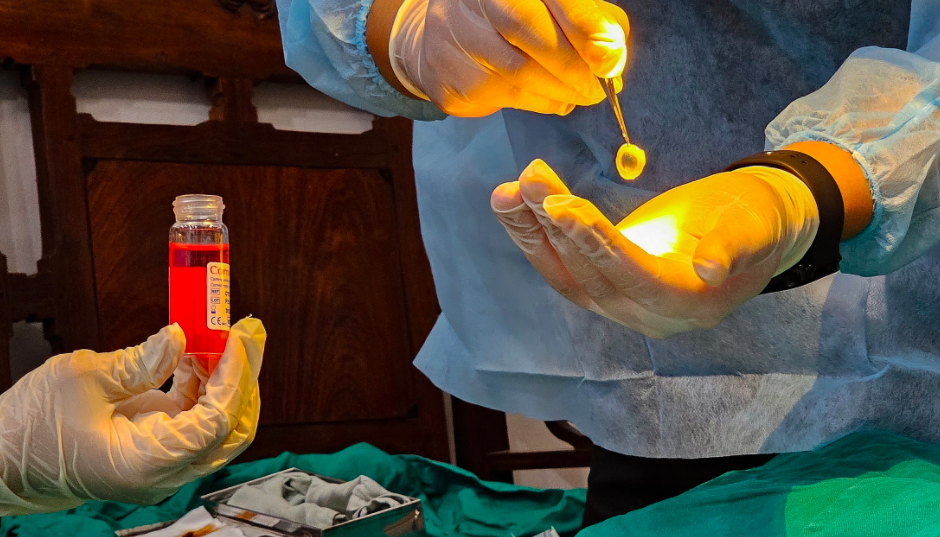 |
Donated corneas are placed in preservation vials. Photo: Thuy Duong.
The demand for corneas significantly outstrips the available supply. At the Central Eye Hospital, the waiting list for transplants exceeds a thousand cases. While specialized eye hospitals and medical facilities have established cornea banks and advocate for donations from brain-dead individuals, the donor supply remains very limited. This forces many patients to endure long waits or even lose their chance at treatment. For example, at the Central Eye Hospital in 2025, 94 donors provided 188 corneas, which were used for 180 transplant cases, still falling short of the extensive need.
Associate Professor Doctor Le Xuan Cung from the Cornea Department at the Central Eye Hospital explained, "The number of patients blinded by corneal diseases accumulates and increases over time, but the supply of corneas is insufficient to meet demand, currently relying mainly on limited domestic donors." He added that many cases require emergency transplants to preserve the eyeball, such as perforated or threatening corneal ulcers and severe infections uncontrollable by medication. Without available donor corneas, the eyeball must unfortunately be removed.
Beyond the shortage, traditional transplantation is not always an optimal solution for complex conditions. Many severe cases, including eye burns, intricate ocular surface damage, or multiple transplant failures, present challenges that conventional methods cannot adequately address. Therefore, seeking alternative solutions has become an essential trend in modern ophthalmology.
Globally, researchers are exploring and applying many new approaches, including artificial corneas and biomaterials. These advancements offer new hope for patient groups who previously had few effective treatment options. They help to proactively secure alternative materials and improve patient access to treatment, especially where human donor tissue is scarce.
Professor Ton Thi Kim Thanh, president of the Vietnam Ophthalmological Society, stated that biological corneas represent a new invention and an advanced biomedical material. They significantly expand the range of alternative materials available for treating corneal diseases. The development and application of this material are important not only technologically but also in helping to proactively replace human corneas in clinical practice, particularly given the ongoing limitations in donated corneal supply.
Le Nga