A year ago, Khai, 35, was diagnosed with ear fungus at Tam Anh General Hospital TP HCM. He stopped medication once his symptoms improved. Recently, he developed ear pain that spread to his head, along with tinnitus and dizziness. Doctor Tran Xuan Nguyen, an ear nose throat specialist at Tam Anh General Clinic District 7, performed an ear endoscopy on Khai. The procedure revealed a swollen ear canal lining, significant pus and mucus, and the presence of ear fungus. Khai was diagnosed with otitis externa, an outer ear infection caused by both fungus and bacteria. His ear lining was inflamed, congested, and earwax was firmly adhered.
Doctor Nguyen endoscopically removed the hardened earwax and prescribed a strong course of medication for severe infection.
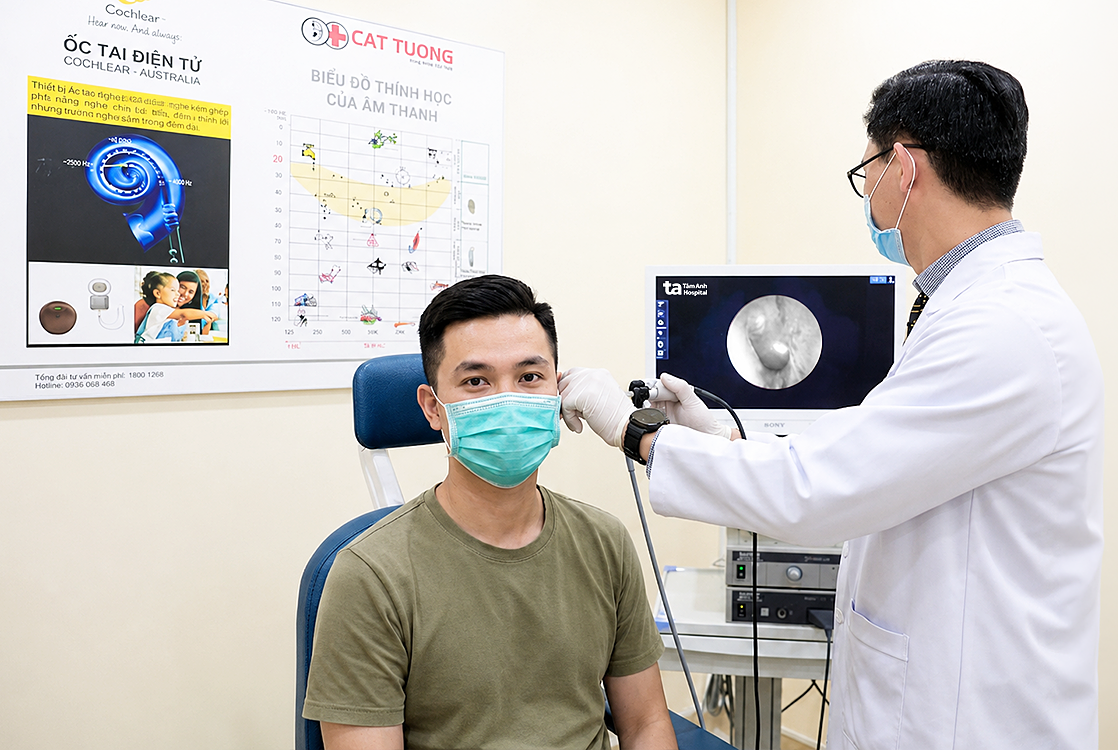 |
Doctor Xuan Nguyen performing an ear endoscopy on a patient. *Photo: Tam Anh General Clinic District 7* |
Ear fungus is primarily caused by two types of fungi: *Aspergillus* and *Candida*. The condition typically responds quickly to topical antifungal medications, with symptoms often reducing within a few days of treatment. This rapid improvement often leads many patients to prematurely stop their medication or skip follow-up appointments, despite medical advice to complete the full treatment course (approximately one to three weeks) and undergo regular ear canal cleaning to fully eradicate fungal filaments and spores.
Stopping medication prematurely means the infection has not fully healed. Residual fungus continues to thrive in the ear canal's warm, moist environment, creating ideal conditions for bacterial superinfection. At this stage, otitis externa is no longer solely fungal but a mixed infection of fungus and bacteria. This leads to increased ear canal swelling, more pus discharge, heightened pain, and a significantly prolonged treatment period.
Earwax possesses a slightly acidic nature, offering natural antibacterial and antifungal protection. Cleaning ears with non-sterile tools or fingernails can remove this protective layer, leading to scratches in the ear canal and creating an entry point for fungal infections.
Ear fungus can also spread by sharing ear cleaning tools or using unsterilized instruments. Individuals with conditions like atopic dermatitis, diabetes, or compromised immune systems face a higher risk of recurrent infections.
Doctor Nguyen emphasizes that for complete treatment and to prevent recurrent ear fungus, patients must strictly follow the full prescribed course of antifungal medication. They should also attend follow-up appointments and undergo regular ear canal cleaning until the fungus is entirely eradicated.
It is important to keep ears dry, gently wiping them after showering, shampooing, or swimming to prevent water from pooling in the ear canal. Avoid excessive ear cleaning with cotton swabs, fingernails, or hard objects, and refrain from professional ear cleaning services. Additionally, limit the continuous use of headphones and hearing aids.
Uyen Trinh
| Readers can submit questions about ear, nose, and throat conditions here for expert medical advice. |