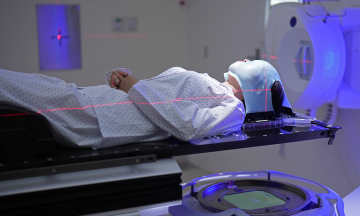
Four months ago, doctors diagnosed the Dong Nai man with hypopharyngeal cancer. After multiple tests, scans, and two rounds of chemotherapy, he entered a radiation therapy phase consisting of about 30 sessions, one daily, according to his treatment plan.
During a follow-up visit to Ho Chi Minh City Oncology Hospital, facility 2, on 3/7, doctors informed him after his simulation scan that a radiation plan, including defining the target area and calculating the dose, needed to be established before scheduling his treatment.
He expects to wait about three weeks, and the hospital will proactively call when his turn arrives. Doctors advised that registering for after-hours treatment could shorten the waiting time, but the cost after health insurance would be around 60-70 million VND, higher than the 40-50 million VND for regular appointments.
"I cannot afford the higher cost, so I have to wait longer", he said.
Recently, he has experienced frequent sore throats, a heavy feeling in his neck, and mild shortness of breath. Doctors instructed him to return for an immediate check-up if any unusual symptoms occurred. He plans to visit the hospital next week if his condition does not improve, hoping the hospital calls soon so he can begin treatment with peace of mind.
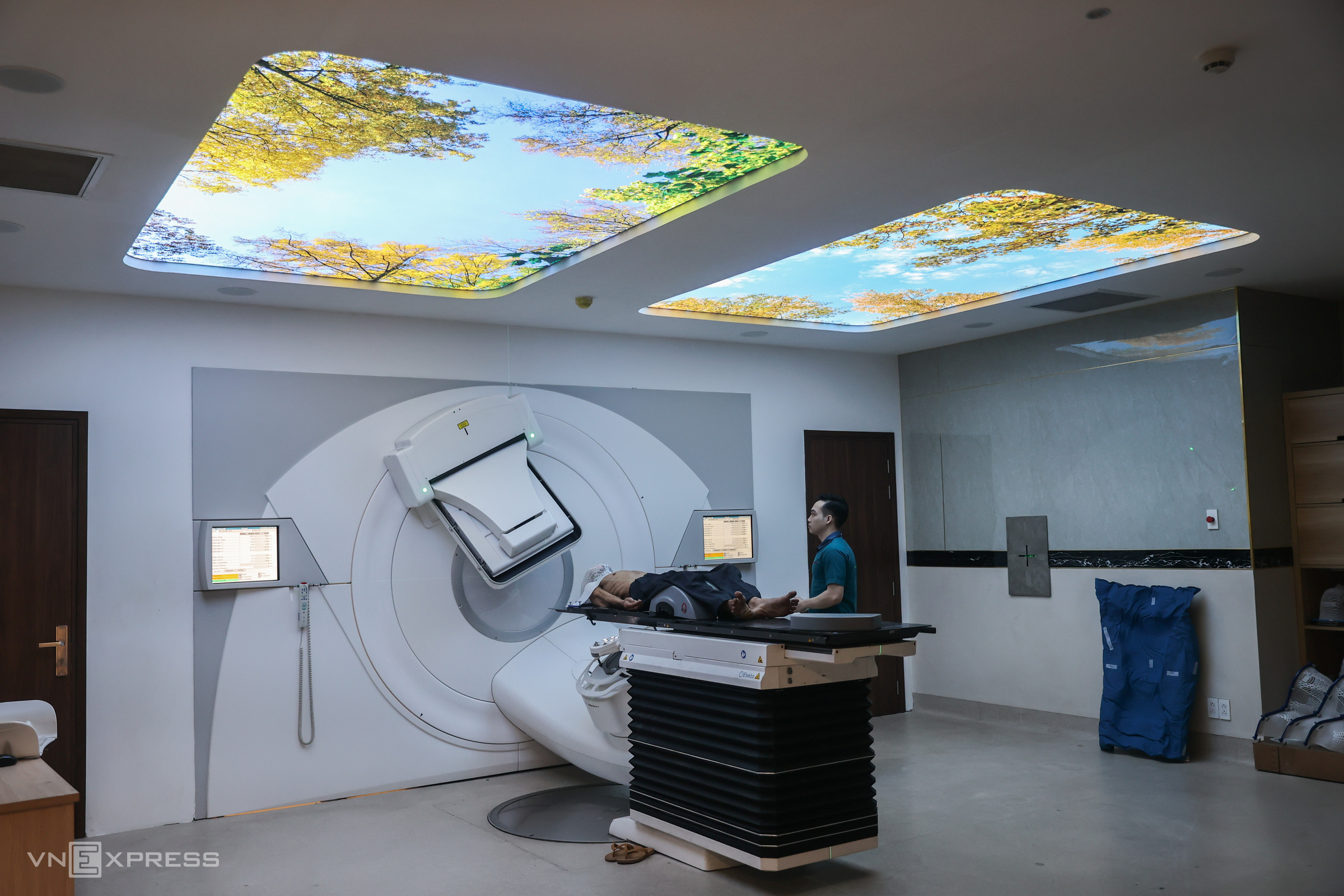 |
Radiation therapy for cancer patients at Ho Chi Minh City Oncology Hospital, facility 2. Photo: Quynh Tran |
It is not only patients awaiting radiation therapy; many families also nervously wait for surgery schedules. Ms. Thanh, residing in An Giang, shared that her sister, diagnosed with thyroid cancer that had metastasized to lymph nodes, received notification to be admitted in about two weeks. As the family prepared to return to Ho Chi Minh City, the hospital informed them of a one-week delay. "My sister thought she was about to have surgery and prepared everything. When she heard she had to wait longer, she was devastated and cried constantly, fearing her condition would worsen", Ms. Thanh recounted.
Many patients transferred to Ho Chi Minh City must travel back and forth between the hospital and their hometowns multiple times. Ms. Minh, 36, from Dong Thap, after thyroid cancer surgery locally, transferred under health insurance to facility 2 to prepare for radioactive iodine treatment. Believing the administrative process would only take one day, she left her young child at home and took an early morning bus to the city. After her examination, doctors scheduled an ultrasound three days later to complete the pre-treatment assessment.
"I had to return to Dong Thap because my young child was at home, and then come back for the appointment", she stated. Each follow-up visit incurs additional costs for travel, accommodation, and childcare for her family.
On cancer patient forums, many express anxiety after pre-anesthetic examinations, having waited for weeks without a call for hospital admission, or missing their scheduled radiation therapy dates, leading them to wonder whether to proactively contact the hospital. Some wait two weeks, others three weeks, and in some cases, it takes over one month for their turn.
According to Doctor Diep Bao Tuan, Director of Ho Chi Minh City Oncology Hospital, approximately 1,000 patients are currently awaiting surgery and nearly 700 are awaiting radiation therapy. Despite teams operating at full capacity, the average waiting time remains about three weeks, depending on the specialty and the priority level of each case.
He noted that the number of cancer patients is increasing, while most patients from the southern region still converge on Ho Chi Minh City for treatment. The oncology specialty often involves complex surgeries that extend for many hours, placing high pressure on the healthcare system.
"The biggest concern for patients is carrying a tumor in their body while waiting for treatment, but the hospital always prioritizes emergency cases or rapidly progressing cancers", he said, adding that less urgent cases are scheduled later, which generally does not significantly affect treatment effectiveness.
To reduce waiting times, the hospital is proposing to build facility 3 in the Ba Ria area to expand its capacity. In the long term, according to Doctor Tuan, the fundamental solution is to promote screening and early detection of cancer to alleviate pressure on tertiary hospitals. The unit is participating in Ho Chi Minh City's universal health check-up program and developing screening programs to limit the number of late-stage diagnoses.
"We hope that in the future, we will have more resources to shorten waiting times to just a few days, helping patients feel less stressed and more confident in their treatment", Doctor Tuan stated.
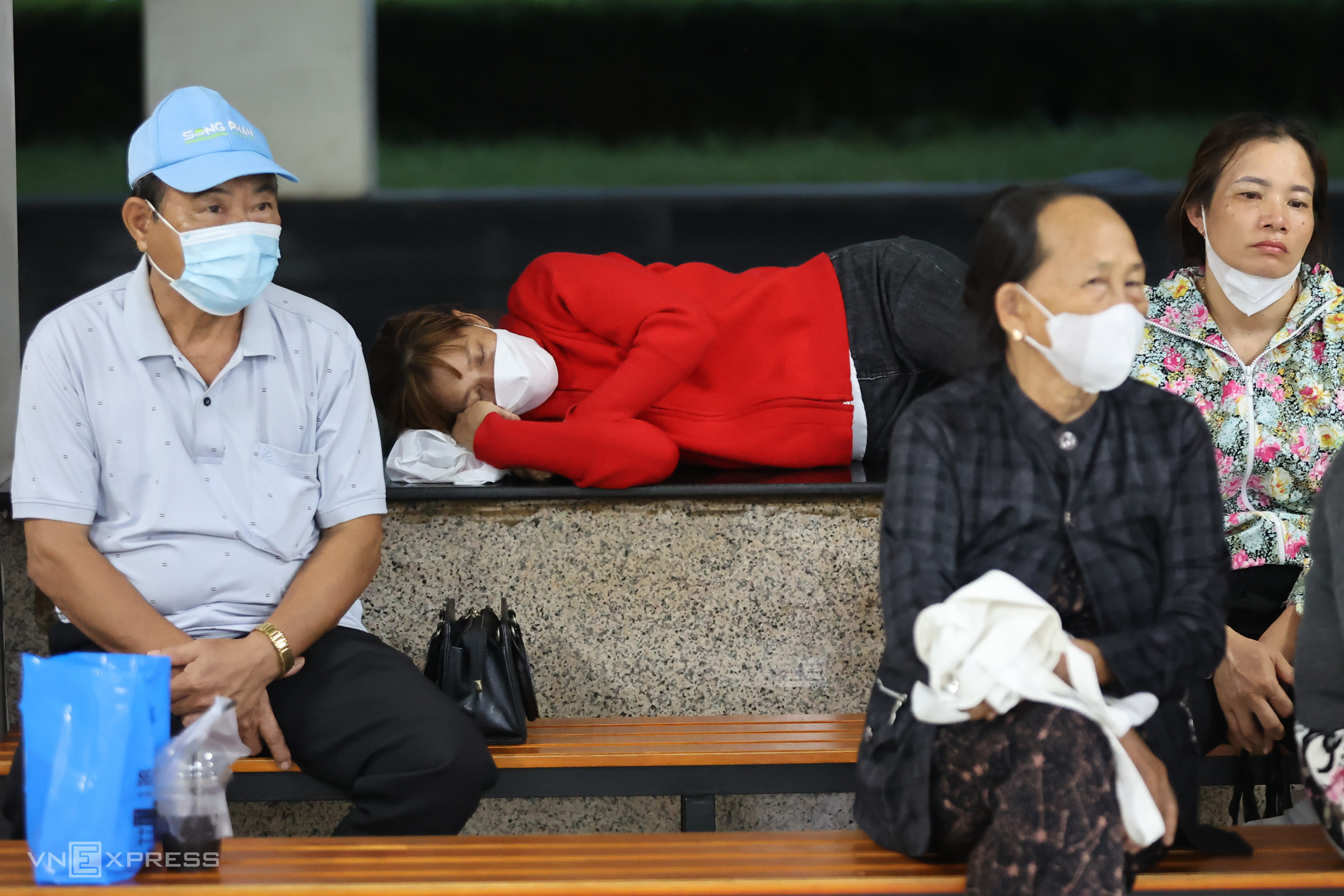 |
Patients waiting for examinations at Ho Chi Minh City Oncology Hospital, facility 2. Photo: Quynh Tran |
Vietnam records a steady increase in new cancer cases each year, placing it among countries in the region with high incidence and mortality rates. Most patients are diagnosed at a late stage, when tumors have progressed or metastasized, leading to prolonged, costly, and less effective treatment.
Tertiary oncology hospitals, particularly in Ho Chi Minh City and Hanoi, are frequently overwhelmed due to patients converging from various provinces. Meanwhile, treatment capacity in local areas remains limited, forcing patients to travel long distances, endure lengthy waits, and bear additional financial burdens.
The health sector is intensifying efforts in screening, early detection, and expanding the treatment network to reduce pressure on tertiary care and enhance cure rates for patients.
Le Phuong
* Patient names have been changed