


On 15/5, Doctor Trinh Thuy Lien from the National Hospital for Tropical Diseases stated that upon admission, the man's pharyngeal mucosa was inflamed and red, with significant mucus accumulation narrowing his glottis. According to his family, the man regularly chewed ice cubes to cool down quickly after playing sports or being in the sun.
Doctors diagnosed the patient with a sub-type left peritonsillar abscess and acute epiglottic edema. The infection was severe, with a large abscess and calcified lesions causing narrowing of the pharynx and airway.
The treatment team assessed this as a difficult case due to the patient's age, the complex location of the abscess, and the nearly complete narrowing of his airway. The process of oral intubation for surgical anesthesia faced a high risk of failure. Despite this, after 5 days of intensive treatment, the patient's health improved.
Doctor Lien explained that suddenly consuming ice-cold water when the body is hot creates a significant temperature difference in the throat. This strongly irritates the pharyngeal mucosa and tonsils, providing conditions for bacteria to grow, causing inflammation and abscess formation.
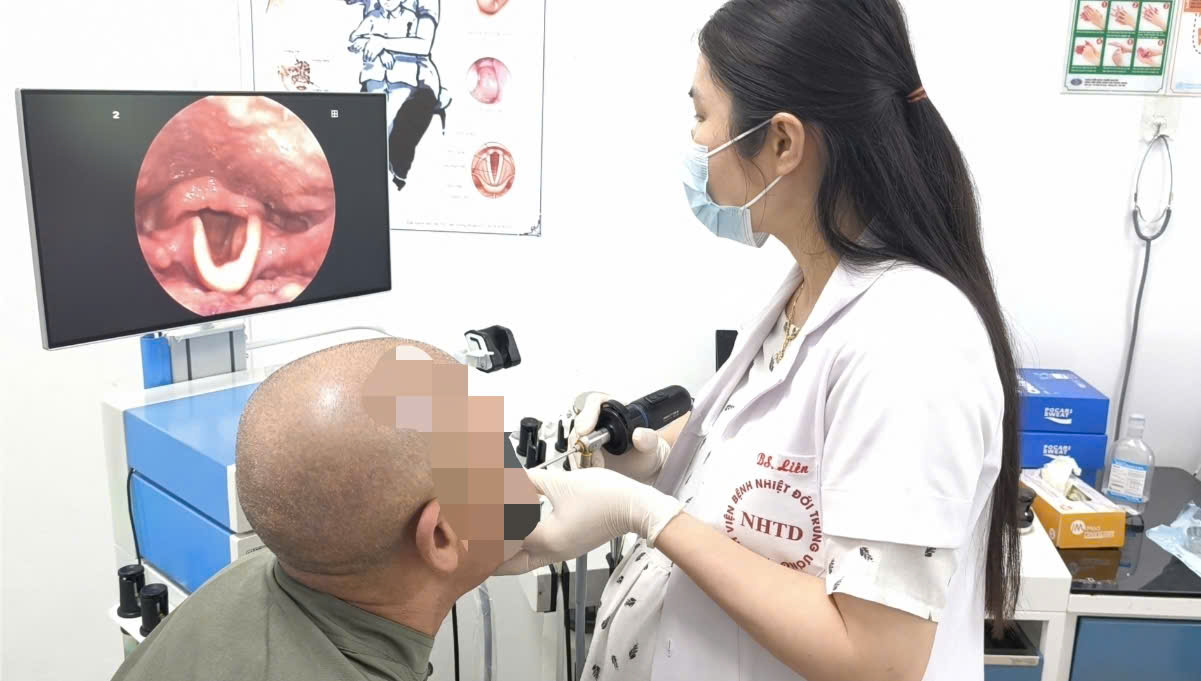 |
A doctor examines the patient. Photo: Hospital provided
Experts advise people to abandon the habit of chewing ice or regularly drinking cold water. This practice not only affects dental health but also increases the risk of chronic pharyngitis, tonsillitis, and complications such as peritonsillar abscess. People should absolutely avoid drinking overly cold water immediately after sun exposure. Instead, use warm water or room-temperature filtered water, taking small sips to allow the body to adapt gradually.
A sub-type peritonsillar abscess poses a significant health risk. When symptoms like sore throat accompanied by difficulty swallowing, shortness of breath, and high fever appear, people need to seek immediate attention at specialized medical facilities for examination and timely intervention to prevent the risk of respiratory failure leading to death. Doctors also warn people against self-medicating at home or enduring the pain, to avoid the abscess spreading and causing airway obstruction upon hospital admission.
Thuy An


