Many people believe that bun and pho feel "lighter" than rice. This perception arises because these noodle dishes, with their abundant broth and soft, easily digestible texture, require less stomach contraction after eating, leading to a less heavy feeling. Rice, conversely, has a denser, drier texture, resulting in a more pronounced and lasting sensation of fullness. Yet, the feeling of fullness does not accurately reflect the actual calorie intake.
From an energy perspective, 100 g of cooked white rice, a starch source, provides about 130 kcal. Bun offers less, at approximately 110 kcal for the same amount, while pho noodles contain around 145 kcal per 100 g. This minor caloric difference suggests that when only accounting for starch calories, consuming bun or pho does not inherently offer a weight loss advantage over rice.
Beyond energy density, food structure also influences weight. The starch in pho noodles and bun is processed, breaking down its structure and making it easier to digest. This rapid digestion can lead to earlier hunger, often causing individuals to consume additional snacks, thereby increasing their total daily calorie intake.
The key difference also lies in the accompanying ingredients. A bowl of pho bo (beef noodle soup) or bun rieu (crab noodle soup) contains not only noodles but also broth rich in fat, meat, pork sausage, and fried shallot oil, all contributing to a higher overall calorie count. The broth often derives its sweetness from bones and spices, and refined sugar is frequently added for flavor enhancement, further boosting the meal's total energy. This explains why individuals who reduce rice intake may still gain weight when consuming bun or pho.
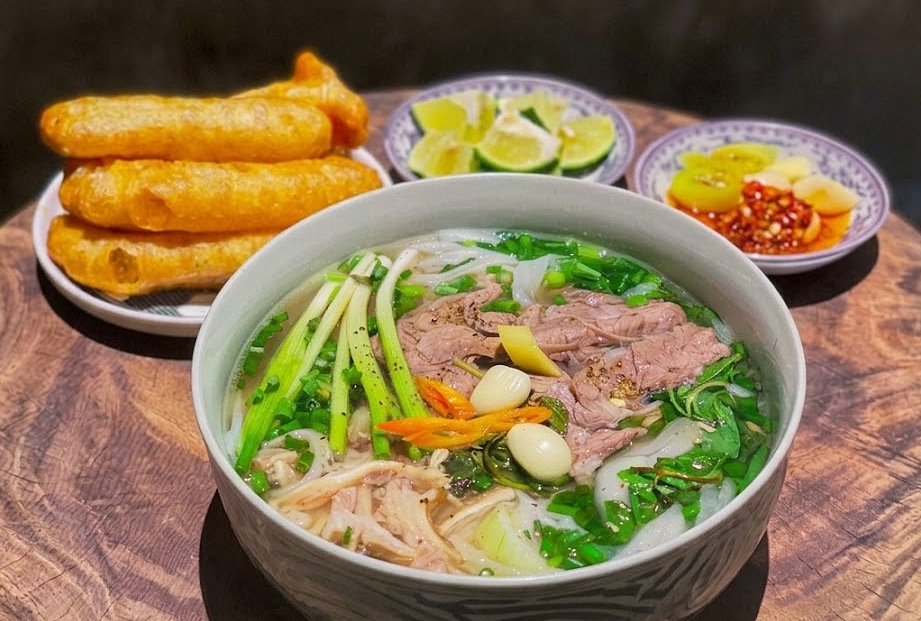 |
Eating pho with accompanying dishes like beef and fried dough sticks increases calorie intake. *AI-generated image*. |
Rice, a staple in the Vietnamese diet, does not cause weight gain when consumed appropriately. When eating rice, prioritize boiled, steamed, or lightly braised dishes, and limit fried or stir-fried foods with excessive oil. Pairing rice with green vegetables and lean protein sources such as chicken, fish, or tofu helps balance nutrition, promotes satiety, and prevents excess calorie intake.
When consuming bun or pho, include plenty of green vegetables and opt for low-fat protein sources. This ensures nutritional balance, increases fiber, and promotes longer-lasting fullness. Additionally, be mindful of salt content. An average bowl of pho typically contains 2,5 to 5 g of salt. Given that the World Health Organization (WHO) recommends adults consume less than 5 g of salt daily, it is advisable to limit broth consumption to avoid exceeding the permissible intake.
Doctor Tran Quyen An
Nutritionist
Tam Anh General Hospital, Hanoi