Answer:
Pork offal is a popular dish, especially among men. However, to achieve crispy white offal, many businesses use hydrogen peroxide, polymers, or industrial bleaching agents. These agents can cause stomach ulcers and increase cancer risk. Therefore, whiter offal does not necessarily mean it is cleaner or safer.
Furthermore, 100g of pork offal contains approximately 154-277 mg of cholesterol, whereas 100g of lean meat contains only about 60-70 mg. The World Health Organization (WHO) recommends that each person consume no more than 300 mg of cholesterol per day. This means that even a small plate of offal in a meal can cause the body to exceed the safe cholesterol limit. Pork offal contains a high purine content, over 150 mg/100g, and is considered an "enemy" for individuals with high blood uric acid. Frequent consumption can trigger acute gout attacks and increase the risk of kidney stone formation.
As a digestive and excretory organ, pork offal accumulates toxic impurities. Toxicological tests show that the levels of lead (Pb) and cadmium (Cd) in offal are often many times higher than in meat. Long-term accumulation of cadmium can cause kidney tubule damage and brittle bones.
In industrial farming, antibiotic groups are most concentrated in the digestive tracts of livestock. Frequent consumption can inadvertently lead to humans ingesting residual antibiotics.
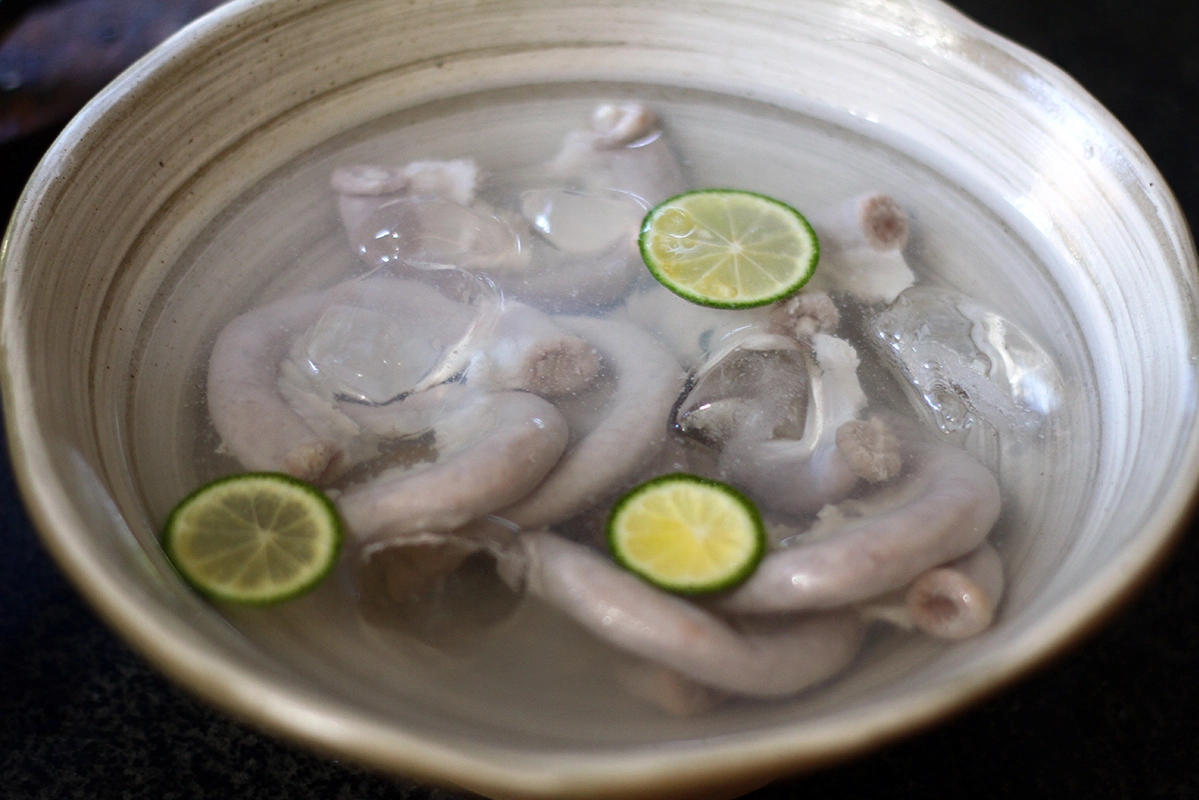 |
It is advisable to clean offal thoroughly with salt and lemon yourself, avoiding unusually white offal from unregulated markets. *Photo: Bui Thuy* |
To protect health, people should not consume pork offal more than two to three times per month. Individuals over 40 years old and those with underlying medical conditions (hypertension, diabetes, gout, dyslipidemia) should severely limit or completely avoid it.
It is advisable to clean offal thoroughly with salt and lemon yourself, avoiding unusually white offal from unregulated markets. People should purchase offal from reputable sources, select offal from healthy animals, and clean it thoroughly before preparation.
When eating, ensure pork offal is fully cooked to avoid the risk of bacterial infection and food poisoning. Animal offal should be prepared and consumed hot to reduce the risk of infection. Absolutely do not eat rare offal or blood pudding.
Doctor Le Thi Huong Giang
Head of Nutrition and Dietetics Department, 19-8 Hospital (Ministry of Public Security)