Answer:
Intraoperative neurophysiological monitoring (IOM) is a set of techniques used for real-time tracking of neurophysiological signals. This method is widely applied in neurosurgery, covering both cranial and spinal procedures.
During brain tumor surgery, surgeons aim to remove the entire tumor while preserving brain regions responsible for vital functions such as language, motor skills, vision, hearing, and sensation.
The intraoperative neurophysiological monitoring system helps surgeons delineate the tumor from functional areas that need preservation, guiding surgical maneuvers. Neurophysiology experts assist by evaluating and issuing risk warnings for each step, enabling surgeons to limit functional damage to patients and ensure a better quality of life post-surgery.
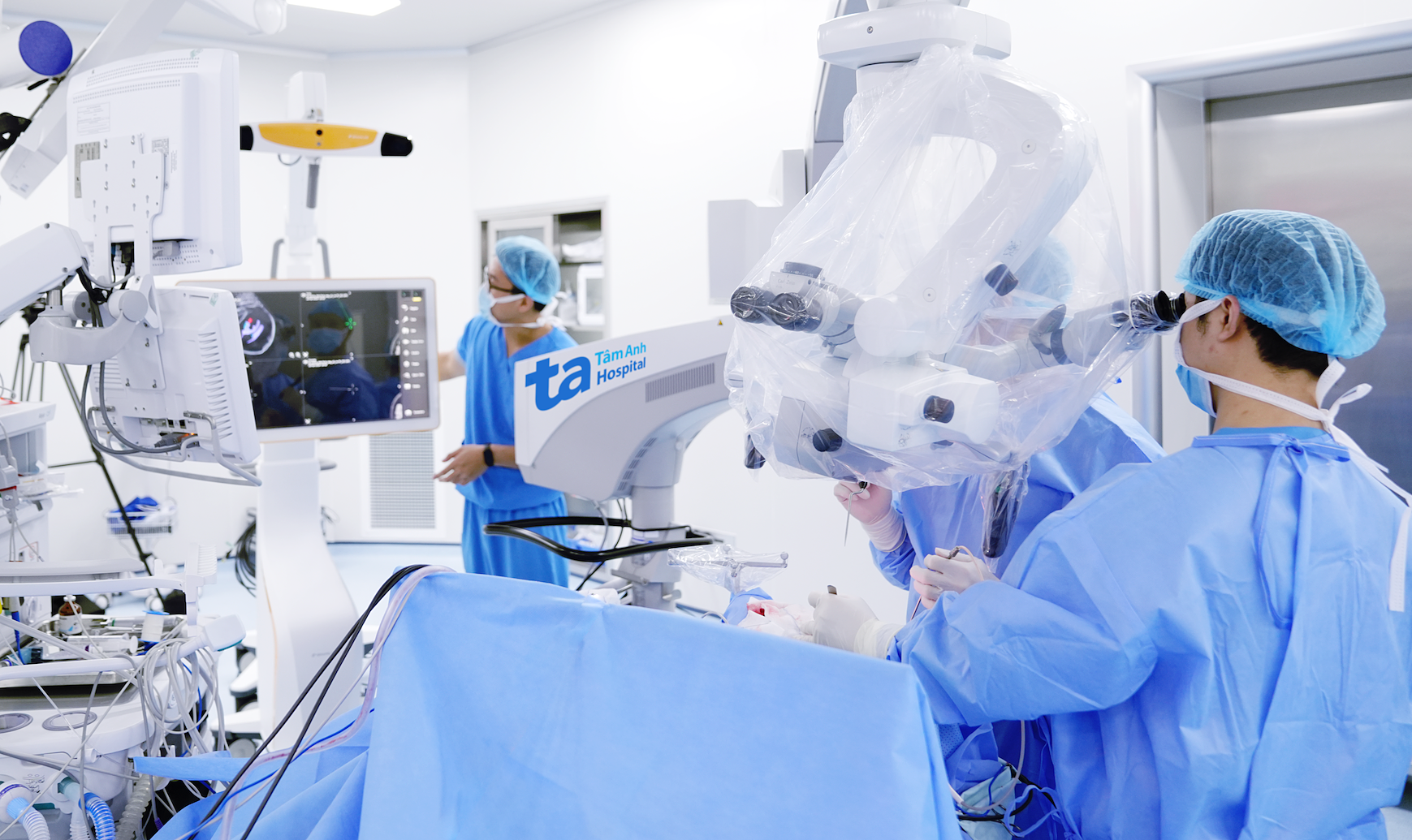 |
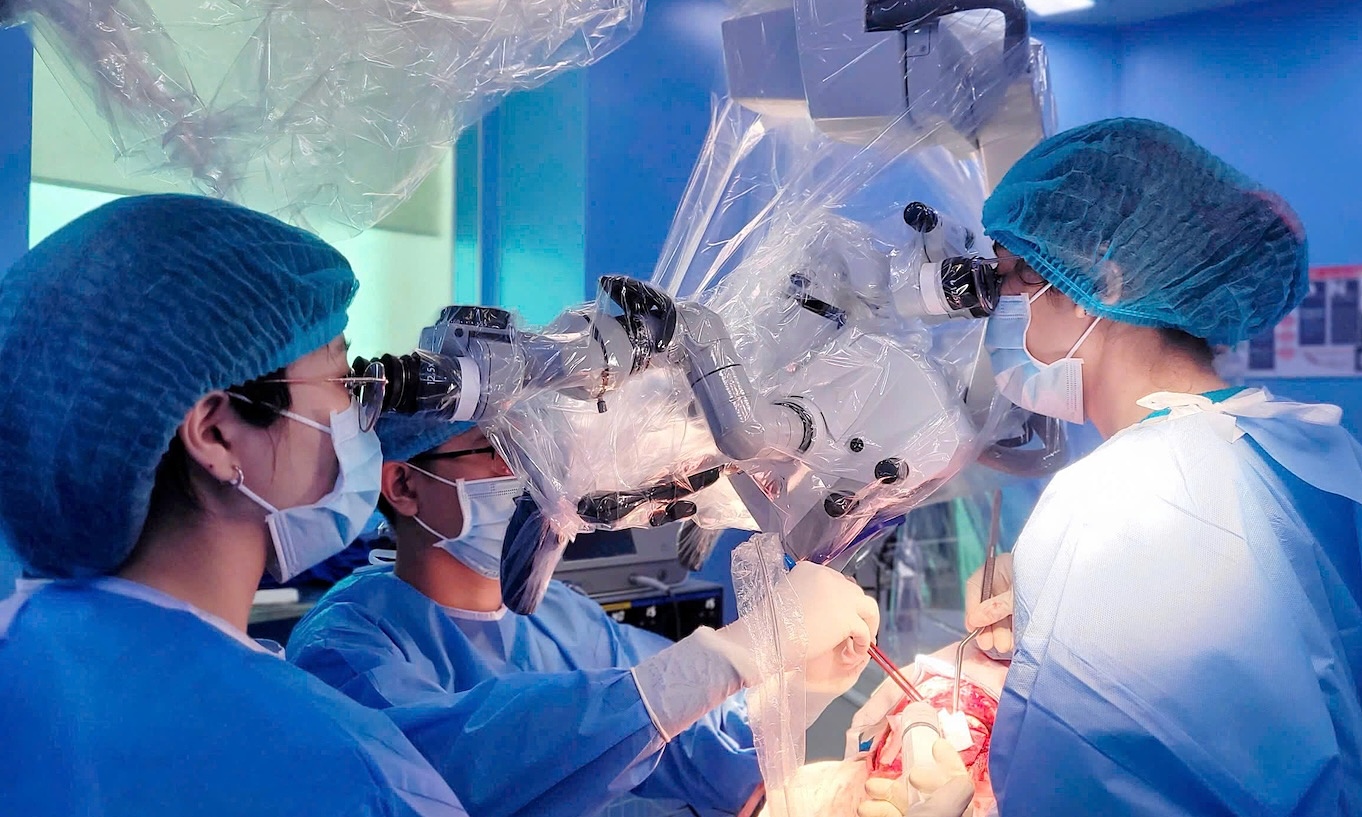
Bac si phau thuat u nao cho nguoi benh. Anh: Benh vien Da khoa Tam Anh
Before surgery, the anesthesiologist meticulously plans the anesthesia, selecting drugs and calculating doses to prevent interference with neurophysiological signals. Electrodes are attached to the patient's arms, legs, and muscle groups corresponding to brain regions affected by the tumor. After the surgeon opens the skull and exposes the brain, microcurrent electrodes directly stimulate the brain's surface, helping to map functional areas.
Surgeons use this map to operate on the tumor, avoiding the patient's functional brain regions. If a surgical maneuver places pressure on healthy brain tissue or reduces blood supply, the signals on the monitor change immediately. The expert then alerts the surgeon to adjust the procedure for greater safety.
Intraoperative neurophysiological monitoring is an advanced technology requiring close collaboration among a team of experts: anesthesiologists, surgeons, and neurophysiology specialists. Common monitoring techniques include: direct cortical stimulation (DCS), motor evoked potentials (TcMEP), and somatosensory, visual, and brainstem auditory evoked potentials.
Since you have a brain tumor and have been advised on this surgical technique, you should visit a specialized hospital for effective treatment.
Master, Doctor Le Van Ngan
Department of Neurosurgery - Spine
Tam Anh General Hospital Hanoi
| Readers can submit questions about ear, nose, and throat conditions here for a doctor's response. |