Ms. Hue, 68, recently faced a serious health issue, nearly losing her sight. Doctors at the High-Tech Eye Center, Tam Anh General Hospital, Ho Chi Minh City, diagnosed her with absolute neovascular glaucoma, a severe and challenging condition. This diagnosis came after she reported significant vision loss in her right eye and severe impairment in her left.
Dr. Duong Minh Phuc, from the High-Tech Eye Center, detailed Ms. Hue's condition. Her left eye retained only 3/10 vision, allowing her to see clearly within 30-50 cm, but causing fatigue and tearing. Her right eye pressure was over 50 mmHg, while her left was 27 mmHg; both readings are significantly higher than the normal range of 11-21 mmHg. A fundus examination revealed neovascularization and hemorrhage in both the iris and retina.
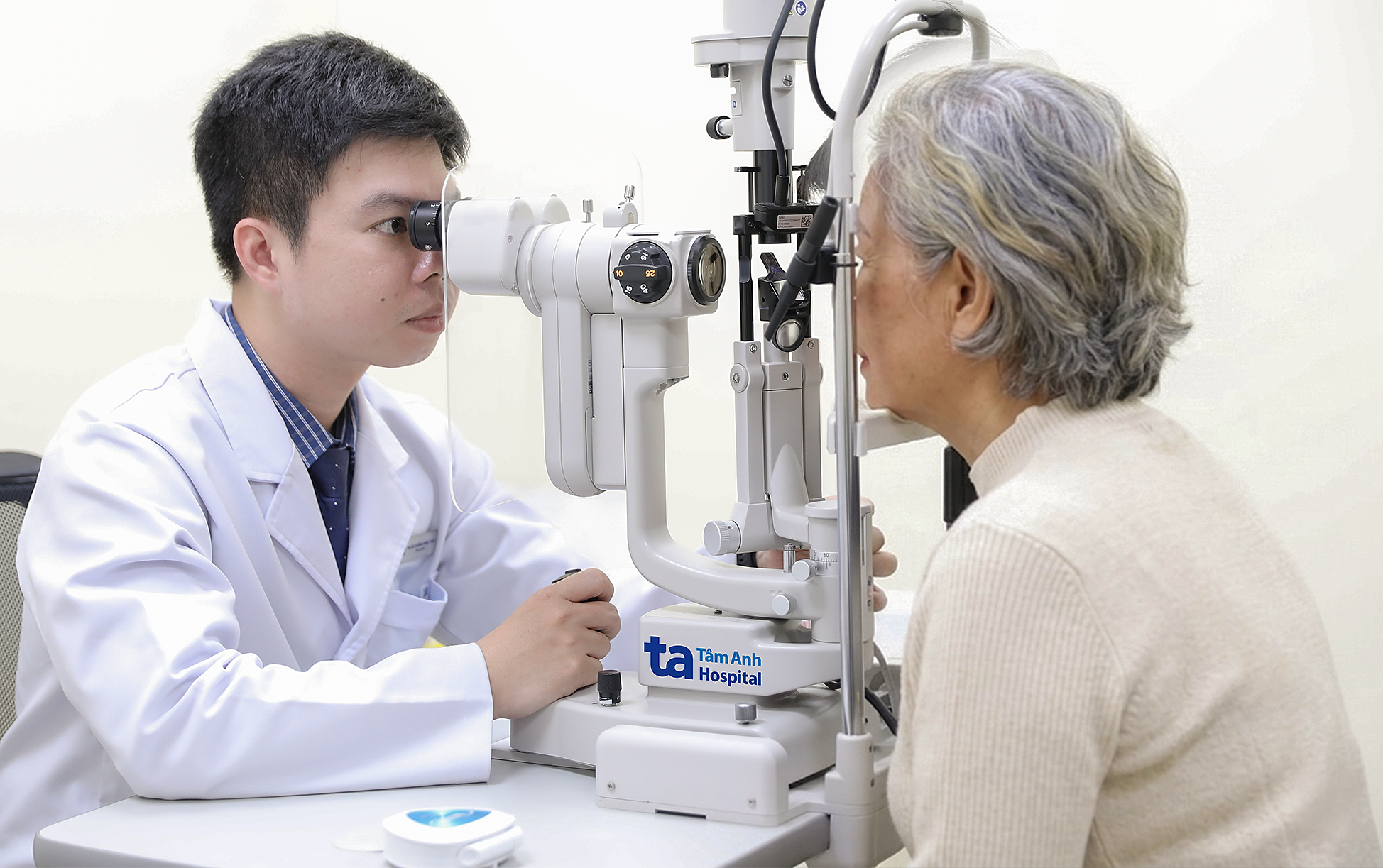 |
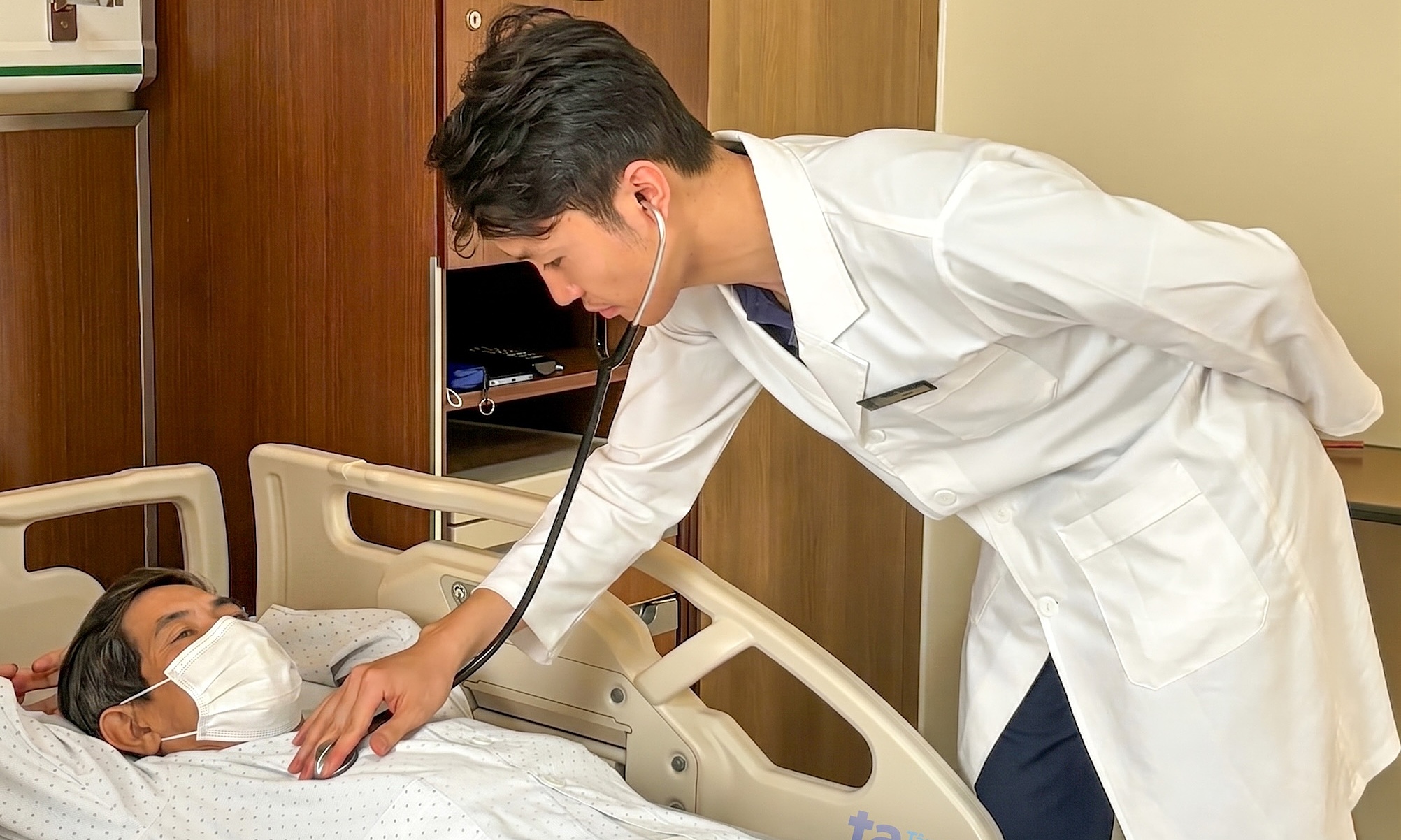
Doctor Phuc examines Ms. Hue's eyes. *Photo: Tam Anh General Hospital*. |
Doctor Phuc explained that glaucoma develops when the eye's aqueous humor, which is continuously produced, cannot drain properly. This fluid accumulation increases intraocular pressure, damaging the optic nerve. In Ms. Hue's case, severe diabetes and chronic kidney failure damaged the blood vessels supplying her eyes, causing ischemia. Her body responded by forming abnormal new blood vessels in the drainage area or iris, worsening the blockage and further increasing intraocular pressure. If untreated, this condition can lead to irreversible blindness, known as absolute neovascular glaucoma.
Treating Ms. Hue presented unique challenges due to her underlying health issues. Standard glaucoma treatment involves systemic intraocular pressure-lowering medication and surgery to create a new drainage pathway. However, Ms. Hue's stage 3 kidney failure meant systemic medication risked electrolyte imbalance and further health complications. Since her right eye had already lost vision and was no longer painful, doctors deemed aggressive intervention potentially more harmful than beneficial. Consequently, doctors opted for conservative treatment, using eye drops to control intraocular pressure and protect her remaining eye.
Following one week of this conservative treatment, Ms. Hue's left eye pressure decreased to 16 mmHg, and her right eye to 38 mmHg, with no reported pain. Despite this improvement, she still faces a risk of severe progression in her left eye, necessitating long-term monitoring. Patients experiencing symptoms such as eye pain, seeing red-green halos around lights, decreased vision, or difficulty tracking moving objects should seek immediate eye examination.
Glaucoma is a leading cause of irreversible blindness worldwide, stemming from optic nerve damage. Neovascular glaucoma often progresses silently. It is identifiable by neovascularization appearing in the iris or anterior chamber angle, which then spreads. Symptoms include blurred vision, red eyes, dull or severe pain, and corneal edema.
Ngoc Kim Tham
*Patient's name has been changed*
| Readers can submit questions about ophthalmic diseases here for doctors to answer. |