


Doctor Le Thi Yen, Head of Quan Su Internal Medicine Department at K Hospital, announced on 22/4 that pathology results revealed the patient's bilateral breast tumors had distinct characteristics. The right breast tumor was triple-negative, while the left was luminal. Given these inherent differences, personalized treatment required careful discussion and consideration before deciding. The patient was also diagnosed with stage 4 due to bone metastasis.
Doctor Yen stated, "This situation often means treatment goals extend beyond merely focusing on the disease; they also involve controlling the illness, reducing tumors and lesions, limiting progression, extending survival, and ensuring the ability to maintain daily activities." She added that an incorrect treatment choice would be ineffective, waste critical time, and risk negatively impacting the patient's health and mental well-being.
After considering various treatment options and the patient's quality of life, doctors and the patient opted for prolonged systemic treatment, which proved effective, safe, and economical. The patient tolerated the medication well, with lesions gradually reducing over treatment cycles and no side effects observed. The initial right breast tumor, measuring 15x20 cm, shrank to 1x1 cm, while the left breast tumor, originally 2x2 cm, reduced to one cm.
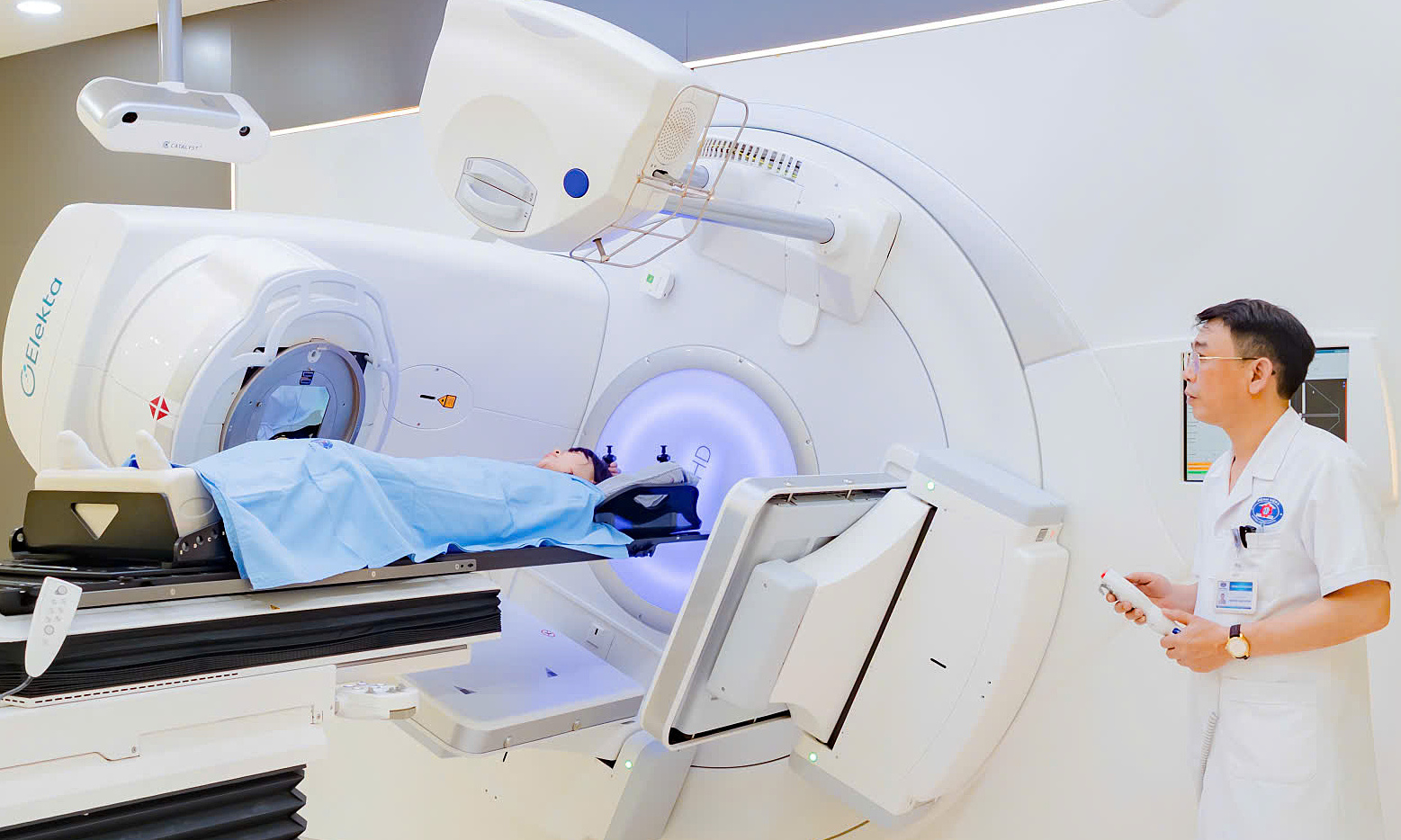 |
Patient undergoing cancer screening at K Hospital. *Photo: Ha Tran* |
Doctor Yen emphasized that stage 4 breast cancer is not a death sentence. Personalized treatment significantly improves patient response rates and quality of life, requiring tailoring to each individual. The careful selection of chemotherapy and combined treatments, matched to the specific biological subgroups of the two tumors in both breasts, along with close monitoring by doctors, led to the patient's stable condition and improved prognosis.
Breast cancer is a common cancer with a high mortality rate. According to GLOBOCAN 2022, Vietnam recorded 24,563 new cases, making it the leading cancer among women, accounting for 28.9% of all female cancer cases, with 10,008 deaths. Significant advancements in treatment are now improving patients' quality of life. Modern radiotherapy techniques reduce complications, while reconstructive breast surgery not only restores physical form but also boosts confidence and psychological stability for women post-treatment. Consequently, patients not only live longer but also experience a substantial improvement in their quality of life.
However, early detection is crucial for treatment effectiveness. Therefore, women aged 40 and above should undergo screening examinations. Regardless of age, women should also perform self-breast examinations at home 3-5 days after their menstrual period, and seek medical attention if any abnormalities are found.
Le Nga


