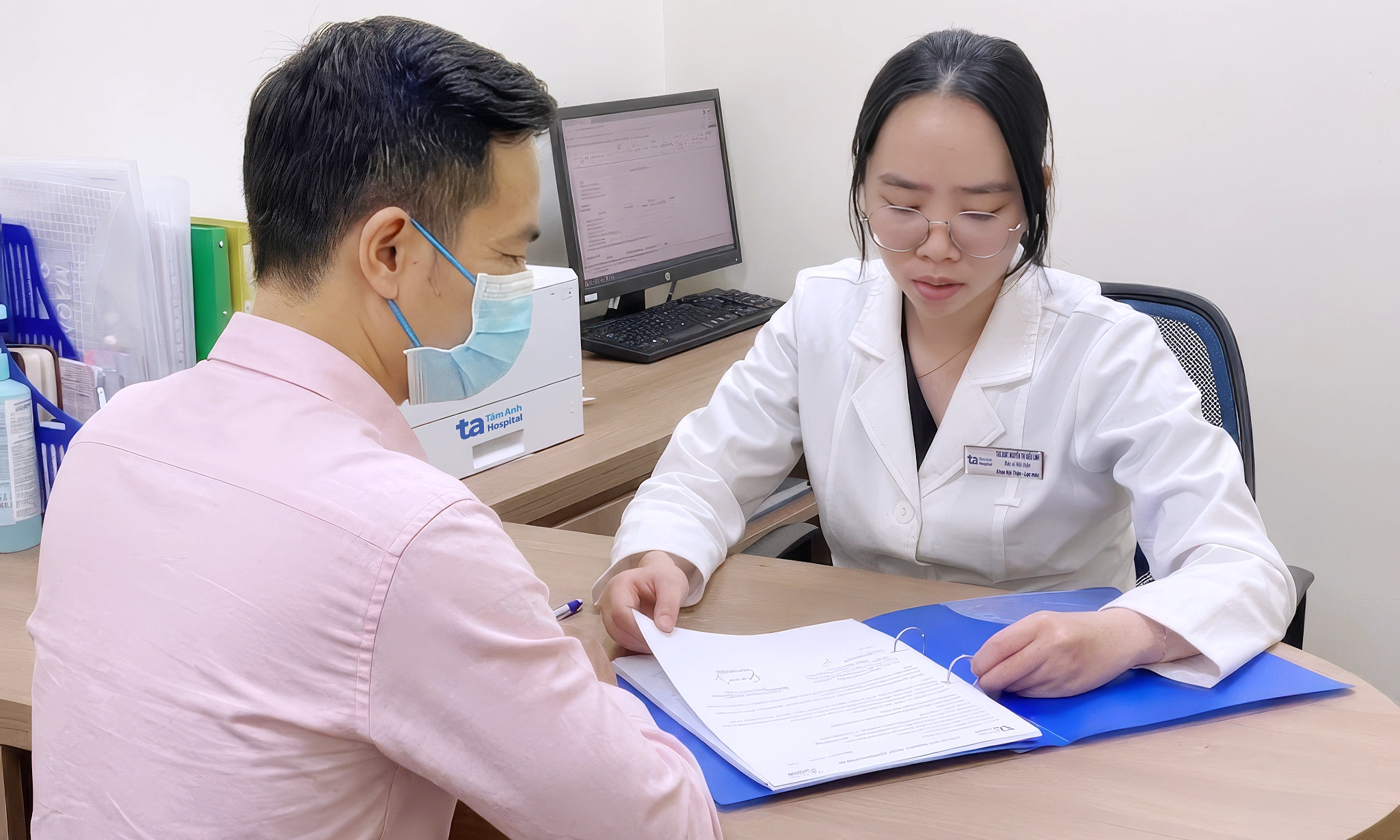
Ms. Chau visited Tam Anh General Hospital, Ho Chi Minh City, after two years without menstruation. Prior to this, her cycles were irregular, sometimes lasting two to three months, and occasionally extending to six or seven months between periods.
Tests revealed the patient's estrogen levels were low, below 10 pmol/L (normal estrogen levels for women of reproductive age are 70-220 pmol/L). Her ovarian reserve index (AMH) was only 0.9 ng/ml, approximately two to three times lower than the average for her age. The number of ovarian follicles was low, indicating ovarian aging, almost depleted like someone in menopause.
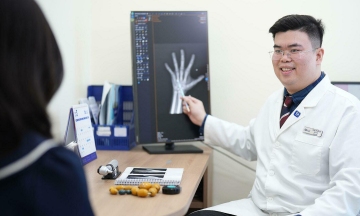
Doctor Nguyen Thi Kim Tuyen, from the Department of Endocrinology and Diabetes, stated that Ms. Chau faces a high risk of infertility and has a low chance of natural conception due to significantly diminished ovarian function.
 |
Doctor Tuyen advises Ms. Chau on treatment. Photo: Tam Anh General Hospital
Typically, ovarian aging occurs during a woman's menopausal stage, between 41 and 55 years old. However, many cases involve premature ovarian failure, affecting fertility. Beyond genetic factors and autoimmune diseases, premature ovarian aging is also linked to lifestyle choices.
Ms. Chau shared that she had avoided rice and carbohydrates for nearly three years, consuming only vegetables, believing that "carbohydrates increase insulin, harming the ovaries."
Doctor Tuyen clarified that completely eliminating carbohydrates to reduce insulin and protect the ovaries is inaccurate information. When the body does not receive diverse nutrient groups, it leads to deficiencies in nutrition and hormones, including ovarian hormones. This organ, if not properly nourished for an extended period, accelerates its degeneration and functional decline.
Insulin is an essential hormone that helps the body sustain life. After each meal, insulin is secreted to transport glucose into cells, nourishing the brain, muscles, uterus, and ovaries. An increase in insulin after meals is a normal and necessary physiological response. Only individuals who are obese or prediabetic with chronic insulin resistance need to restrict carbohydrates to prevent elevated insulin from negatively impacting the ovaries.
Completely cutting out carbohydrates can also lead to insulin deficiency, which may inhibit the hypothalamus (the area regulating reproductive hormones), resulting in an absence of ovulation and reduced chances of conception.
The doctor advised Ms. Chau to abandon her strict diet and instead adopt a balanced diet while undergoing hormone replacement therapy to improve her estrogen levels. Currently, there is no effective treatment for premature ovarian aging. "If she wishes to have children, Ms. Chau will require assisted reproductive technologies such as in vitro fertilization," Doctor Tuyen said.
Bach Duong
The patient's name has been changed.
| Readers can send questions about endocrine diseases here for doctors to answer. |