According to CNN on 11/12, a joint investigation by 14 European public broadcasters, including the BBC, uncovered a much larger scope to the incident than the 67 children initially reported in May. Data gathered from public record requests and patient interviews confirmed that the man donated samples at the European Sperm Bank (ESB) in Denmark. His samples were then distributed to 67 clinics across 14 countries for fertilization. The BBC cautioned that the actual number of affected individuals could be higher, as the investigation team has not yet compiled complete data from all involved nations.
The donor carried a rare mutation on the TP53 gene, which causes Li-Fraumeni Syndrome (LFS). This genetic disorder puts patients at high risk of developing various types of cancer. According to data from the Cleveland Clinic, LFS patients have a 90% chance of developing cancer before the age of 60, with about 50% developing the disease before 40. At the time of donation, the man was healthy and unaware he carried the mutation.
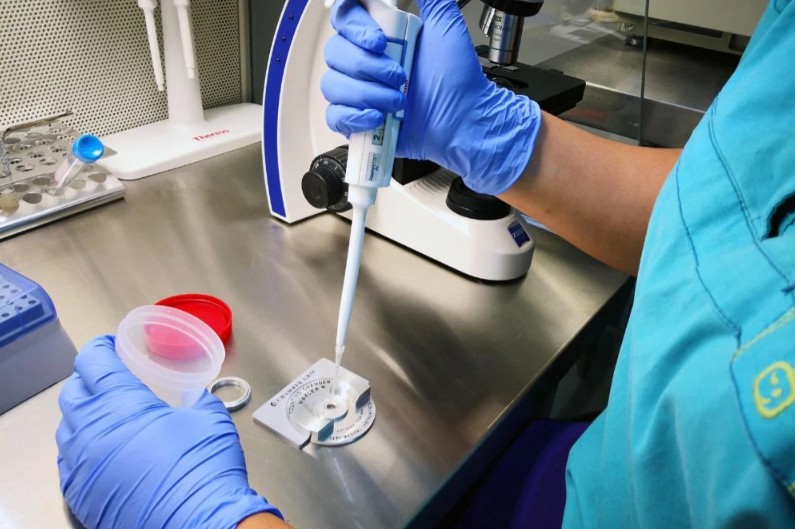 |
Inside a sperm bank in California, USA. *Sperm Bank*
While the exact number of children among the nearly 200 who inherited the faulty gene remains undetermined, experts warn that the likelihood of children avoiding cancer is low. In a report presented at the annual conference of the European Society of Human Genetics, Edwige Kasper, a biologist at Rouen University Hospital (France), disclosed the list of the first 67 affected children. 10 of these children were diagnosed with serious conditions such as brain tumors and Hodgkin lymphoma; 13 others carried the gene but had not yet developed the disease. Experts stated that the young victims will require lifelong regular medical tests and check-ups, and face a 50% chance of transmitting the mutation to the next generation.
Professor Clare Turnbull at the Institute of Cancer Research London described this as a "devastating diagnosis" for families. She characterized the incident as an unfortunate coincidence of two rare factors: the donor carried a gene mutation with a prevalence of less than one in 10,000 people, and his sperm samples were used to conceive an excessively large number of children. Professor Mary Herbert from Monash University (Australia) agreed, suggesting the incident exposed regulatory loopholes. She called for authorities to implement more comprehensive gene screening and strict control over the number of children born from a single donor.
Julie Paulli Budtz, an ESB representative, affirmed that the unit had fully complied with the laws and recognized scientific testing procedures at the time, but expressed regret about the serious impact on families. The sperm bank supports limiting the number of children born from a single donor and believes that the lack of harmonization in national laws is the root cause of the problem. ESB called on the European Union to quickly unify regulations to prevent a similar scenario from recurring.