Doctor of Science, Doctor Le Phuc Lien, Head of the Female Urology Unit, Center for Urology - Nephrology - Andrology, Tam Anh General Hospital, TP HCM, stated that conservative treatments were no longer effective for Ms. Hang, necessitating surgery.
Doctor Lien, along with Master of Science, Doctor, First-Degree Specialist Nguyen Van Nghia, opted not to use synthetic mesh. Instead, they utilized the patient's own rectus abdominis fascia to create a "hammock" that supports the urethra when intra-abdominal pressure increases. The autologous tissue is formed from the fascia of the patient's own transverse abdominis, internal oblique, and external oblique muscles.
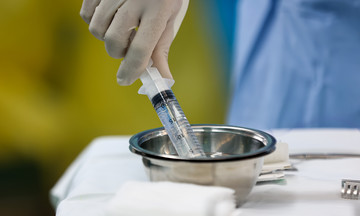
According to Doctor Lien, this method helps avoid complications associated with synthetic grafts, boasting a success rate of up to 95%. However, the most challenging aspect is obtaining a fascial strip of suitable length and sufficient durability to suspend the urethra, while minimizing patient trauma. The harvested tissue is preserved in saline solution, with excess adipose tissue removed to reduce the risk of inflammation or necrosis before being reinserted into the patient's body.
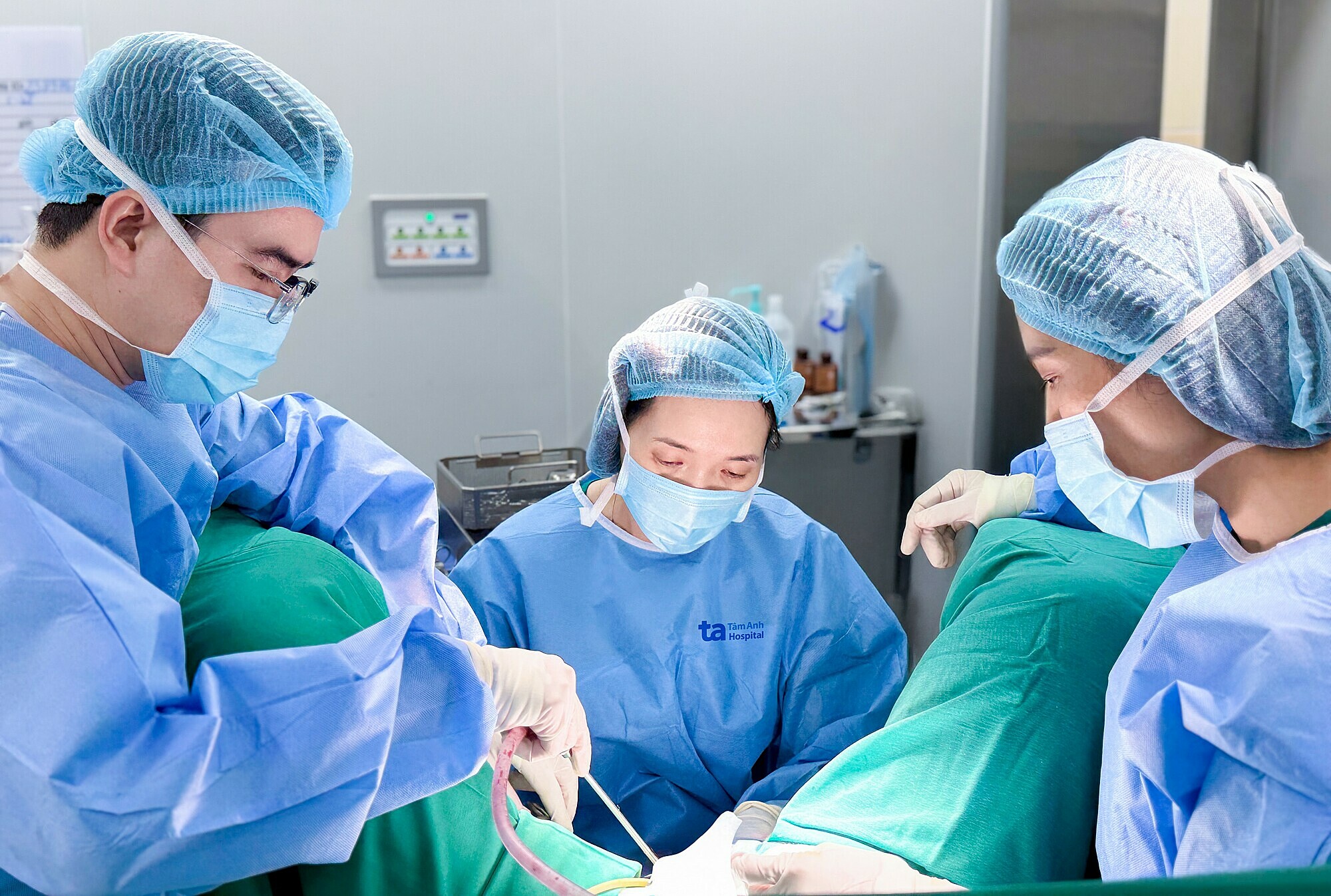 |
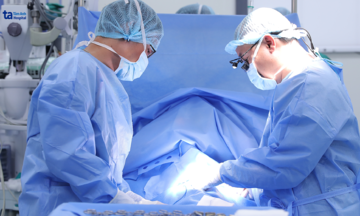
Doctor Lien (center) and Doctor Nghia (left) performing surgery to treat Ms. Hang's urinary incontinence. Photo: Tam Anh General Hospital |
Doctors extracted a section of rectus abdominis fascia, approximately 10 cm long and one cm wide, from Ms. Hang's abdominal wall. This was then secured to adjacent connective tissues, creating a stable support point for the urethra. Over time, the autologous tissue integrates well with the surrounding tissues, reducing the risk of graft exposure, a complication that can occur with synthetic materials.
Two days after surgery, Ms. Hang recovered and was discharged. Doctors advised the patient to limit strenuous activities for one month, maintain good intimate hygiene to prevent infections, and attend follow-up appointments as scheduled to monitor her recovery.
Urinary incontinence is common among older adults and women after childbirth, especially after vaginal delivery. This is due to significant pressure on the pelvic floor muscles and pelvic nerves, leading to a loss of bladder and urethral support. Due to embarrassment, many individuals only seek medical attention when their condition has become severe.
Doctors recommend that women visit the Female Urology Unit for early diagnosis and timely treatment. In stage one, patients can alleviate symptoms through conservative measures such as pelvic floor exercises (Kegel exercises), lifestyle changes, or medical treatment. When the condition progresses, patients may require surgery to support the urethra using either synthetic materials or autologous tissue.
To prevent urinary incontinence, Doctor Lien advises women, particularly after childbirth, to strengthen their pelvic floor muscles, drink two liters of water daily, eat plenty of fiber to avoid constipation, and limit bladder irritants such as coffee, alcohol, and spicy foods. It is important not to hold urine, to practice urinating when needed, and to maintain a fixed urination schedule. Controlling weight also helps limit pressure on the bladder.
Ha Thanh
*Patient's name has been changed