Eng English
China 中国人

Eng English
China 中国人
  • News
  • World
  • Business
  • Entertainment
  • Sports
  • Law
  • Education
  • Health
  • Lifestyle
  • Travel
  • Science
  • Digital
  • Automobiles
  • Trở lại Thể thao
  • Health
Thursday, 27/11/2025 | 08:01 GMT+7

Non-surgical heart valve replacement for a patient

Mr. Quynh, 68, suffering from aortic valve stenosis complicated by heart failure, and unable to undergo surgery due to multiple underlying conditions, received a transcatheter heart valve replacement.

Mr. Quynh was diagnosed with aortic valve stenosis three years ago. Initially, his symptoms were not severe, and he maintained normal daily activities, experiencing only mild dizziness when changing positions from sitting to standing, and occasional fleeting chest pains. However, over the past three months, he developed shortness of breath during exertion and chest pain behind his breastbone, which prevented him from engaging in heavy labor. Consequently, he sought examination at Tam Anh General Hospital, TP HCM.

Professor Doctor Vo Thanh Nhan, Director of the Interventional Cardiology Center, diagnosed the patient with severe aortic valve stenosis. This condition occurs when the valve does not open fully, obstructing blood flow from the heart into the systemic circulation, leading to reduced cardiac output and decreased blood supply to organs. The disease progresses silently over a long period, eventually causing stage 3 heart failure. If left untreated, heart failure would advance to its final stage, increasing the risk of arrhythmias, endocarditis, and sudden death. According to Professor Nhan, the prognosis for survival beyond two years at this stage is only 50% without intervention.

Given the patient's numerous underlying conditions, including hypertension, heart failure, moderate aortic regurgitation, ischemic heart disease, and dyslipidemia, traditional open-heart surgery posed significant risks. The medical team opted for transcatheter aortic valve implantation (TAVI), a minimally invasive procedure that avoids opening the sternum, thereby reducing the risk of complications. The new valve is designed to last up to 12 years.
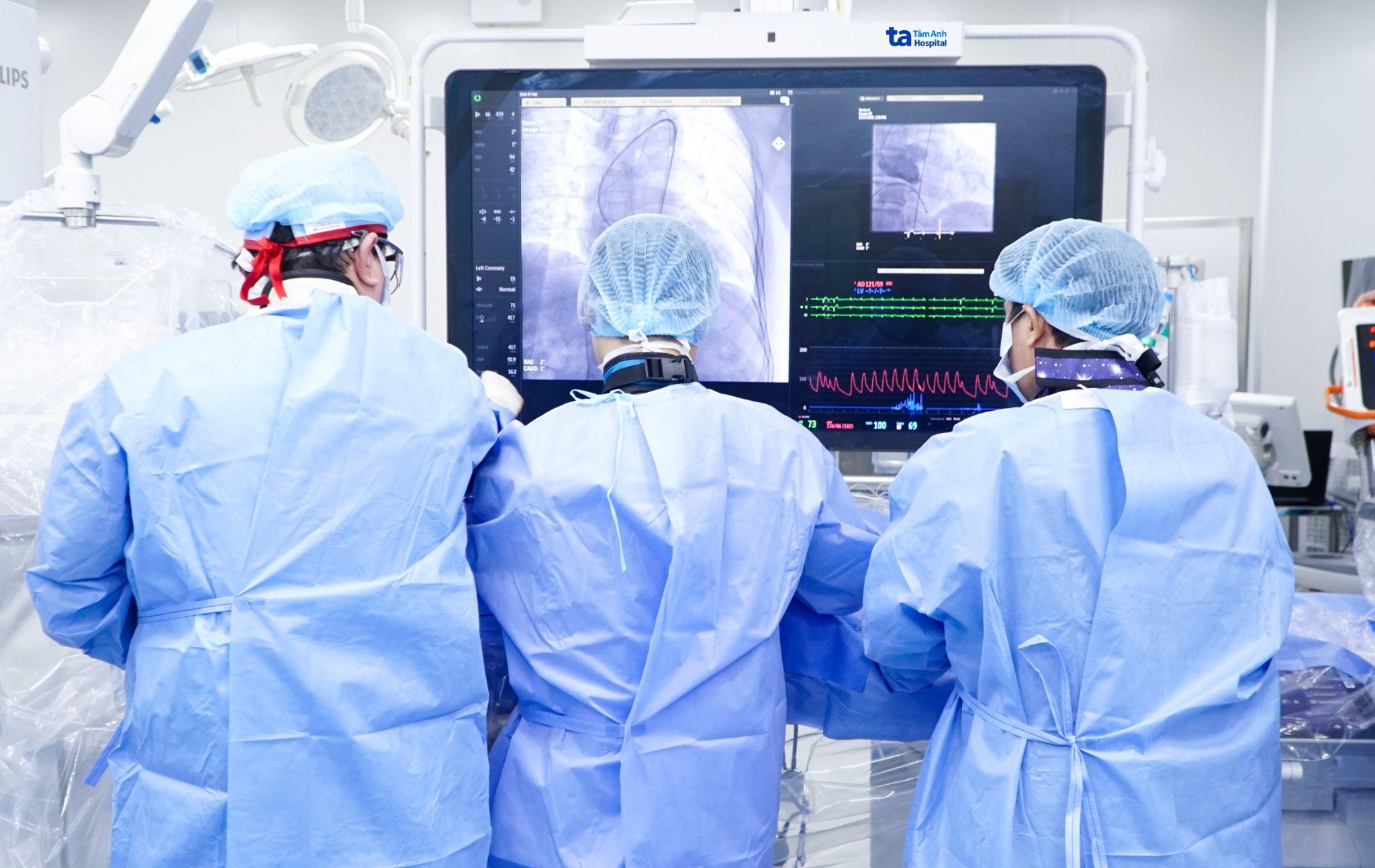
Doctors performing transcatheter aortic valve implantation for the patient. Photo: Trung Vu

The patient's aorta presented a challenging, tortuous path, complicating the advancement of the catheter from the femoral artery to the aortic valve. Additionally, the aorta was horizontally positioned. Using an older generation of self-expanding valves would have made the procedure difficult. The doctors instead utilized a new generation balloon-expandable valve, featuring a flexible catheter body that easily navigated the winding vessels. After over one hour, the new valve was precisely positioned, effectively taking over the role of circulating blood throughout the body. The patient's heart function improved, and his shortness of breath, fatigue, and chest pain resolved. He was discharged after three days.

Professor Nhan assessed that the new valve is functioning well, and the patient experienced minimal pain, expecting to resume normal activities within 4-6 weeks.
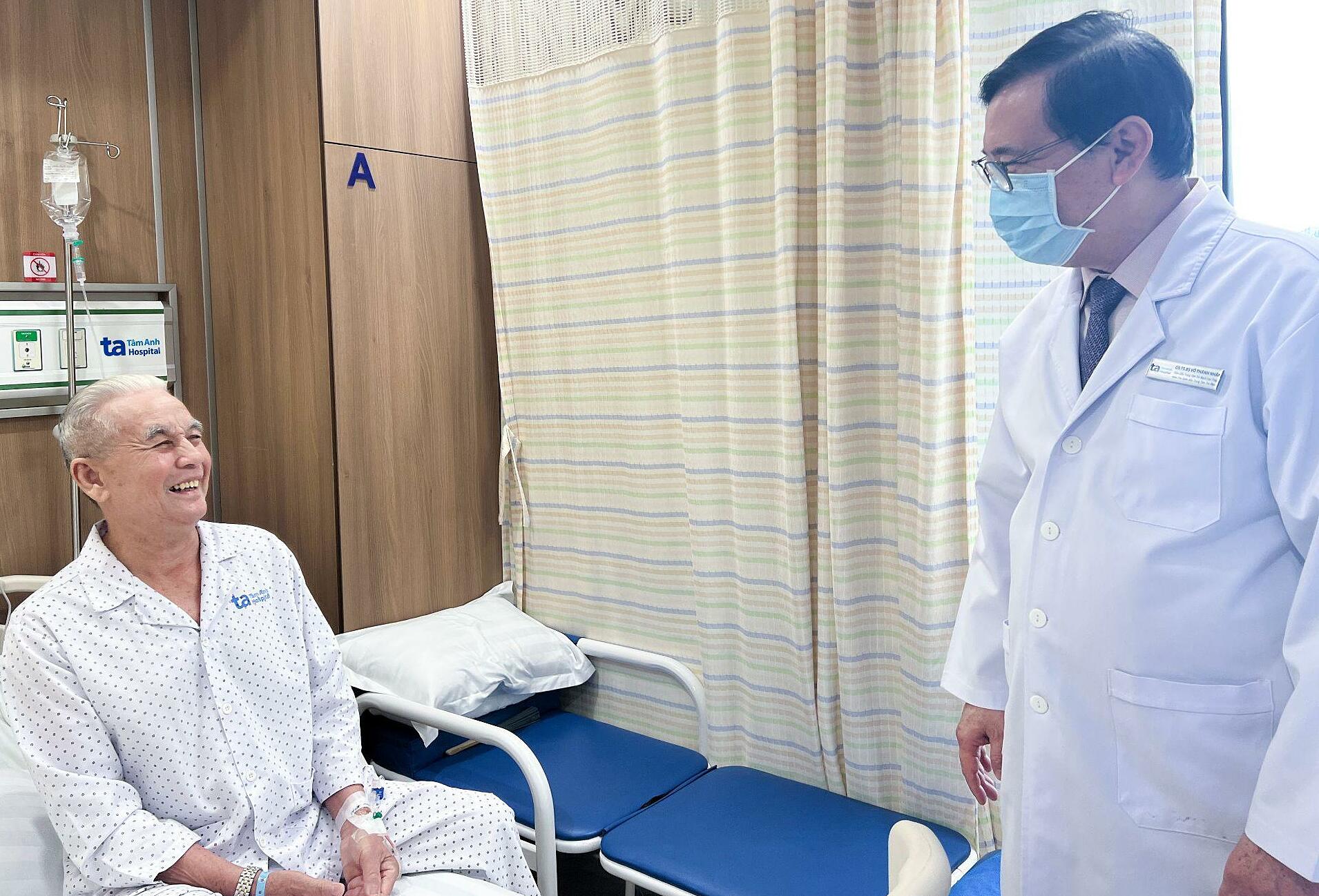
Professor Nhan checking on Mr. Quynh on the second day after the intervention. Photo: Minh Huyen

Professor Nhan stated that SAPIEN 3 represents an advanced generation of balloon-expandable valves. Compared to other TAVI valves, SAPIEN 3 offers high positional accuracy. Its compact size facilitates future coronary interventions or the placement of another valve, providing severely ill patients with an extended opportunity for a healthy life. Transcatheter aortic valve implantation (TAVI) is a complex procedure; imprecise maneuvers can lead to unwanted risks such as bleeding, vascular occlusion, or aortic rupture, which can be fatal. This technique has received approval from health insurance, offering patients access to modern treatment methods at a reasonable cost.

Thu Ha

Readers can submit questions about cardiovascular diseases here for doctors to answer
By VnExpress: https://vnexpress.net/thay-van-tim-khong-can-phau-thuat-benh-nhan-4986633.html
Tags: cardiovascular disease heart valve replacement TP HCM

News in the same category

How to prevent asthma and chronic obstructive pulmonary disease flare-ups during pollution?

How to prevent asthma and chronic obstructive pulmonary disease flare-ups during pollution?

A 65-year-old patient asks why asthma and chronic obstructive pulmonary disease (COPD) flare up with air pollution and what preventive measures can be taken.

How RSV exacerbates chronic diseases

How RSV exacerbates chronic diseases

Respiratory syncytial virus (RSV) intensifies the burden on the heart and causes widespread airway inflammation, leading to complications such as heart failure and respiratory failure in individuals with chronic conditions.

Three 'invisible cages' make chinese women fear childbirth

Three 'invisible cages' make chinese women fear childbirth

Work pressure, the burden of education, and a lack of support from husbands create three "invisible cages", causing chinese women to hesitate before deciding to have children, even as policies have been relaxed.

Should you cover or uncover the pot when cooking vegetable soup?

Should you cover or uncover the pot when cooking vegetable soup?

A reader asks how cooking methods affect vegetable nutrition, specifically whether to cover or uncover the pot when making vegetable soup. (My, 32, Tay Ninh)

Skin peeling precautions for dry weather

Skin peeling precautions for dry weather

Individuals with healthy skin can perform light chemical peels during dry weather, but those with excessively dry or sensitive skin should avoid this procedure.

can prolonged anxiety cause anxiety disorder?

can prolonged anxiety cause anxiety disorder?

I often feel constantly anxious and tired. can prolonged anxiety cause an anxiety disorder, and how is it treated? (My Trinh, Dong Nai)

5 foods good for blood vessels in cold weather

5 foods good for blood vessels in cold weather

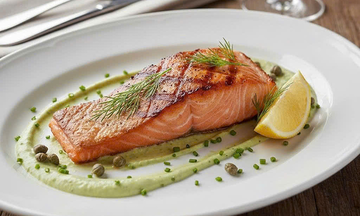
Foods rich in omega-3, fiber, and healthy fats, such as fatty fish, lentils, avocados, and oats, help maintain blood vessel elasticity and reduce the risk of cardiovascular disease during cold weather.

Deafness and facial paralysis from complicated middle ear infection

Deafness and facial paralysis from complicated middle ear infection

Ha, 38, developed severe deafness and facial paralysis due to a prolonged middle ear infection, which led to infection, eardrum perforation, and damage to her 7th cranial nerve.

Eye signs that may signal underlying health issues

Eye signs that may signal underlying health issues

Watery eyes or blurred vision are often simple symptoms that disappear on their own, but sometimes they can warn of problems in the eyes or other parts of the body.

12 decayed teeth extracted simultaneously: the consequence of a bedtime bottle habit

12 decayed teeth extracted simultaneously: the consequence of a bedtime bottle habit

A habit of bottle feeding until age 4 and neglected oral hygiene led to 12 of a young boy's teeth being severely damaged by decay.

Eng English
China 中国人
  • News
  • World
  • Business
  • Entertainment
  • Sports
  • Law
  • Education
  • Health
  • Lifestyle
  • Travel
  • Science
  • Digital
  • Automobiles
FPT Tower, 10 Pham Van Bach Street, Dich Vong Ward,
Cau Giay District, Hanoi, Vietnam
Email: contacts@vnportal.net
Tel: 028 7300 9999 - Ext 8556
Advertise with us: 090 293 9644
Register
© Copyright 2025 vnnow.net. All rights reserved.
Terms of use Privacy policy Cookies