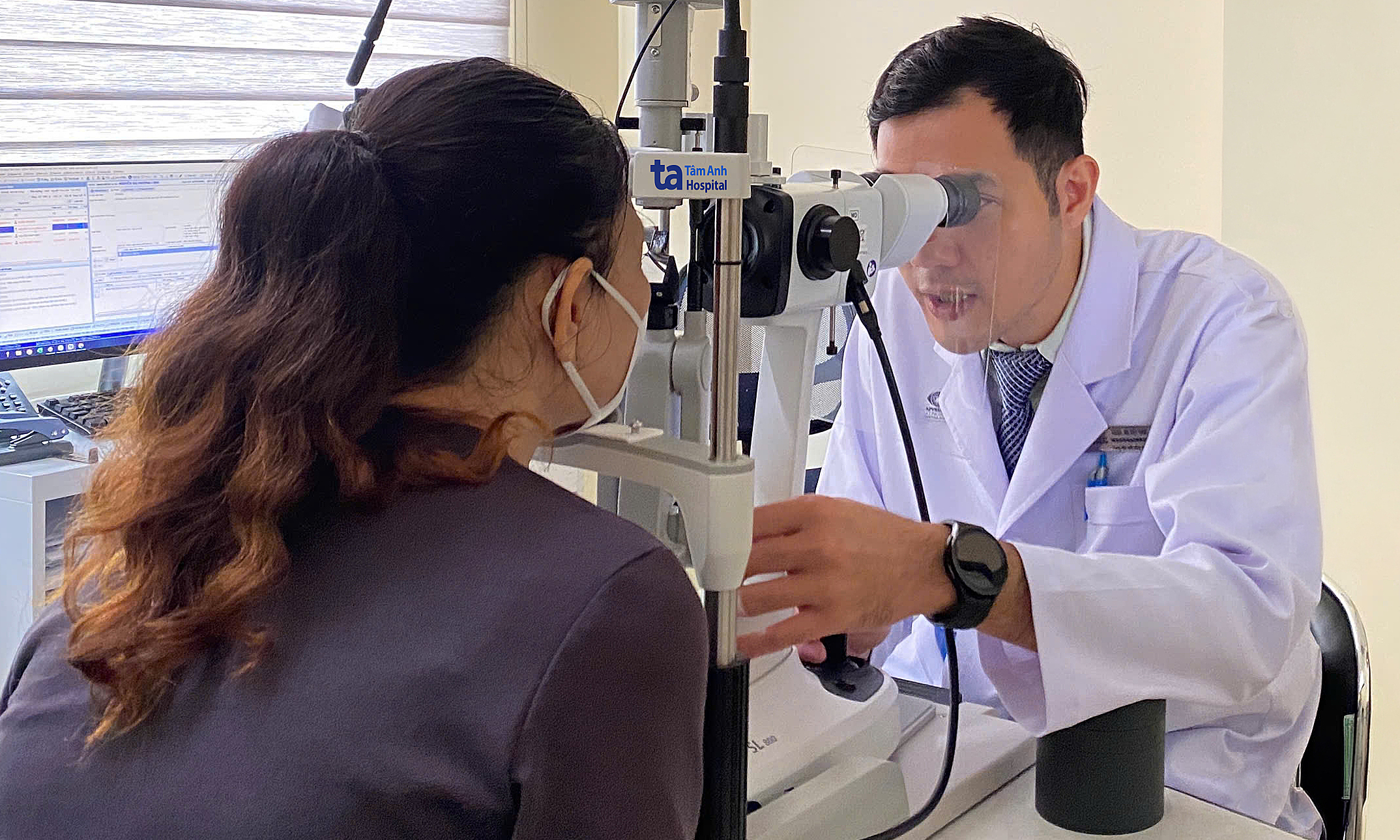
Ms. Hong suddenly felt tingling in both legs two weeks ago, which gradually worsened, making walking difficult. Doctors at a nearby hospital diagnosed her with a musculoskeletal disease and prescribed medication. Four days later, her legs rapidly weakened, she could not stand on her own, and experienced urinary incontinence. She then sought examination at Tam Anh General Hospital TP HCM.
Doctor Duong Dinh Hoan, Head of the Neurointervention Unit, Center for Diagnostic Imaging and Interventional Radiology, noted that the patient's leg reflexes were about one-fourth of normal. The rapid progression of weakness and paralysis, coupled with urinary dysfunction, was inconsistent with typical spinal degeneration, raising suspicion of spinal cord injury.
An MRI of her thoracic spine revealed a syrinx, a fluid-filled cavity, within the spinal cord extending from the T7 thoracic vertebra to the end of the spinal cord. Concurrently, numerous tortuous dilated blood vessels appeared in the spinal canal from T7-T10, showing early contrast enhancement in the arterial phase – a potential sign of a thoracic dural arteriovenous fistula. Digital subtraction angiography (DSA) confirmed the fistula was located in the thoracic region, supplied by a branch of the left T9 intercostal artery, with the abnormal blood flow draining directly into the intraspinal venous plexus.
According to Doctor Hoan, when a fistula is present, high-pressure arterial blood flows directly into the perimedullary venous system. This increases venous pressure, impeding blood drainage from the spinal cord, leading to blood stagnation, edema, and hypoxia in spinal cord tissue, which eventually impairs motor and sensory function.
The patient underwent endovascular intervention to directly address the cause of the spinal cord damage. Doctors made a small puncture in the right femoral artery, guided a microcatheter through the vascular system to the left T9 intercostal artery branch, accessed the fistula site, and injected specialized embolization material. Post-intervention DSA images confirmed complete occlusion of the abnormal blood flow through the fistula.
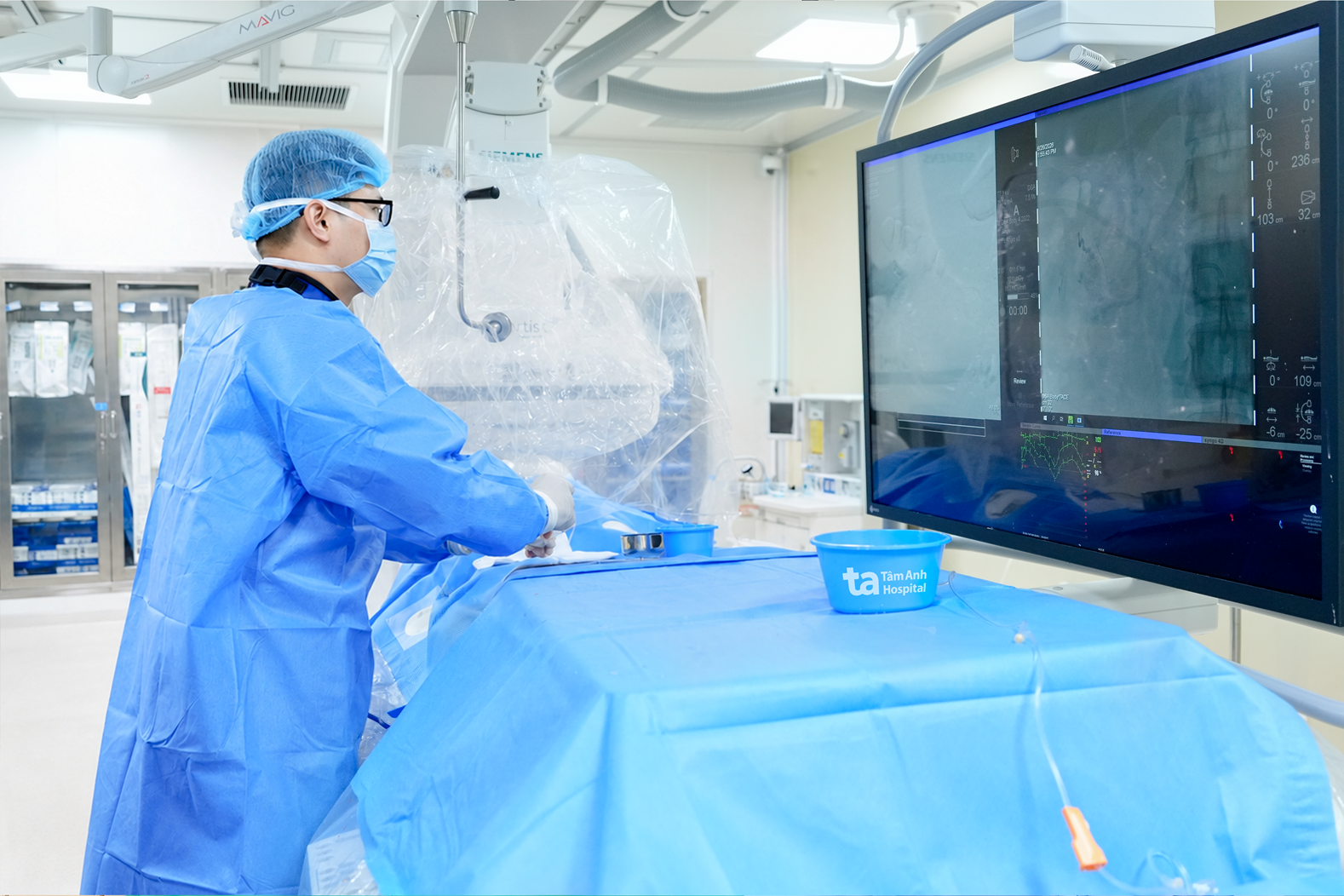 |
Doctor Hoan performs endovascular intervention on Ms. Hong. Photo: Tam Anh General Hospital |
One day after the procedure, Ms. Hong could move both her legs and began walking with the assistance of medical staff. After two days of monitoring, she could stand on her own, was discharged, and continued rehabilitation to improve muscle strength and mobility.
Spinal dural arteriovenous fistulas are common in older adults and can progress insidiously. Initially, patients often experience back pain, numbness, or leg heaviness, which can be easily mistaken for spinal degeneration or musculoskeletal conditions. As the damage progresses, patients may develop weakness in both legs, loss of ambulation, and bladder dysfunction.
Doctor Duc advises patients experiencing these unusual symptoms to seek medical attention to rule out spinal cord injury. Treatment before irreversible spinal cord damage occurs increases the chance of preserving and restoring motor function.
Nhu Ngoc
*Patient's name has been changed
| Readers can submit questions about neurological diseases here for doctors to answer |