The boy, from Dang Thuy Tram commune, was admitted to Quang Ngai Provincial Obstetrics and Pediatrics Hospital on the morning of 30/12, suffering from prolonged nasal discharge and nosebleeds.
 |
The team at Quang Ngai Obstetrics and Pediatrics Hospital endoscopically removed the leech from the patient's nose. Photo: Kim Ny. |
The team at Quang Ngai Obstetrics and Pediatrics Hospital endoscopically removed the leech from the patient's nose. Photo: Kim Ny.
The boy's mother reported that after he went with his parents to a farm and bathed in a stream, he developed unusual symptoms. These included: frequent nose rubbing, difficulty breathing during sleep, and nosebleeds, which worsened during baths. He was examined at a nearby clinic, diagnosed with rhinitis, and prescribed medication. However, after 7 days, his condition did not improve, leading to his hospitalization.
During a clinical examination and nasal endoscopy, doctors discovered a parasitic leech in the boy's nasal cavity. An endoscopic team safely removed the leech, which measured 3 cm in length. Following the procedure, the boy's nosebleeds stopped, and his health stabilized.
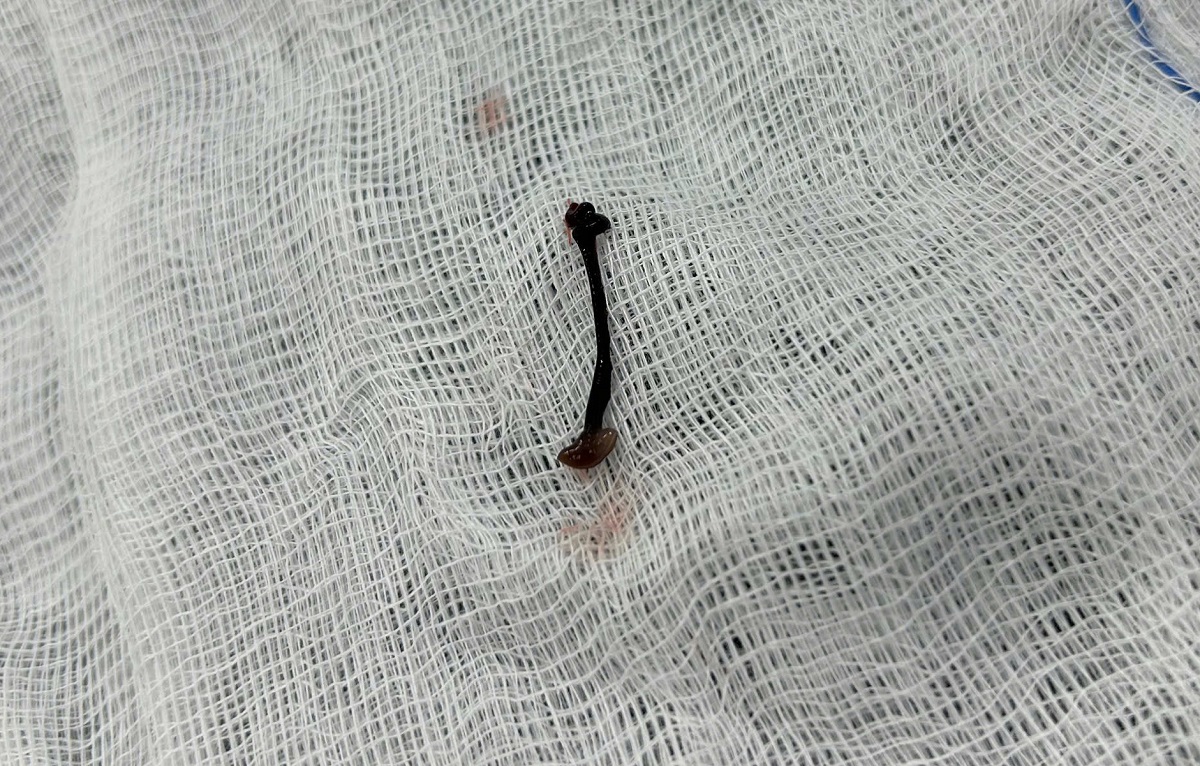 |
Doctors removed the leech from the 2.5-year-old boy's nose. Photo: Kim Ny. |
Doctors removed the leech from the 2.5-year-old boy's nose. Photo: Kim Ny.
Doctor Tran Thi Kim Tuyen, an ear-nose-throat specialist, advised parents to prevent young children from bathing in streams, ponds, or lakes, particularly in mountainous regions. She also cautioned against allowing children to drink untreated stream water, emphasizing the need to boil and cool it beforehand.
If a child experiences prolonged nosebleeds, one-sided nasal congestion, foul-smelling nasal discharge, or unexplained breathing difficulties, parents should seek prompt medical attention. They should visit a healthcare facility with an ear-nose-throat specialist for endoscopic examination, diagnosis, and timely treatment.
Prolonged parasitic infestations by leeches can cause persistent nosebleeds and lead to chronic anemia due to blood loss. Leeches also pose a risk if they attach to major blood vessels or move into the larynx, potentially causing airway obstruction.
Van Linh