As Vietnam enters a new development phase focused on improving quality of life and universal healthcare, access to high-quality treatments, especially newly invented drugs, becomes a strategic issue.
Drug costs currently account for a significant portion of total healthcare expenditure. Data from the Institute for Health Strategy and Policy (IHSP), Ministry of Health, for 2025, indicates that Vietnam's total drug expenditure increased from USD 4.7 billion to USD 6.9 billion between 2019 and 2025, representing an average annual increase of 6-7%. This is projected to reach USD 8.6 billion by 2028. New drugs, particularly those for cancer and rare diseases, often carry high price tags, leading to cautious and prolonged processes for their inclusion in health insurance coverage.
Delayed inclusion of new drugs can reduce successful treatment outcomes. Conversely, applying traditional payment mechanisms to expensive advanced drugs places significant pressure on the health insurance fund. This is a challenge many countries address through more flexible financial tools. One successful approach is risk-sharing solutions (RSS).
RSS represents an agreement among regulatory bodies, payers, and drug manufacturers to allocate financial risk. This is achieved through various forms, such as: capping the total cost for a specific drug (expenditure ceiling), limiting the quantity of drugs covered (volume limit), or conditioning payment on achieving certain treatment outcomes (outcome-based payment). This model has been implemented in many countries and territories, including South Korea and Taiwan.
In South Korea, from 2007, price and volume agreements were applied to new, high-cost drugs. By 2013, the legal framework for RSS was finalized, focusing on cancer and rare drugs. This led to an increased rate of drug coverage and reduced out-of-pocket costs for patients, while maintaining the stability of the health insurance fund.
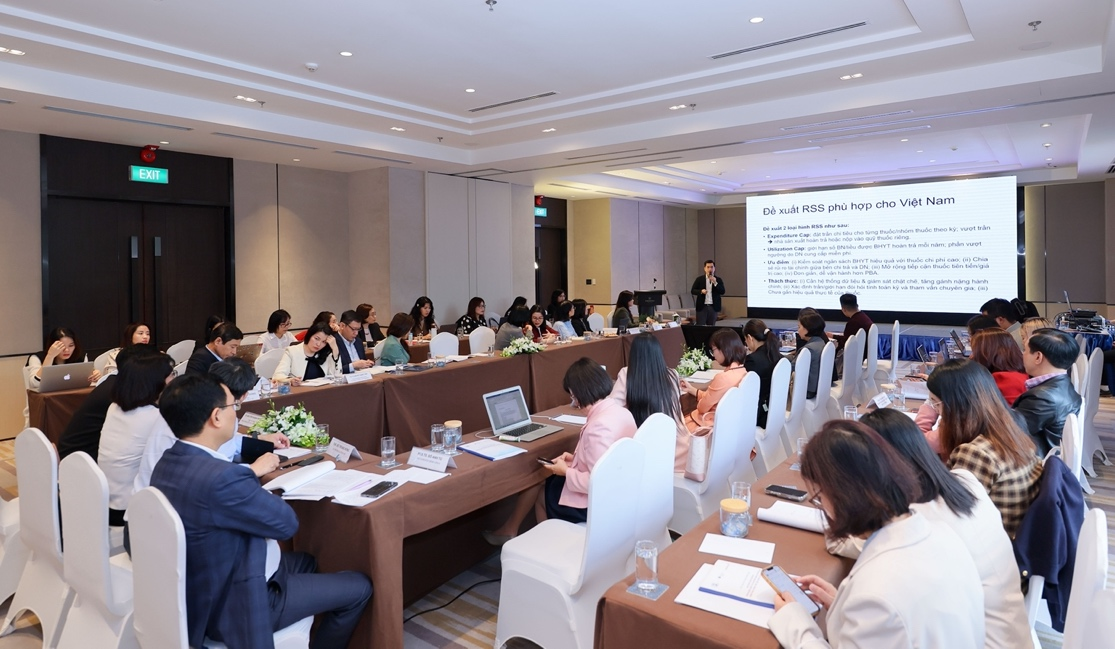 |
RSS offers a way to balance cost control and expand access to innovative drugs. AstraZeneca Vietnam |
RSS offers a way to balance cost control and expand access to innovative drugs. AstraZeneca Vietnam
In Vietnam, with health insurance coverage exceeding 90%, many experts believe that risk-sharing solutions (RSS) present a viable path to balance cost control and expand access to innovative drugs. Doctor Ong The Due, from the Institute for Health Strategy and Policy (IHSP), stated that RSS allows for conditional payment tied to expenditure caps or treatment outcomes, thereby sharing risks and contributing to budget sustainability.
From a legal and policy perspective, Luong Thi Mai Anh, from the Legal Department, Ministry of Health, stated that RSS is not only a financial tool but also a lever to improve care quality and optimize costs. She suggested that Vietnam could develop a pilot roadmap to evaluate and expand RSS, integrating it with a legal framework, data standards, and transparent monitoring mechanisms.
Additionally, diversifying healthcare financing mechanisms, such as supplementary health insurance, patient support programs, or case-based payment agreements, also helps reduce out-of-pocket expenses and expand access to healthcare services.
In developing and implementing new financial mechanisms, public-private partnerships are crucial. AstraZeneca, a long-standing partner of Vietnam's healthcare sector, has collaborated with the IHSP to implement the "Partnership for Sustainability and Resilience of Vietnam's Healthcare System" program. This program contributes to policy research, expert dialogues, and proposing solutions to enhance drug access and manage healthcare costs.
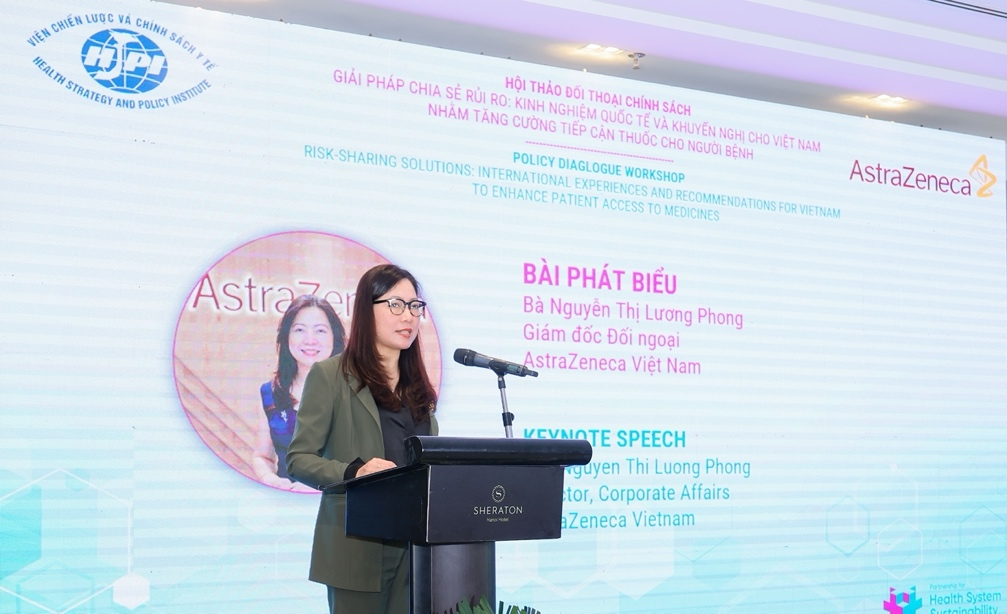 |
Nguyen Thi Luong Phong, representative of AstraZeneca Vietnam, shared the company's commitment to accompanying regulatory bodies in promoting sustainable healthcare financial solutions and expanding drug access for patients. AstraZeneca Vietnam |
Nguyen Thi Luong Phong, representative of AstraZeneca Vietnam, shared the company's commitment to accompanying regulatory bodies in promoting sustainable healthcare financial solutions and expanding drug access for patients. AstraZeneca Vietnam
Nguyen Thi Luong Phong, External Affairs Director at AstraZeneca Vietnam, stated that the company prioritizes fostering long-term public-private partnerships to strengthen the sustainability of Vietnam's healthcare system and expand equitable healthcare access. She noted that the results of cooperation with the IHSP over the past five years have enhanced the ability to address disease burden, expanded access to effective treatments, and supported sustainable cost management; mechanisms like risk-sharing play a key role in this.
With over 30 years of presence in Vietnam, AstraZeneca reaffirms its commitment to partnering with the government and healthcare sector in promoting scientific innovation, technology transfer, and expanding access to advanced treatments, particularly for non-communicable diseases. According to the company's representative, when appropriately designed and transparently implemented, risk-sharing mechanisms can help Vietnam balance the cost-quality equation, moving towards a more equitable and sustainable healthcare system.
The Dan