On 18/9, doctors at Medlatec General Hospital successfully surgically removed a cancerous lesion from a 21-year-old male patient. A post-operative histopathological biopsy confirmed the wound showed only chronic inflammation, with no malignant cells remaining. The patient recovered well and was discharged.
Three months prior to surgery, the patient noticed a small, hard lump at the base of his penis. The lump grew slowly, without inflammation, discharge, or burning pain. As he experienced no weight loss or painful urination, he initially monitored it at home. A clinical examination at the hospital revealed several small papules on the foreskin mucosa and enlarged lymph nodes in both groins.
Biopsy results confirmed the patient had penile intraepithelial neoplasia (PeIN), a stage 0 precancerous squamous cell lesion. Additionally, a urethral fluid test was positive for the sexually transmitted bacterium Chlamydia trachomatis. The patient disclosed a history of unprotected sexual intercourse for the past one year.
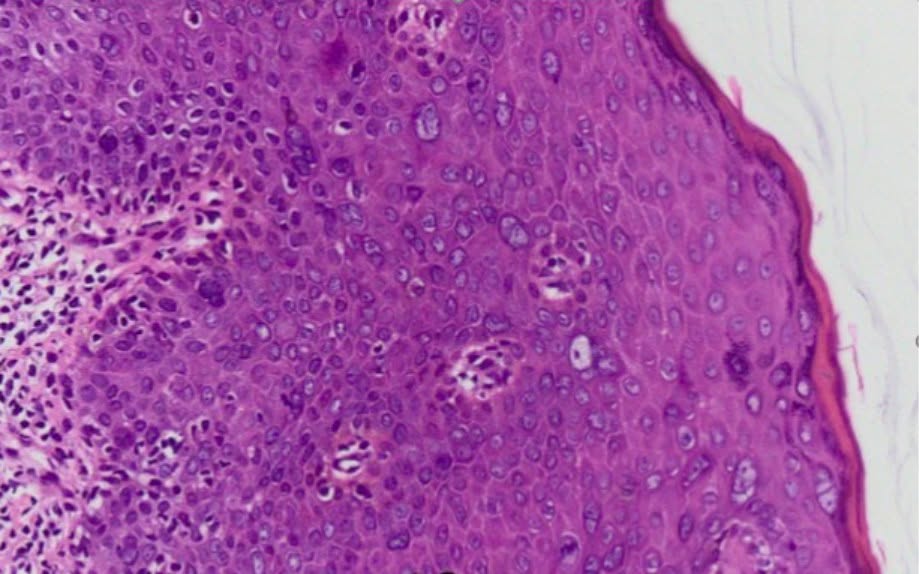 |
The patient's pathology results revealed the lesion. Photo: Hospital provided |
Doctor Tran Quang Toan, a specialist in Urology - Andrology and the patient's treating physician, explained that penile cancer accounts for approximately 1% of all urinary system cancers in men, with more than 95% being squamous cell carcinoma. At stage 0 (PeIN), malignant cells are confined to the superficial layer of the mucosa, not having penetrated the basement membrane or invaded blood vessels or the lymphatic system. This early detection allowed for radical surgery, resulting in an almost absolute cure rate.
According to Doctor Toan, over one-third of penile cancer cases originate from the HPV virus. Other risk factors include men with phimosis or long foreskin, and individuals with prolonged, untreated sexually transmitted diseases such as Chlamydia and gonorrhea. Promiscuous sexual habits, lack of protection, and multiple partners can lead to chronic inflammation of the genital mucosa, stimulating cells to mutate into cancer.
Doctor Toan advises men to consult a specialist immediately if they notice papules, warts, erosive ulcers, or discolored skin in the genital area, emphasizing that self-medication should be avoided. A biopsy of any wart sample helps accurately differentiate benign genital warts from malignant lesions. For prevention, men should receive the HPV vaccine, use condoms during sexual intercourse, practice daily genital hygiene, and undergo regular urological check-ups every six months.
Thuy Quynh