Middle ear infection, or otitis media, can affect anyone but is more common in children. This is due to their weaker immune systems and the shorter, more horizontal structure of their eustachian tubes compared to adults, making them more susceptible to bacterial invasion. Common symptoms include ear pain, fever, hearing loss, a feeling of fullness, or the sensation of water in the ear. Severe infections can cause children to cry excessively, refuse to eat, or experience a discharge of pale yellow pus from the ear if the eardrum ruptures.
Associate Professor, Doctor Nguyen Chi Trung, from the Department of Ear, Nose, and Throat at Tam Anh General Hospital Hanoi, notes that while many people enjoy swimming during summer for cooling down and exercise, this activity also carries risks, especially middle ear infections. To reduce the risk of otitis media when swimming, Doctor Trung has outlined several measures.
Choose the right time
Children should not go swimming when they are recovering from an illness, feeling tired, or exhibiting signs of an upper respiratory infection such as a runny nose, sneezing, or cough. The ideal time for swimming is when the temperature inside and outside the pool does not differ significantly. Children should avoid staying in the water for too long; those under 5 years old should swim for no more than 30 minutes, and those over 5 years old for less than 60 minutes.
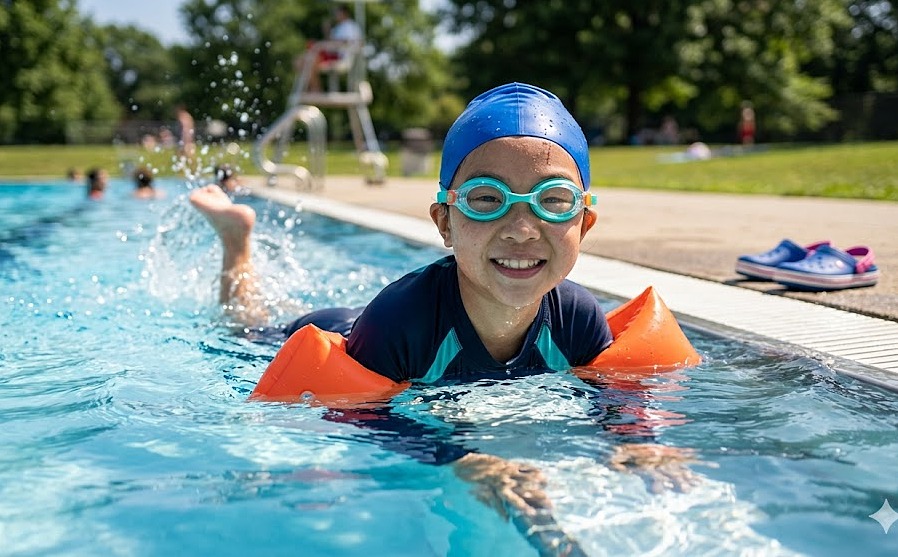 |
Children swimming are prone to middle ear infections if ear, nose, and throat hygiene is not properly maintained. Photo created by AI
Choose a clean, hygienic swimming location
Adults should select swimming locations with good, clean water quality that is treated according to proper standards, helping to reduce the risk of infection. Pools with high-quality filtration systems and regular hygiene checks will decrease the likelihood of bacterial and virus infections. Avoid swimming in stagnant ponds or polluted water sources.
Properly manage water entering the ears and nose
If water enters a child's ear while playing, they should tilt their head and gently pull the earlobe back to allow the water to drain out. If water enters the nose, parents should instruct the child to close one nostril and gently blow through the other, alternating sides. Do not block both nostrils at the same time, as this can create pressure on the ears and increase the risk of bacteria spreading from the nasopharynx to the middle ear.
Ear, nose, and throat hygiene after swimming
After swimming, it is advisable to clean the eyes, nose, and throat with physiological saline solution. Proper post-swim care and hygiene help limit the risk of upper respiratory infections, while also reducing the risk of middle ear infections and other common ear, nose, and throat conditions in young children.
Doctor Trung advises parents to teach children to maintain hygiene while swimming, refraining from spitting, blowing their nose, or urinating in the pool to limit infection and protect public health.
Tran Duong
| Readers can submit questions about ear, nose, and throat diseases here for doctors to answer. |