Response:
Meningococcal bacteria commonly reside in the nasopharynx of both patients and healthy individuals, known as asymptomatic carriers. In the community, approximately 10-20% of the population are healthy carriers, a figure that can rise to 40-50% during outbreaks. While not all carriers develop the disease, they pose a risk for transmitting the pathogen and have a higher chance of becoming ill. The bacteria, already present in the nasopharynx, can seize an opportunity to attack when the immune system is weakened or when the mucous membranes are damaged due to respiratory infections.
Individuals identified as close contacts of a patient include: those living together, working in the same room; direct caregivers or those with intimate contact; and children attending the same preschool, daycare, class, or group. The period of concern for contact is within 7 days before the onset of illness until 24 hours after the patient has received specific antibiotics.
Individuals exposed to meningococcal bacteria need preventive medication as soon as possible, ideally within 24 hours of the case diagnosis. Close contacts must also self-isolate and monitor their health for 10 days, reporting any fever, cough, or fatigue immediately to local health authorities.
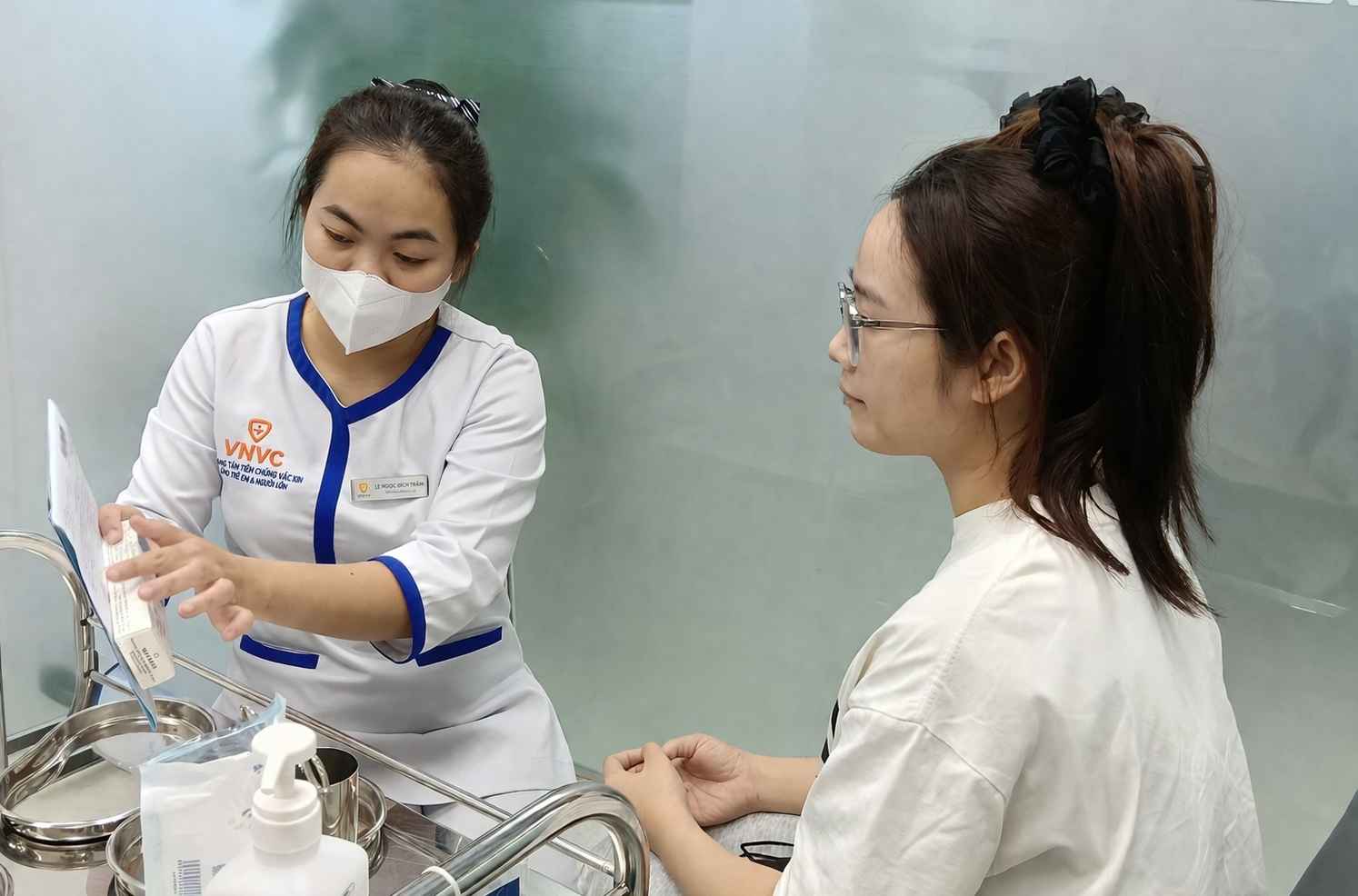 |
People receiving meningococcal vaccines at VNVC. Photo: Hoang Duong |
Rushed vaccination may not allow sufficient time for the body to build immunity against the disease. Furthermore, the tendency to wait for an outbreak before getting vaccinated can strain vaccine supply at immunization centers, potentially leading to inadequate service and long waits, which increases anxiety among the public. Therefore, everyone should plan to get vaccinated early.
Vietnam currently offers various vaccines protecting against five common meningococcal serogroups: A, B, C, Y, and W. These include three new-generation quadrivalent vaccines that protect against serogroups A, C, Y, W, with the earliest type administered to children from 6 weeks of age. A new-generation vaccine against serogroup B is available for children from 2 months to 50 years old. Another vaccine protects against serogroups B and C, administered to children from 6 months to 45 years old. Vaccines do not offer cross-protection between meningococcal serogroups; individuals need a combination of vaccines to cover all five serogroups for comprehensive protection.
In addition to vaccination, people should practice other proactive preventive measures. These include wearing masks when outdoors, maintaining personal hygiene, keeping living environments clean, regularly gargling with antiseptic solution, and avoiding sharing personal items such as lipstick, toothbrushes, or eating utensils like drinking cups, bowls, and chopsticks.
Master. Doctor Nguyen Van Quang
Medical Director, VNVC Vaccination System
Readers can submit vaccine-related questions for doctors to answer here.