Conjunctivitis, commonly known as pink eye, can stem from bacterial, viral, or seasonal allergic causes. According to Master of Science, Doctor Le Thanh Huyen, from the High-Tech Eye Center at Tam Anh General Hospital Hanoi, the characteristics of ocular discharge, accompanying medical conditions, and other specific features can help identify the root cause of conjunctivitis, thereby guiding appropriate care and treatment.
Bacterial conjunctivitis produces thicker discharge
One of the most easily distinguishable characteristics between viral and bacterial conjunctivitis is the nature of ocular discharge. Bacterial conjunctivitis typically produces a thick, sticky, yellow or greenish, pus-like discharge. This discharge can be copious throughout the day, often causing the two eyelids to stick together upon waking.
In contrast, viral conjunctivitis typically results in a thin, clear, and watery discharge, leading to excessive tearing and sometimes some crusting in the morning. A distinguishing feature of viral conjunctivitis is the potential presence of a pseudomembrane (a whitish or pale yellow film forming on the conjunctival surface), which rarely occurs with bacterial conjunctivitis.
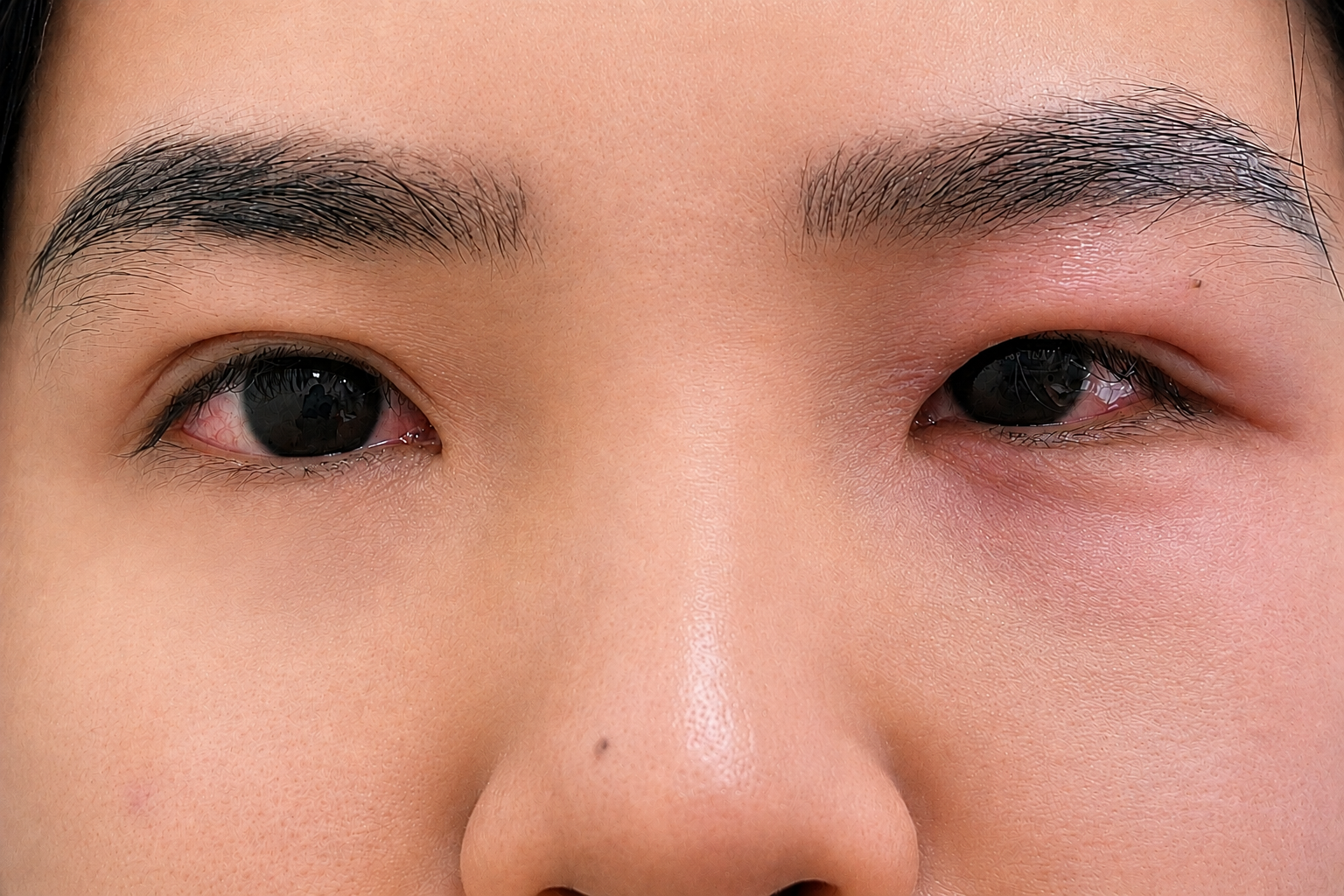 |
A patient with pink eye. Illustrative photo. *Tam Anh General Hospital* |
Viral conjunctivitis often presents with systemic symptoms
Viral conjunctivitis frequently accompanies or follows viral infections such as influenza, RSV, adenovirus, or measles. Patients may experience a runny nose, cough, or other respiratory discomfort. Therefore, if red eyes and tearing appear after a bout of fever, coughing, or a sore throat, viral conjunctivitis should be considered. Viral conjunctivitis can also sometimes lead to preauricular lymph node swelling.
In contrast, bacterial conjunctivitis may occur alongside respiratory bacterial infections or ear infections, particularly in young children. Preauricular lymph node swelling is less common in bacterial conjunctivitis, except in some cases of Chlamydia or gonococcal infections.
Viral conjunctivitis is more contagious
Viral conjunctivitis is highly contagious. It typically begins in one eye and easily spreads to the other. The infection often spreads through respiratory droplets or direct contact with infected eye discharge. Another common route is indirect contact with virus-contaminated surfaces such as doorknobs, tabletops, towels, or makeup.
Bacterial conjunctivitis can start in one or both eyes. It is less transmissible within the community, but sharing common water sources like swimming pools or baths, or sharing towels, can still lead to its spread.
Doctor Huyen emphasizes that these signs only help differentiate between viral and bacterial conjunctivitis. Patients should not self-medicate with eye drops, especially antibiotics or corticosteroids, without a doctor's evaluation. It is crucial to consult an ophthalmologist if red eye persists, symptoms worsen, eye pain occurs, vision blurs, or any other unusual symptoms appear. The doctor will conduct an examination, determine the cause, and select the appropriate treatment plan.
Minh Duong
| Readers can submit ophthalmology questions here for a doctor's response. |