This April, the Ministry of Health will submit a draft decree, detailing the implementation of the Population Law, to the Government following assessment by the Ministry of Justice. If approved, these pro-birth policies will take effect from 1/7. Commune-level People's Committees will then directly disburse cash or transfer a minimum reward of 2 million VND per case to three groups of pregnant women.
Beneficiaries include women from very small ethnic minority groups, women residing in localities with birth rates below the replacement level (2,1 children per woman), and women who have two children before age 35.
Notably, authorities will allow individuals to combine benefits. For example, a woman from a very small ethnic minority group living in a low birth rate area will immediately receive 4 million VND per birth. Provincial-level People's Councils also have the authority to establish reward levels higher than this framework.
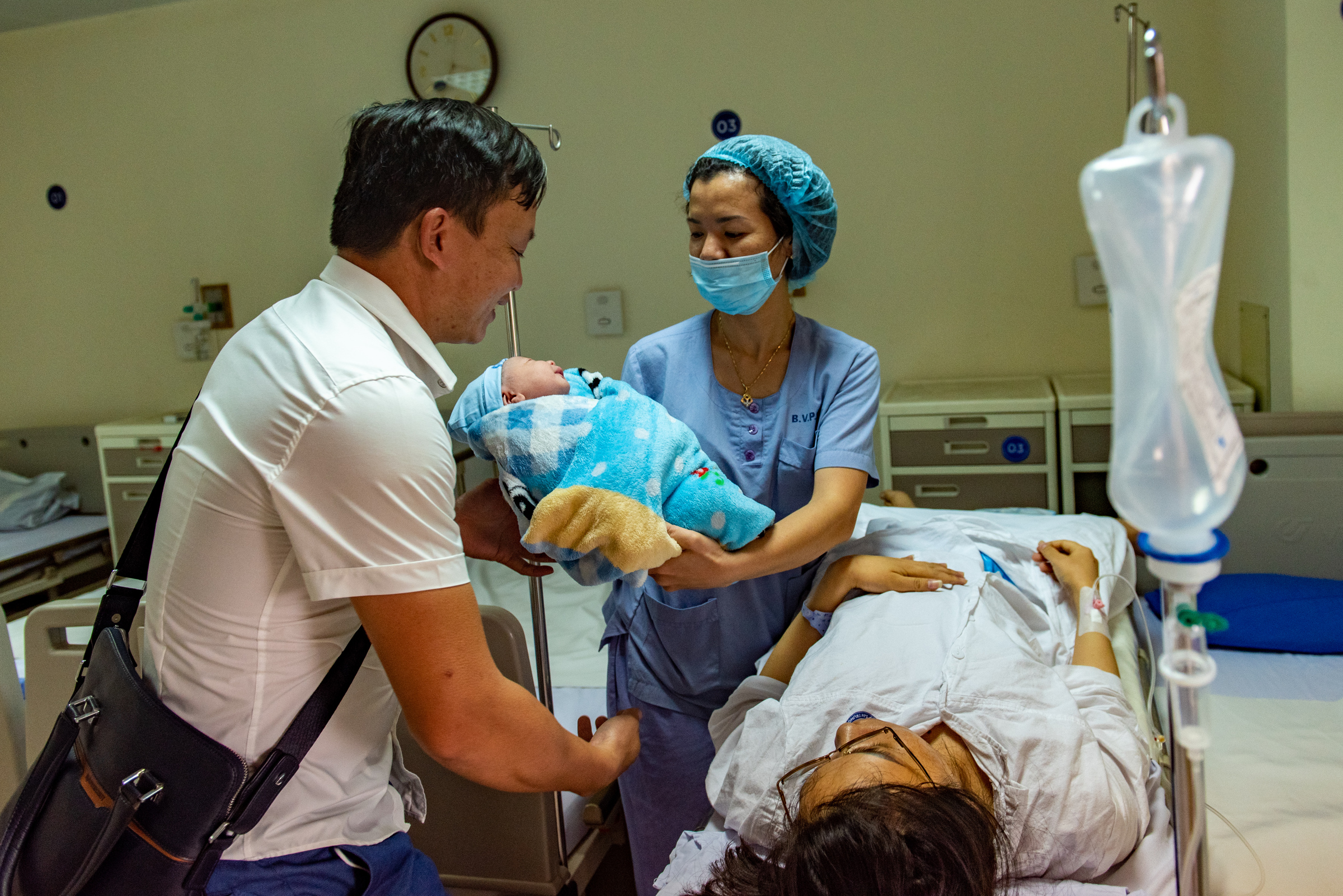 |
A woman gives birth at the National Hospital of Obstetrics and Gynecology. Photo: Thanh Hue
Ho Chi Minh City has already implemented a similar policy. The city government recently spent 3-5 million VND to reward nearly 9,000 mothers who had two children before age 35, as this mega-city of 14 million residents faces a record-low birth rate.
In addition to birth incentives, the Ministry of Health plans to allocate over 2,000 billion VND annually to cover congenital disease screening costs. Pregnant women will receive 900,000 VND for prenatal fetal screening and 600,000 VND for newborn screening.
Health experts view these financial incentives as urgent solutions, given the increasing reluctance of young people to have children. Statistics show the national birth rate is falling significantly below replacement level, dropping from 2,11 children per woman in 2021 to 1,91 this year, with further declines projected. This trend is not confined to major cities but is spreading to provinces that previously maintained high birth rates.
The government's introduction of social welfare packages, such as maternity benefits and alleviating healthcare or education burdens, is expected to encourage families to have more children. This could help Vietnam curb the pace of population aging and address future labor shortages.
Le Nga