Nguyen Quoc Thanh, Deputy Director of Ho Chi Minh City Social Security, announced this on 23/4. Ho Chi Minh City has 19 communes and wards recognized as revolutionary "safe zones" from the resistance wars against the French and Americans.
According to Decision 40 by the Prime Minister, a "safe zone" commune is one that was directed by a Party Committee from the Regional Party Committee or Military Region Party Committee level to establish a revolutionary "safe zone", possessing strategic terrain, political stability, and trusted local support. The main criteria include: being a revolutionary base, a residence or workplace for high-ranking officials, or a site of important historical events.
The 19 communes and wards in Ho Chi Minh City recognized under this designation are An Nhon Tay, Nhuan Duc, Phu Hoa Dong, Binh Hung, Can Gio, Hiep Phuoc, Nha Be, Hung Long, Tan Nhut, Tan Vinh Loc, Vinh Loc, Binh Chanh, Binh Loi, Phu Tho Hoa, Thoi An, An Phu Dong, Ba Diem, An Hoi Dong, and Hanh Thong.
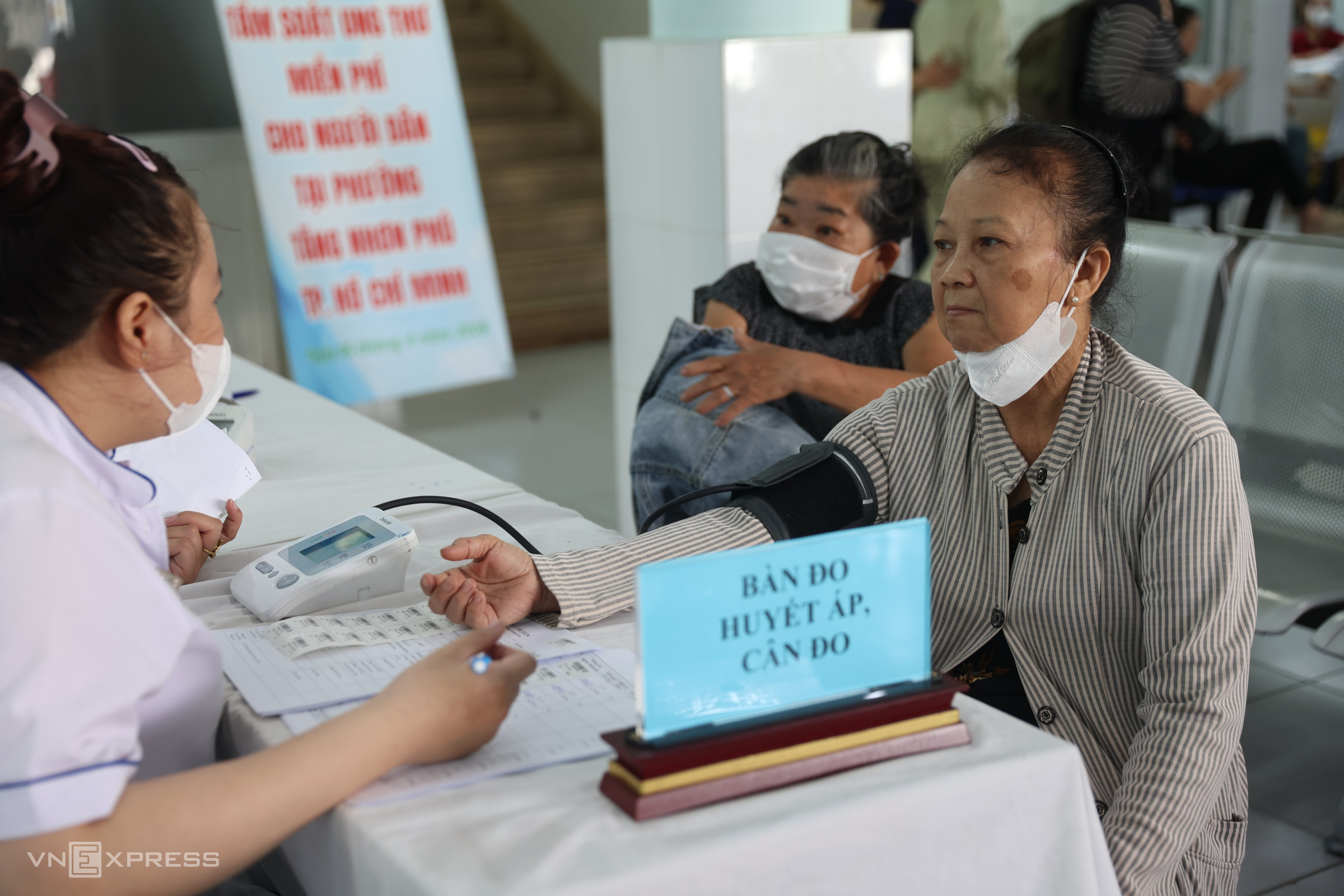 |
People receive free medical examinations at a health station in Ho Chi Minh City. Photo: Quynh Tran
Under the regulations, residents with permanent residence in these areas receive health insurance cards funded by the state budget, meaning the cards are free. Additionally, when participating in health insurance, these residents enjoy the highest benefits, with the health insurance fund covering 100% of costs for in-network medical examinations and treatment.
The total population of these 19 localities is over 1.132 million people. Among them, over 520,000 already hold cards under other groups, primarily mandatory health insurance at their workplaces. Over 428,000 people have already received free cards under the "safe zone" scheme.
Nguyen Quoc Thanh stated that to ensure residents' benefits, Ho Chi Minh City authorities and departments have issued many guidelines. However, after more than three months of implementation, many communes and wards have yet to confirm their lists for the city's Social Security to issue cards. Nearly 175,000 people still await health insurance cards, which impacts their access to healthcare.
As of 23/4, many communes still have tens of thousands of people awaiting health insurance cards, resulting in low issuance rates. Specifically, Chanh Hung commune has over 38,000 people (a new card issuance rate of over 36%); Nha Be commune has over 41,600 people (a card issuance rate of over 58%); Binh Loi commune has over 18,000 people (a card issuance rate of 40%); and Phu Tho Hoa ward has over 29,000 people (a card issuance rate of nearly 66%).
Nguyen Cong Chanh, Chairman of Phu Tho Hoa Ward People's Committee, noted that his locality has over 29,000 people yet to receive health insurance cards under the "safe zone" program. Neighborhood leaders and local police are reviewing records to verify eligible groups and assess those already covered, preparing lists for submission to Ho Chi Minh City Social Security for card issuance.
Meanwhile, Nguyen Quoc Thanh attributed the delays to some localities' questions regarding policy beneficiaries. For example, Binh Hung commune inquired whether only residents living continuously in the area since 1975 were eligible, or if permanent residence was sufficient. Others expressed concerns about individuals already covered by mandatory workplace insurance or voluntary household insurance, leading to multiple verification rounds and delays.
"The eligibility conditions are simple; the insurance agency will review each group to ensure no duplication in issuance," Thanh affirmed. To qualify for this policy, residents' residency information must be available in the National Population Database or the police residence management system, and confirmed through a list compiled by the communal or ward People's Committee. If voluntary health insurance was purchased and overlaps with the period of eligibility for the "safe zone" policy, Ho Chi Minh City Social Security will refund the money.
Under current regulations, purchasing voluntary health insurance annually costs over 1.26 million VND. For household purchases, the premium decreases from the second person onwards. Certain groups, such as students and poor households, receive additional reductions.
Le Tuyet