Last year, Mrs. Chi underwent laparoscopic surgery at a hospital in TP HCM to suspend her uterus and bladder to the bilateral pectineal ligaments. However, the condition recurred two months ago, making walking and personal hygiene difficult for her.
Doctor Nguyen Ba My Nhi, Specialist in Obstetrics and Gynecology II, Director of the Obstetrics and Gynecology Center, Tam Anh General Hospital TP HCM, stated that the patient gave birth to three children and had been post-menopausal for 20 years. This led to a prolonged estrogen deficiency, causing the pelvic organ suspension structures to degenerate. As a result, she suffered grade 3 uterine prolapse accompanied by bladder and rectal prolapse, where the organs slide down and protrude significantly outside the vagina, despite previous surgical treatment.
Mrs. Chi had high blood pressure and received medication treatment 24 hours before surgery to reduce the risk of cardiovascular complications during the procedure. The surgical team performed a total vaginal hysterectomy to reduce pressure on the pelvic floor. Afterward, doctors stitched to suspend and trim excess tissue on the anterior wall to reposition the bladder, and sutured to repair and prevent rectal prolapse. This comprehensive approach aimed to reconstruct the entire pelvic floor, ensuring a strong perineum to support all the organs above.
Post-surgery, Mrs. Chi recovered well, her health stabilized, and she was discharged after two days. Doctors advised her to engage in light activity, avoid wearing tight pants, refrain from lifting heavy objects for about six weeks, and monitor for any unusual symptoms.
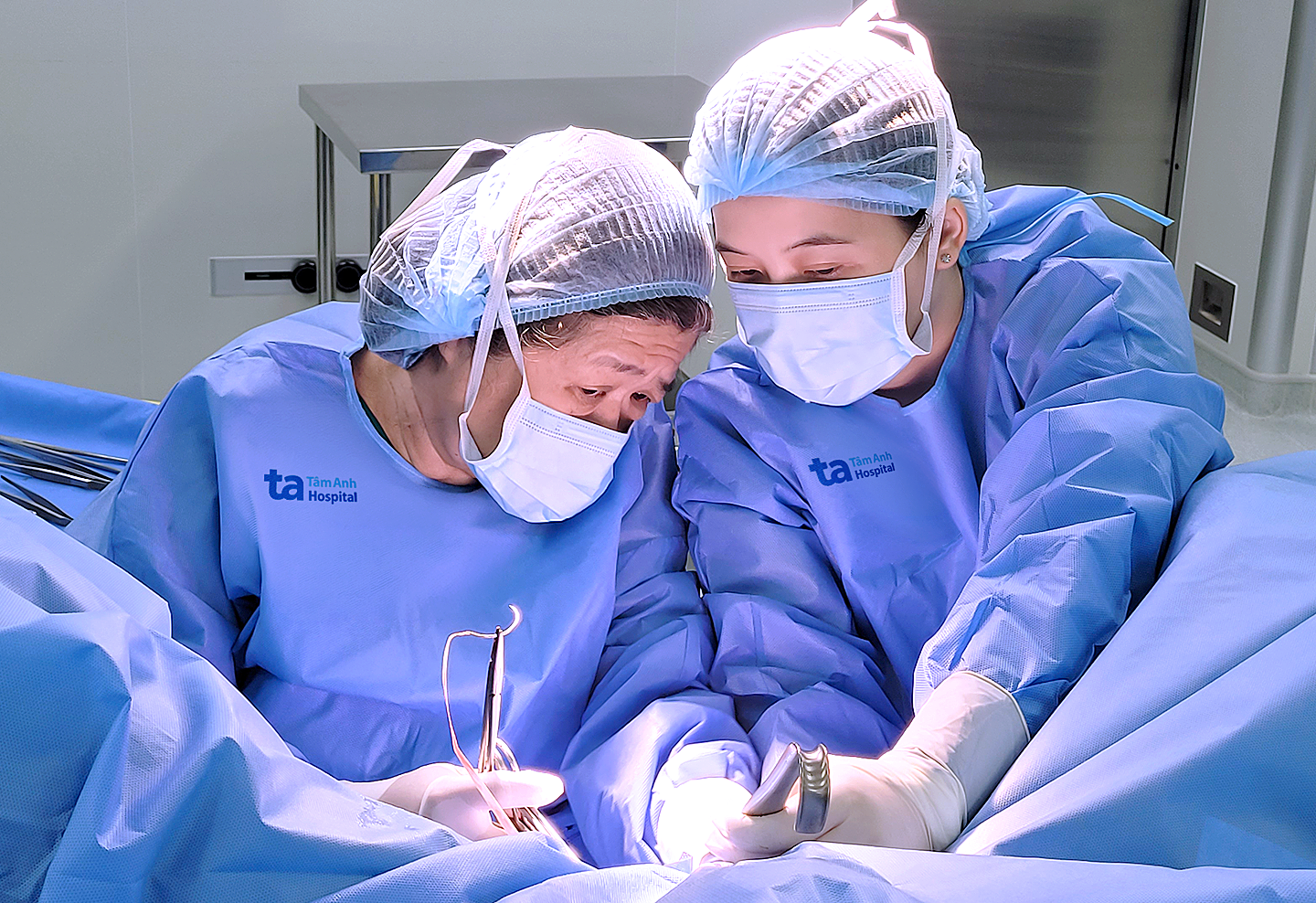 |
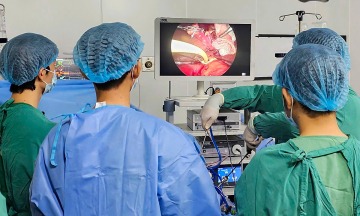
Doctor My Nhi (left) and her surgical team operating on a patient. Photo: Tam Anh General Hospital |
Uterine prolapse, also known as pelvic organ prolapse, occurs when the pelvic floor muscles and ligaments stretch and weaken. This weakening causes the uterus to move out of its normal position, dropping into the vagina or even prolapsing far enough to protrude outside the vaginal opening.
The condition primarily affects women after childbirth or menopause. During multiple pregnancies and childbirths, the pelvic floor must support the weight of the fetus, placenta, and amniotic fluid. This weight continuously stretches the muscles and ligaments. During menopause, declining estrogen levels cause connective tissue and collagen in the pelvic floor area to thin, become brittle, and easily stretch or tear under gravitational pressure.
The condition often progresses silently, with common signs appearing at severe stages including pelvic pain, lower abdominal or back pain, urinary urgency, incontinence, and constipation. Doctor My Nhi noted that the biggest barrier to treating uterine prolapse is patients' hesitation to seek help.
To reduce the risk of developing the condition, doctors recommend women maintain a healthy lifestyle and manage a healthy weight. They should exercise 30 minutes daily or a minimum of 150 minutes weekly, perform Kegel exercises to strengthen pelvic floor muscles, and undergo regular health check-ups. If unusual symptoms appear, early examination is necessary for timely diagnosis and treatment.
Ngoc Chau
*Patient's name has been changed