Master of Science, Doctor Vu Thi Ngoc, from the Center for Reproductive Assistance at Tam Anh General Hospital Hanoi (IVF Tam Anh), reported that Ms. Nhai's uterine fundus had fibrous adhesions between its front and back walls, with uneven endometrial development. This condition likely resulted from previous abortions or intrauterine surgeries.
Ms. Nhai had a prior ectopic pregnancy, which necessitated surgery to remove her left fallopian tube and clip her right one. For her and her husband to have a child, in vitro fertilization (IVF) became their only option. They underwent IVF at two different hospitals, yielding many good quality embryos. However, they experienced four failed embryo transfers and two unexplained miscarriages, one of which was a twin pregnancy.
Doctor Ngoc explained that uterine adhesions narrow the uterine cavity, causing the endometrial lining in the affected areas to become fibrotic, thin, and less vascularized. This significantly impairs the embryo's ability to implant. The condition can also obstruct the movement of a fertilized egg into the uterus, increasing the risk of ectopic pregnancy. Even if an embryo reaches the uterus, limited space can lead to miscarriage, premature labor, abnormal bleeding, or abnormal placental attachment to the uterine wall.
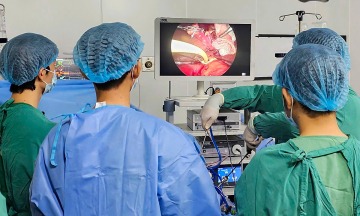
Doctor Ngoc recommended hysteroscopic adhesiolysis for Ms. Nhai. This procedure removes fibrous bands, reconstructs the uterine cavity, and improves the endometrial surface area. After the procedure, a gel to prevent re-adhesion was applied, and hormone medication was prescribed to promote uterine lining regeneration.
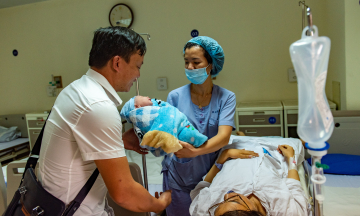
Following surgery, Ms. Nhai's uterine cavity volume recovered, making it suitable for embryo transfer. To optimize embryo implantation, Doctor Ngoc prescribed a medication regimen designed to increase the thickness, uniformity, and blood supply of the endometrium. Ms. Nhai had to postpone embryo transfers during two cycles due to a thin endometrial lining. She then underwent two more screened embryo transfers before successfully conceiving. Her son was born healthy in early 2026, weighing 3,4 kg.
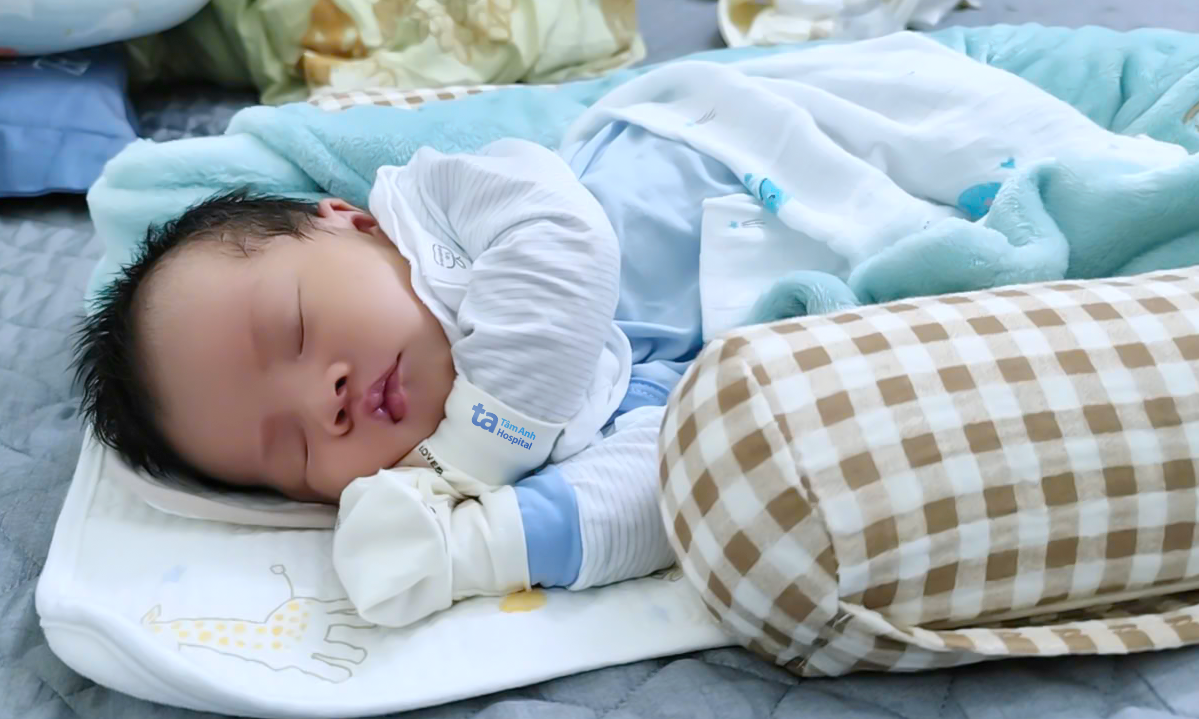 |
Ms. Nhai's son at 10 days old. Photo: Provided by subject |
Doctor Ngoc stated that repeated failed embryo transfers can stem from embryo quality issues, uterine or embryonic abnormalities, or endometrial incompatibility. Uterine adhesions, polyps, fibroids, or uterine malformations are common factors that are often overlooked without specialized examination. Additionally, a woman's age and certain underlying medical conditions can impact embryo implantation rates.
Currently, many lesions can be effectively treated with hysteroscopic surgery, which improves the environment for embryo implantation and increases the chances of pregnancy. Many individuals can conceive naturally after such interventions, without requiring assisted reproductive methods.
Doctors advise women to undergo regular gynecological check-ups every six months for disease screening. Those with a history of uterine interventions, such as abortions or tumor removal, or who experience difficulty conceiving after six months to one year of regular intercourse, should seek early examination for timely diagnosis and treatment.
Trinh Mai
| Readers can submit questions about infertility here for doctors to answer. |