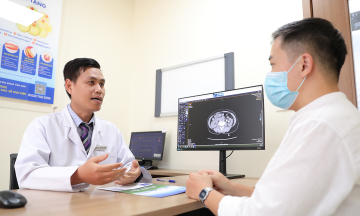
The spot appeared three years ago, initially thought to be a mole by Mr. Hai. However, it grew to about 2.5 cm and began oozing fluid. Doctor of first-degree specialization Le Ngoc Vinh from Tam Anh General Clinic in District 7 observed a rough, uneven-bordered black spot, suspecting cancer. He advised Mr. Hai to undergo surgery to prevent the cancer from metastasizing to lymph nodes and other organs if left untreated.
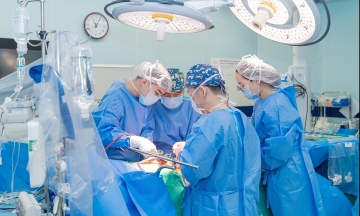
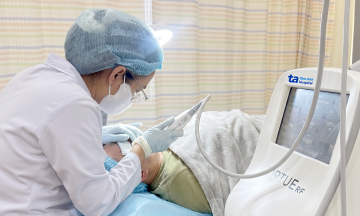
After local anesthesia, Doctor Vinh incised the skin along the marked lines, excising a 0.5 cm margin around the tumor to a depth of 2.5 cm. A cheek skin flap was used to close the resulting 3 cm skin defect, ensuring an aesthetic outcome. The minor surgery lasted 30 minutes, and Mr. Hai was monitored for another 30 minutes before being discharged.
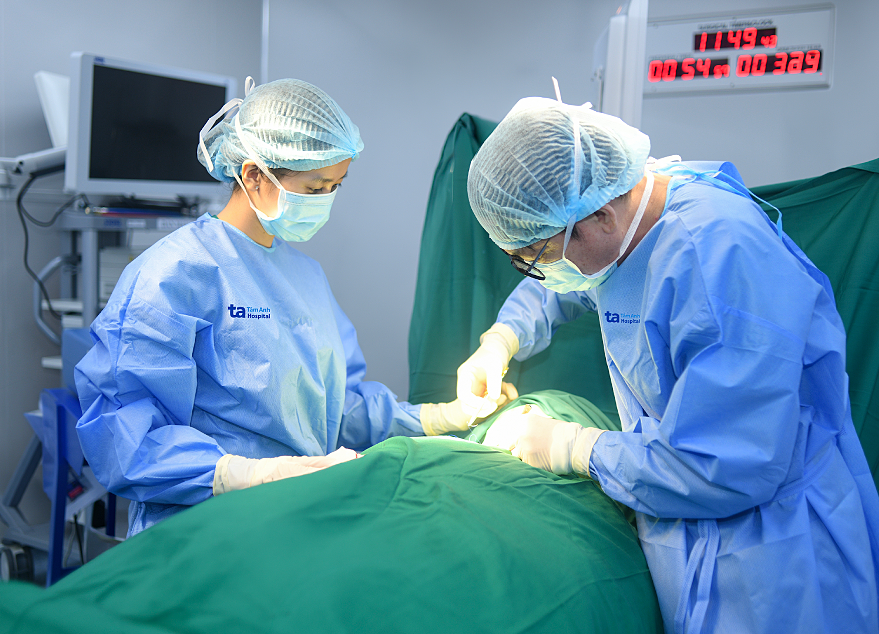 |
Doctor Vinh performing surgery on a patient. *Photo: Tam Anh General Hospital*
Due to the cancer's facial location, surgeons must achieve sufficient excision margins while maintaining aesthetics. The tissue sample was sent for histopathology, which confirmed infiltrative basal cell carcinoma.
"The tumor had infiltrated the subcutaneous fat layer but had not invaded blood vessels, nerves, or metastasized to lymph nodes or other organs. The cure rate is up to 99%", Doctor Vinh stated, adding that the surgical margins were clear of cancer cells, meaning Mr. Hai did not require adjuvant radiation therapy.
Skin cancer is categorized into three types: basal cell carcinoma, squamous cell carcinoma, and melanoma (malignant mole). Basal cell carcinoma accounts for about 80% of skin cancer cases, characterized by low malignancy, slow growth, and a high treatment prognosis.
The disease commonly affects skin areas with prolonged, repeated sun exposure, such as the head, face, and neck. Frequent exposure to ultraviolet rays from sunlight is the primary cause of skin cancer. Other risk factors include radiation exposure, chronic dermatitis, arsenic exposure, family history, smoking, albinism, and HPV infection. Older individuals are more susceptible to skin cancer due to aging combined with frequent sun exposure.
Treating skin cancer, especially on the face, requires combining tumor removal with reconstructive surgery for the defect. Doctors typically excise the malignant tumor with a 1-2 cm margin of surrounding tissue, followed by reconstruction to ensure an aesthetic outcome. Late-stage melanoma is often treated with chemotherapy, immunotherapy, and targeted therapy drugs.
Doctor Vinh advises everyone to avoid sun exposure during peak ultraviolet radiation hours (10h - 15h) to reduce the risk of skin cancer. When outdoors, individuals should wear protective clothing and wide-brimmed hats. If any unusual skin signs appear, such as slow-healing sores, darkening, easy bleeding, rough or scaly red-black spots, or moles with irregular borders, patients should consult an oncology specialist for examination.
Nguyen Tram
*Patient's name has been changed
| Readers can submit questions about cancer here for doctors to answer. |