Viet Duc Hospital recently announced Vietnam's first domino organ transplant for a patient suffering from amyloidosis, a rare condition affecting both the heart and nervous system. Before this multi-organ transplant, doctors at French Hospital Hanoi had diligently worked to diagnose and treat the patient for nearly two years.
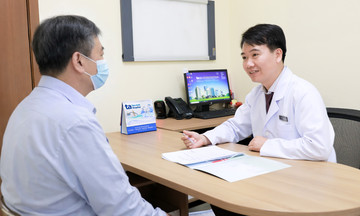
On 19/3, Master of Science, Doctor Sabrina Stefanizzi from the Neurology Department, French Hospital Hanoi, stated that the patient first visited the hospital for a health check-up in 9/2024. He was advised to undergo a specialized cardiovascular examination due to symptoms of shortness of breath. During the examination, doctors suspected the patient had a rare disease involving both the cardiovascular and nervous systems.
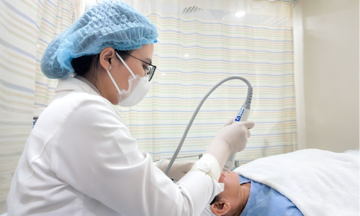
To confirm the diagnosis, Doctor Sabrina Stefanizzi collaborated with international partners to conduct genetic testing and analyze a salivary gland biopsy. Results identified the patient as heterozygous for the c.157T>C (p.Phe53Leu) variant – a mutation associated with hereditary transthyretin amyloidosis (hATTR). The biopsy results further confirmed this diagnosis.
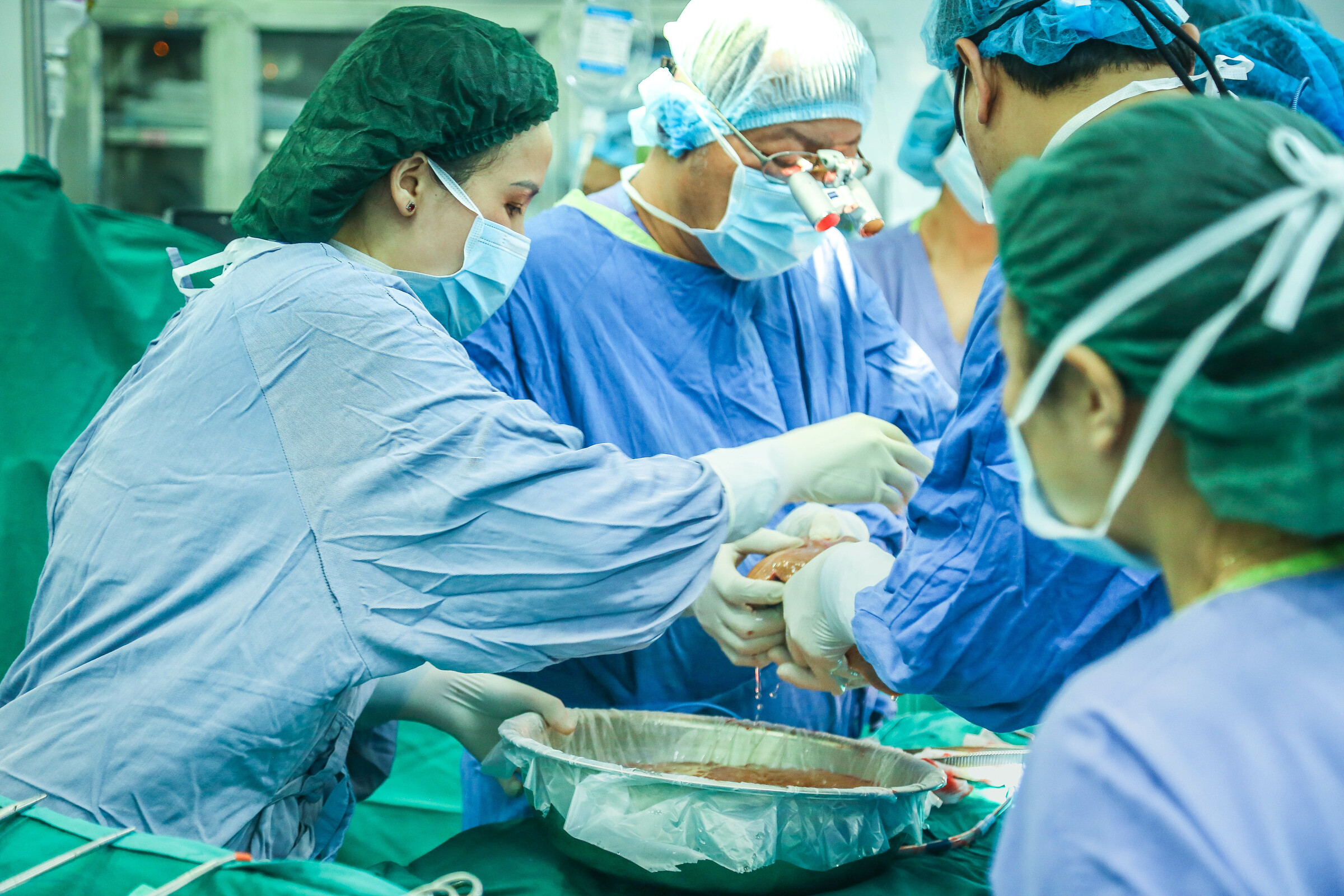 |
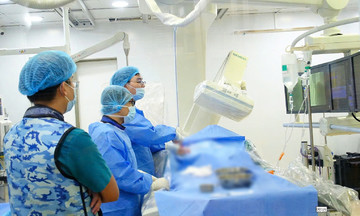
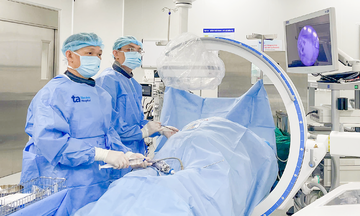
Doctors performing a liver transplant on the patient. Photo: Thao My |
Amyloidosis encompasses a group of rare disorders characterized by the abnormal extracellular deposition of insoluble, misfolded protein fibers. This leads to structural disruption and multi-organ dysfunction. Among systemic forms, hereditary transthyretin amyloidosis (hATTR) is the most common, caused by transthyretin (TTR) gene mutations on chromosome 18q.
Normal TTR protein exists as a stable tetramer, transporting thyroxine and vitamin A. However, point mutations, most commonly Val30Met, destabilize this structure, causing it to dissociate into monomers that readily aggregate into toxic amyloid fibers. The disease progresses continuously, causing heart failure, peripheral neuropathy, weakness, orthostatic hypotension, and is often fatal within 10-15 years without specific treatment. The goal of treatment is to prevent amyloid accumulation, improve patient quality of life, and prevent complications.
Following a confirmed diagnosis, the patient received treatment and close monitoring of the disease's progression. By early 2026, myocardial infiltration had caused heart failure, accompanied by increasingly severe peripheral nerve damage. Doctor Sabrina and doctors from Viet Duc Hospital held a consultation and unanimously concluded that a simultaneous heart and liver transplant was necessary for radical treatment.
The simultaneous heart and liver transplant replaced the amyloid-infiltrated myocardium and eliminated the source of mutated TTR protein production from the liver. The patient received a heart and liver from a brain-dead donor. Meanwhile, the patient's healthy liver was subsequently used for another patient with liver cancer. Associate Professor Duong Duc Hung, Director of Viet Duc Friendship Hospital, stated that this was the first domino liver transplant performed in Vietnam. Currently, the patient is conscious, able to sit up independently, and eat normally.
Doctors emphasize that this case highlights the crucial role of early detection of rare diseases through specialized examinations and multidisciplinary collaboration. This approach helps open up opportunities for optimal treatment, even for complex conditions like amyloidosis.
Le Nga