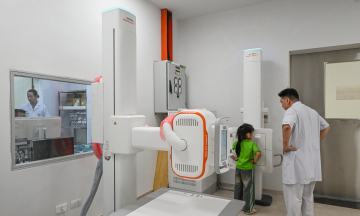
Flat feet is a condition where the sole of the foot is flat, lacking an arch. Typically, children under 2 years old exhibit flat feet symptoms because the arch and ligament system in the sole have not yet fully formed. However, if a child's foot remains flat without an arch after the age of 5, they have a high risk of developing flat foot deformity.
Master, Doctor, Level I Nguyen Xuan Truong from the Orthopedic Trauma Center at Benh vien Da khoa Tam Anh TP HCM, states that flat feet often present without symptoms and may not require treatment. However, if the deformity causes pain or stiffness in the foot, medical intervention may be necessary. When detected early, a child's musculoskeletal system is still flexible and developing, making the treatment process easier. The deformity can be corrected through methods such as wearing orthopedic shoes or undergoing physical therapy.
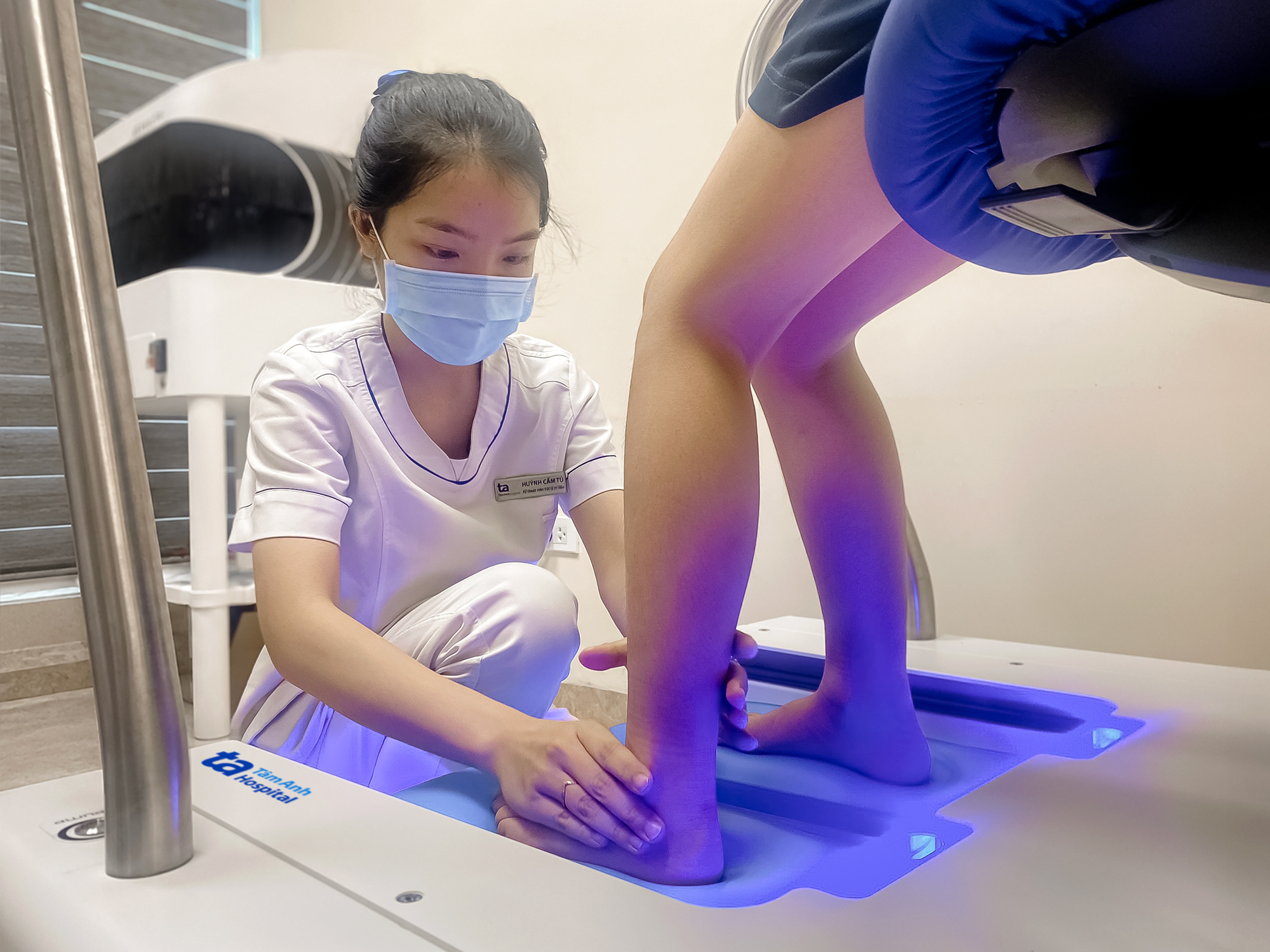 |
A technician performs a personalized 3D insole measurement, helping to reshape the foot. Photo: Benh vien Da khoa Tam Anh |
If left untreated, flat feet can deform bone structures and lead to several health issues:
Foot deformities alter the shape of the toes, ankles, and heels due to uneven force distribution. Patients may experience crooked toes or ingrown toenails, caused by unequal pressure on the toes during movement.
Abnormal gait results from the loss of support from the foot's arch. A heel that leans outward or inward can also change one's gait, leading to imbalance and an increased risk of falls.
Knee osteoarthritis is common. The knees of individuals with flat feet often rotate abnormally, tending to converge (knock-knees) due to the ankle rolling inward. This occurs because changes in the lower limb structure cause the shin bones and knee joints to rotate and misalign. This condition prevents force from distributing evenly across the joint cartilage, increasing the risk of cartilage damage and long-term knee osteoarthritis.
Osteoarthritis can develop. Abnormal compression and friction between bones can cause damage, leading to conditions such as: bursitis, Achilles tendinitis, and plantar fasciitis.
 |
Doctor Truong assesses a patient's foot condition. Photo: Benh vien Da khoa Tam Anh |
While flat feet are not life-threatening, they pose many long-term health consequences. Therefore, patients should seek early medical attention if they notice warning signs of flat feet, such as a flat footprint (no arch in the middle of the sole), heels or ankles tilting outward, knees tending to converge, or frequent aches, fatigue, and cramps in the feet and lower legs after prolonged walking.
For cases unresponsive to conservative treatment or when symptoms worsen, doctors may recommend surgery. The two common surgical methods for treating flat feet are foot reconstruction surgery and corrective, lengthening, or bone grafting surgery. These techniques can help reduce pain, create a foot arch, and improve foot function. However, surgery can lead to complications if not performed by specialized doctors. Therefore, patients should seek examination at reputable medical facilities with orthopedic trauma departments.
Phi Hong