Master, Doctor Le Thanh Huyen of the High-Tech Eye Center at Tam Anh General Hospital, Hanoi, reported on the case of one-year-old Quang. The boy presented with severe conjunctivitis in both eyes, alongside bronchitis, nasopharyngitis, and otitis media, with elevated infection markers. Quang's right eye was particularly swollen, congested, had significant discharge, and a very thick pseudomembrane covering both upper and lower eyelids.
A pseudomembrane is an inflammatory membrane forming on the inner eyelid during severe inflammation and necrosis. Persistent pseudomembranes continuously rub the cornea, increasing the risk of erosion, scratches, or inflammation with each blink. An excessively thick pseudomembrane also hinders medication absorption, prolonging and complicating treatment.
 |
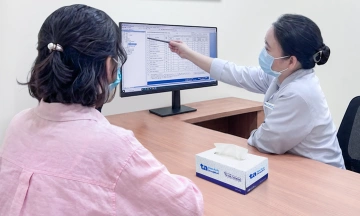
Doctor Huyen advises the patient's mother. *Photo: Tam Anh General Hospital* |
Doctor Huyen explained that respiratory viruses such as adenovirus, influenza, or measles can affect the eye's mucous membranes. Quang's persistently thick, regenerating pseudomembrane was likely linked to co-infection with adenovirus and influenza A. This dual infection exacerbated both local and systemic inflammation, necessitating 5 pseudomembrane removal procedures.
Given the patient's young age, pseudomembrane removal demanded precise, gentle handling to prevent eye surface damage. Timely intervention preserved his cornea, ensuring no lasting impact on his vision. Alongside eye treatment, the medical team managed respiratory complications, including fever reduction, close monitoring of breathing, administering influenza A antiviral medication, and antibiotics for infection control.
After 4 days, the child's health significantly improved: fever subsided, and coughing and wheezing decreased. One week after pseudomembrane removal and diligent medication, his eyes were no longer swollen, free of discharge, and the pseudomembrane did not recur.
Doctors advise parents of children with viral illnesses to observe eye abnormalities, not just coughs, fevers, or runny noses. If a child experiences red eyes, swollen eyelids, excessive tearing, significant discharge, light sensitivity, or difficulty opening their eyes, seek immediate medical attention. Parents should avoid self-medicating with eye drops, particularly those containing corticosteroids, without a doctor's prescription. Maintaining hand hygiene and sanitizing the child's personal items also helps limit infection risk.
Hoang Duong
*Patient's name has been changed*
| Readers can send questions about ophthalmic diseases here for doctors to answer. |