Ms. Hang was born with solitary ovary syndrome. After nearly one year of not conceiving due to an endometrioma, she pursued infertility treatment using in vitro fertilization (IVF). Three months ago, she completed her ovarian stimulation cycle, underwent oocyte retrieval, and created embryos for freezing. She is currently planning an embryo transfer.
This time, Ms. Hang was admitted to the emergency room due to severe, intermittent lower abdominal pain and dry heaving. Doctor of First Degree Specialization Nguyen Van Cong, from the Obstetrics and Gynecology Center at Tam Anh General Hospital Hanoi, performed a clinical examination. He noted significant lower abdominal pain, suspected adnexal torsion, and ordered a transvaginal ultrasound. The results showed Ms. Hang's left ovary and fallopian tube were twisted two times, and an endometrioma measured approximately 3x4 cm.
"This is a special case because the patient was born with only one ovary," said Doctor Cong, adding that without timely intervention, prolonged ischemia could lead to ovarian necrosis and necessitate its removal.
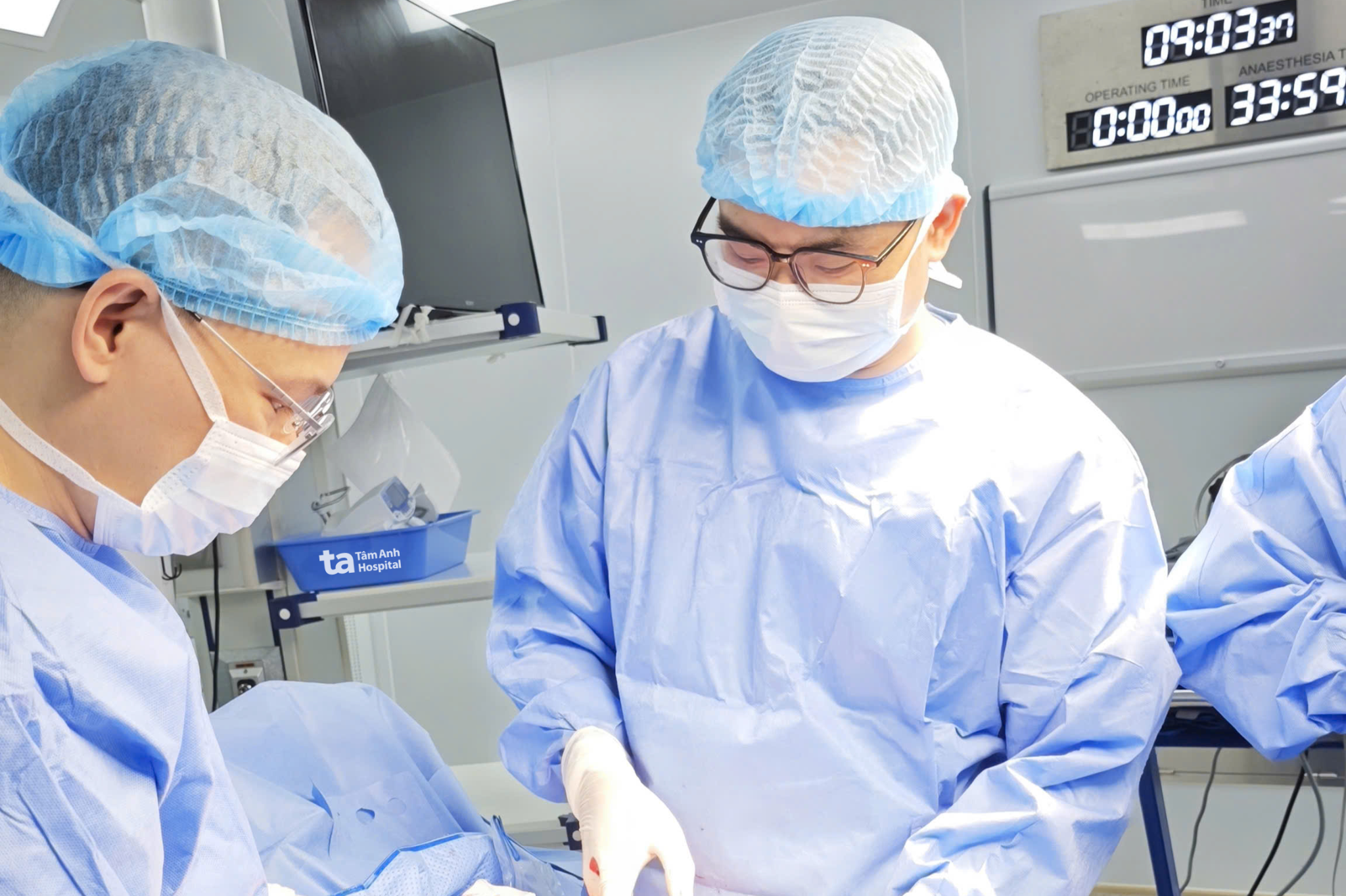 |
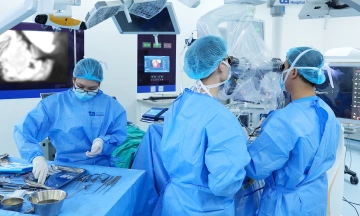
Doctor Cong performing detorsion surgery on the patient. Photo: Tam Anh General Hospital |
The endometrioma caused the torsion by increasing the ovary's weight and altering its position, making the organ susceptible to twisting around its vascular pedicle during movement. When the vascular pedicle twists, it obstructs blood flow to the ovary. Without prompt detorsion, ovarian tissue can undergo necrosis.
The laparoscopic surgical team untwisted the ovary two times, carefully avoiding damage to the blood vessels. After the ovary and fallopian tube returned to their anatomical positions, the ovarian tissue gradually regained its normal color, indicating restored circulation. The doctors then proceeded to dissect and remove the endometrioma, maximally preserving the remaining ovarian and fallopian tube parenchyma.
Twenty-four hours after surgery, the patient's abdominal pain subsided, her health stabilized, and she was discharged. If her recovery proceeds favorably, she may be able to proceed with embryo transfer as early as her next menstrual cycle.
According to Doctor Cong, ovarian preservation in this case holds particular significance. The embryos the patient had previously created can still be transferred to the uterus, as the uterus remains unaffected. However, if her solitary ovary had necrosed and required removal, she would lose the ability to produce additional oocytes to create new embryos using her own eggs in the future. The removal of her only ovary would also mean early menopause and the necessity of hormone replacement therapy.
Ovarian torsion can occur at any age but is more common in women of reproductive age who have ovarian cysts or endometriosis. The condition requires early detection and prompt management, particularly within the first 6 hours of symptom onset.
Typical symptoms include sudden, severe lower abdominal pain, which may be accompanied by nausea or vomiting. When these symptoms appear, patients should seek immediate medical attention at an obstetrics and gynecology specialist for timely diagnosis and treatment. Women with ovarian cysts, endometriosis, or a history of infertility treatment should undergo regular gynecological check-ups to detect any abnormalities early.
Thuy Hanh
| Readers can send questions about obstetrics and gynecology here for doctors to answer |