Chi Thanh had abdominal pain for about one month and felt a mobile lump in her abdomen. She visited Tam Anh General Hospital in Ho Chi Minh City, where an abdominal ultrasound revealed an abnormal stomach wall. A CT scan showed a dilated stomach, approximately 8,3 cm in diameter, with a lesion of about 2 cm in the pyloric antrum region, which strongly absorbed contrast medium in the mucosal layer.
Doctor Do Minh Hung, Director of the Center for Endoscopy and Endoscopic Digestive Surgery, ordered a gastric endoscopy. This revealed an antral ulcer, diffuse congestive gastritis, and atrophic gastritis. A biopsy performed during the endoscopy confirmed poorly cohesive adenocarcinoma, a type of cancer where cells lose their ability to stick together. This cancer is highly invasive and prone to spreading.
The surgical team performed robot-assisted laparoscopic surgery using the Da Vinci Xi system to remove the lower part of the stomach, excising the entire tumor, combined with a D2 lymphadenectomy to eradicate cancerous cells.
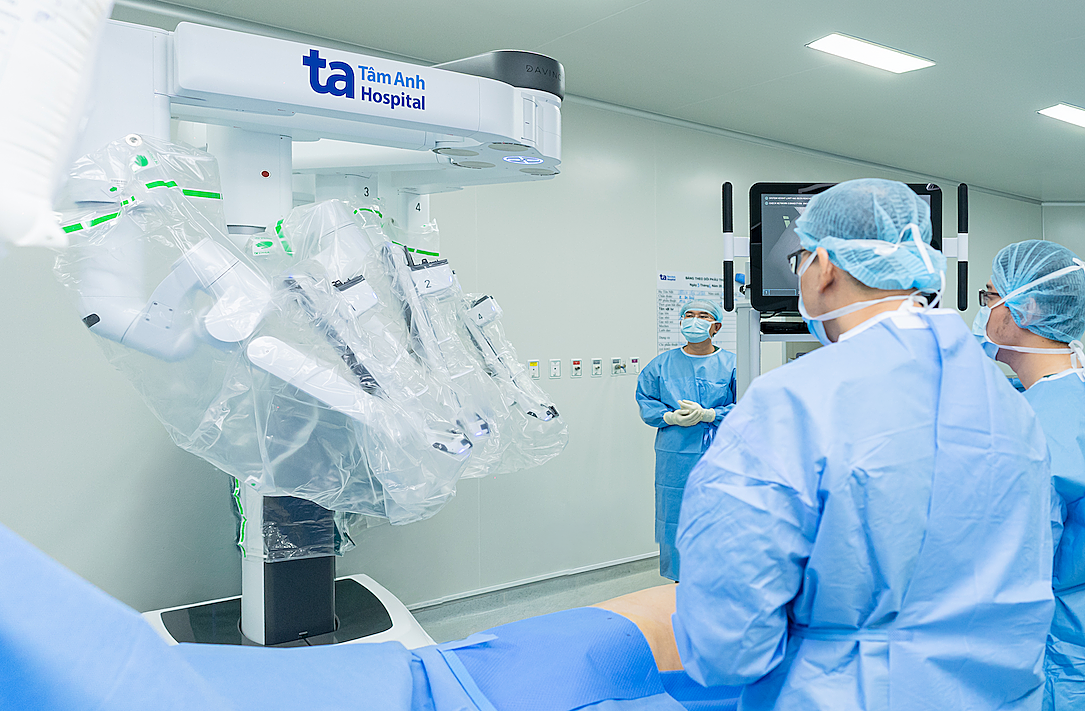 |
Doctor Hung (second from right) places a trocar to connect four robotic arms for Chi Thanh's surgery. Photo: Tam Anh General Hospital |
The surgeon controlled the robotic arms, which mimic human wrists, to dissect and remove lymph nodes in deep areas. The team then removed the 3 cm tumor from the antrum and resected the stomach 6 cm above the tumor. Finally, a gastrojejunostomy was performed, connecting the stomach to the small intestine.
Post-surgery, Chi Thanh recovered quickly. Her small incision was dry, and she was able to move and eat light meals, being discharged after three days. Pathological results showed stage 2A cancer (intermediate stage), with clear resection margins free of cancerous cells. None of the 50 lymph nodes removed showed metastasis, and the tumor had not invaded blood vessels, meaning Chi Thanh did not require additional treatment.
 |
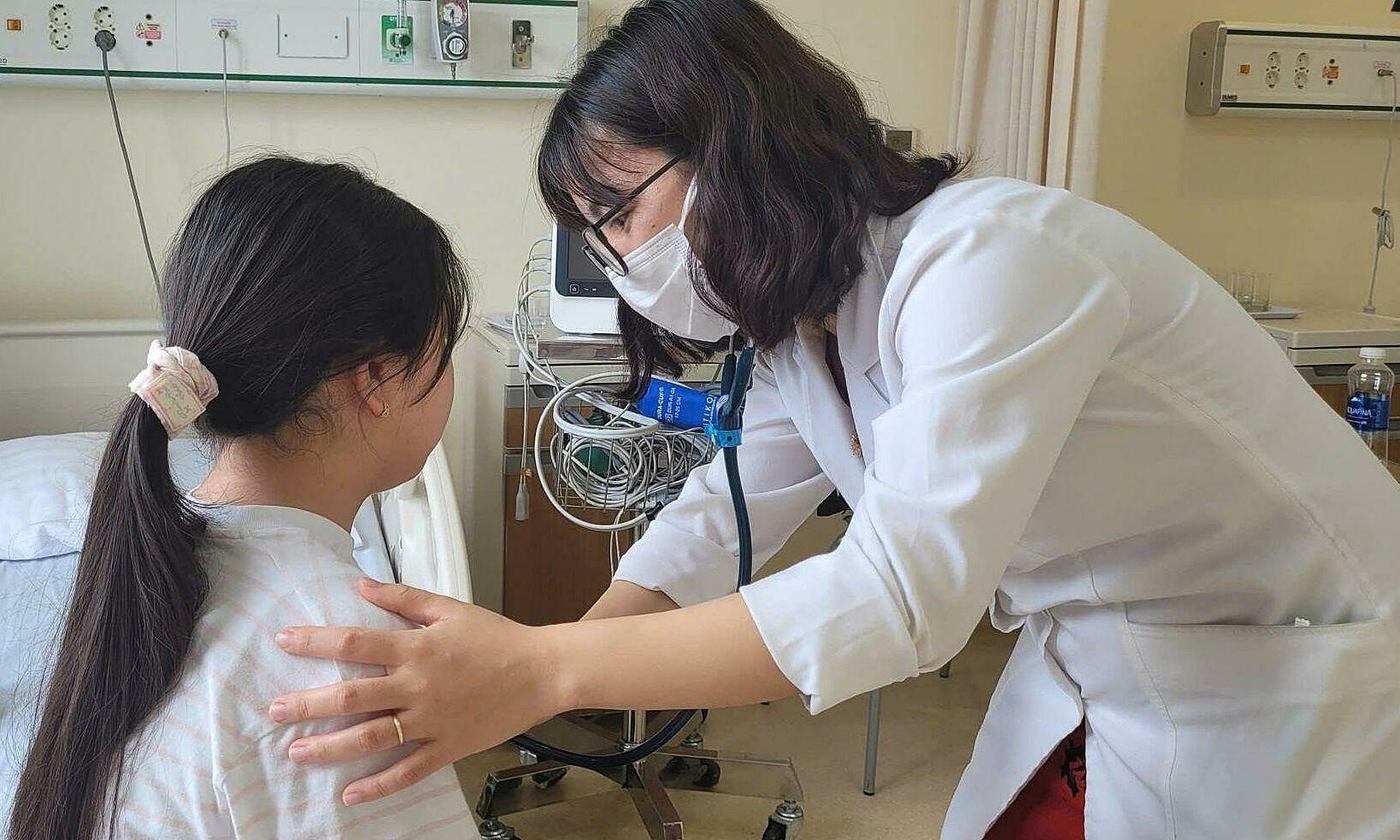
Doctor Hung checks Chi Thanh's incision during her follow-up appointment. Photo: Tam Anh General Hospital |
According to Doctor Hung, stomach cancer is a common malignancy with an increasing incidence and affects younger patients. The exact cause of stomach cancer remains undetermined. However, several factors can increase the risk, including genetic mutations and helicobacter pylori (HP) infection. Additionally, a sedentary lifestyle, unhealthy eating habits (consuming processed foods, insufficient vegetables and fruits), prolonged stress, lack of sleep, and environmental pollution also promote cancer development.
Early-stage stomach cancer often presents no symptoms, leading to most diagnoses occurring in later stages, which complicates prognosis. When suspicious signs appear, such as persistent bloating, abdominal distension, epigastric pain, nausea, early satiety, or weight loss, individuals should seek digestive examination for early treatment to prevent complications.
Quyen Phan
*Patient's name has been changed
| Readers can submit questions about digestive diseases here for doctors to answer |