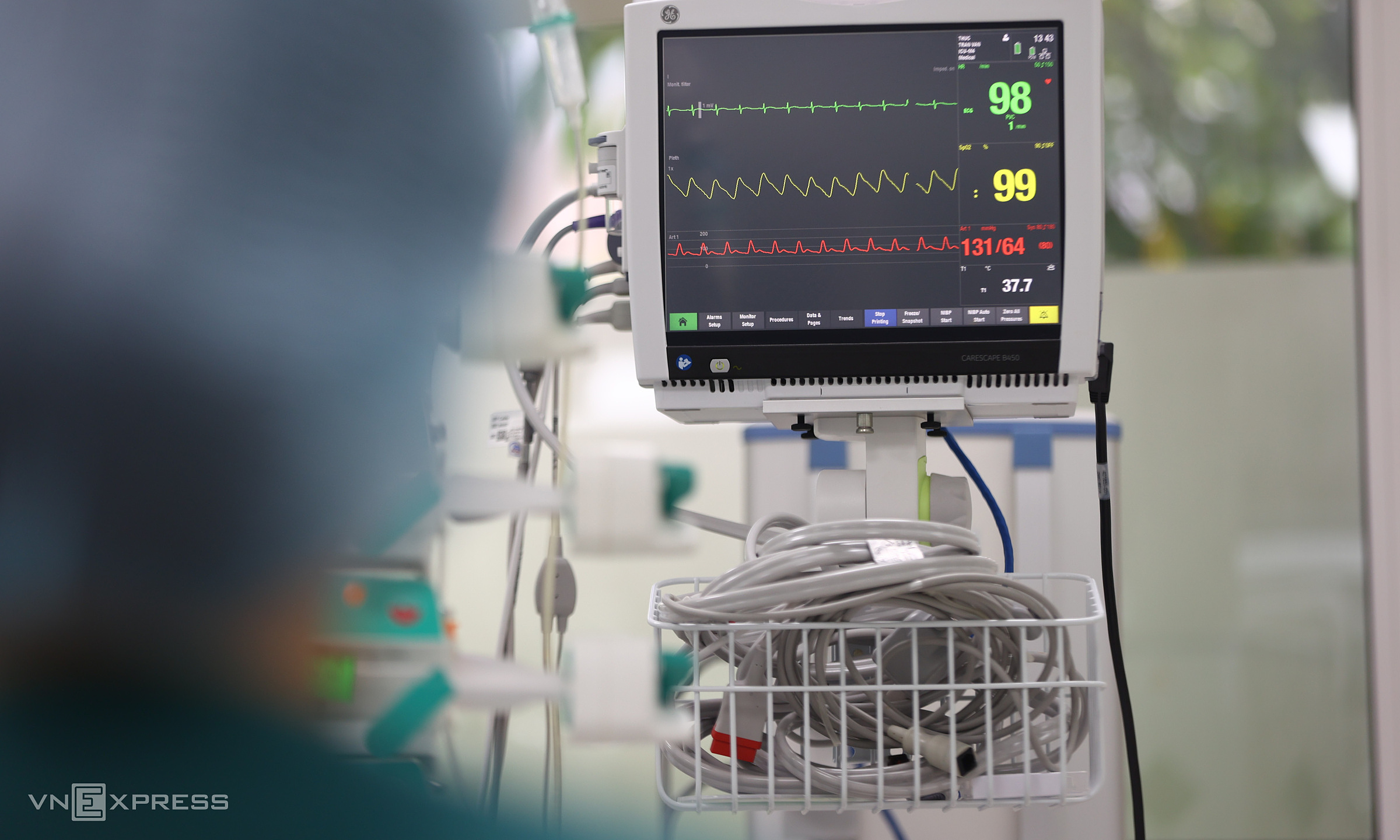
Mr. Tuan, 69, had no unusual symptoms and regularly underwent health check-ups due to a previous heart stent placement. Doctors discovered a lesion in his right lung, but its benign or malignant nature was initially unclear because the tumor was small and difficult to access.
A computed tomography (CT) scan of the lung revealed a tumor approximately 1.8 cm in size, located deep within the lung parenchyma in the lower right lobe. It displayed several characteristics suspicious for malignancy, including irregular spiculated margins and pleural retraction.
Assoc. Prof. Dr. Vu Huu Vinh, Director of the Thoracic - Vascular Surgery Center at Tam Anh General Hospital Ho Chi Minh City, stated that at this location, methods like needle biopsy often have a high error rate, potentially leading to misdiagnosis. Following a consultation, doctors decided to perform robotic-assisted endoscopic surgery using the Da Vinci Xi system, which allowed them to both determine the tumor's nature via frozen section biopsy and radically remove it.
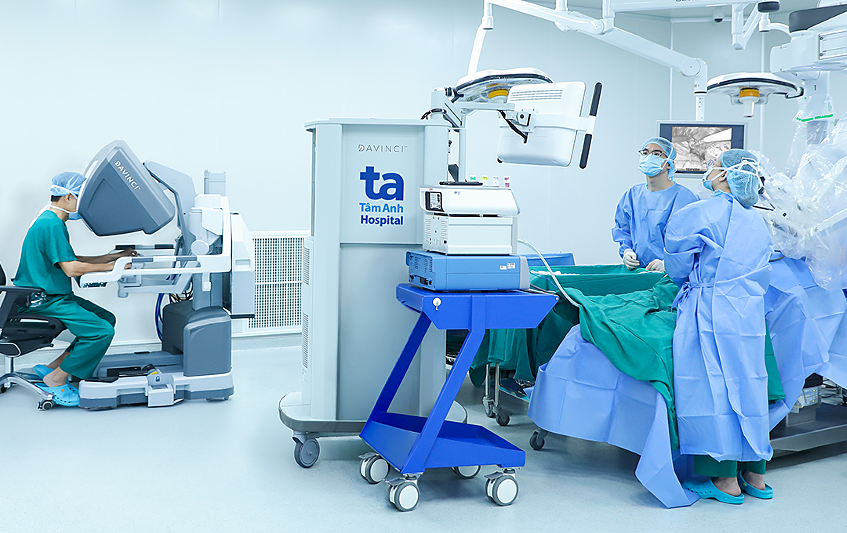 |
Assoc. Prof. Vinh (left) operates the robot for biopsy and segmentectomy on the patient. Photo: Tam Anh General Hospital |
Doctors meticulously separated the lung segments requiring removal, then intervened in the tumor-containing segments (S7, S8, S9, S10) while preserving segment S6, which occupies a large area. This approach aimed to conserve the maximum amount of healthy lung tissue and maintain the patient's quality of life after surgery.
With the assistance of the robot and its magnified 3D camera, Assoc. Prof. Vinh precisely dissected the tumor, avoiding damage to the four surrounding veins and minimizing the risk of bleeding. The small tumor was deeply embedded in the parenchyma, invisible and undetectable from the outside; it only became apparent after the resected lung lobe was incised, Assoc. Prof. Vinh explained.
The frozen section biopsy confirmed early-stage adenocarcinoma, allowing for radical tumor removal during the same operation. Mr. Tuan was discharged after four days and required no additional treatment.
According to Globocan 2022, Vietnam recorded over 24,400 new cases and nearly 22,600 deaths from lung cancer.
Early-stage lung cancer often presents no clear symptoms, making it easily mistaken for pneumonia and common respiratory tract infections.
Assoc. Prof. Vinh advises older adults, current or former smokers, individuals working in dusty environments, or those with a family history of lung cancer to undergo screening using modern imaging techniques like annual low-dose lung CT scans or as advised by a doctor. Early detection significantly increases the chances of cure, often allowing for minimally invasive techniques that preserve maximum lung parenchyma and maintain physical condition and respiratory function after treatment.
*Patient's name has been changed