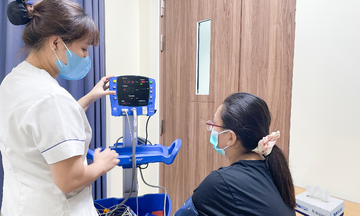
Ong Truc, 62, had a JJ stent placed at a local hospital to temporarily drain urine from his kidney to his bladder. However, his ureter was kinked and his renal pelvis dilated, making the procedure ineffective.
Associate Professor, Doctor Vu Le Chuyen, Director of the Urology - Nephrology - Andrology Center at Tam Anh General Hospital TP HCM, stated that the patient suffered from a ureteral stricture in the middle one-third segment, causing urinary flow obstruction and hydronephrosis. Robotic pyeloplasty using the Da Vinci Xi robot was the optimal solution for the patient.
 |
Associate Professor Chuyen visits Ong Truc after surgery. *Photo: Tam Anh General Hospital* |
Doctor Le Phuc Lien, Head of the Female Urology Unit at the Urology - Nephrology - Andrology Center, who was part of the surgical team, suggested that the patient's strictured ureteral segment was fibrotic, possibly due to a long-standing kidney stone or damage from a previous lithotripsy procedure.
As the strictured segment was under 2 cm long, the team used the Da Vinci Xi robot for an end-to-end ureteral anastomosis. Doctors completely removed the narrowed section, then reconnected the two healthy ends of the ureter, above and below, while also placing a JJ stent to drain urine from the kidney to the bladder. The robot's assistance provided a magnified surgical field, allowing for precise manipulation, minimizing invasiveness. After surgery, Ong Truc recovered quickly, experienced less pain, had a small incision, and was discharged after two days.
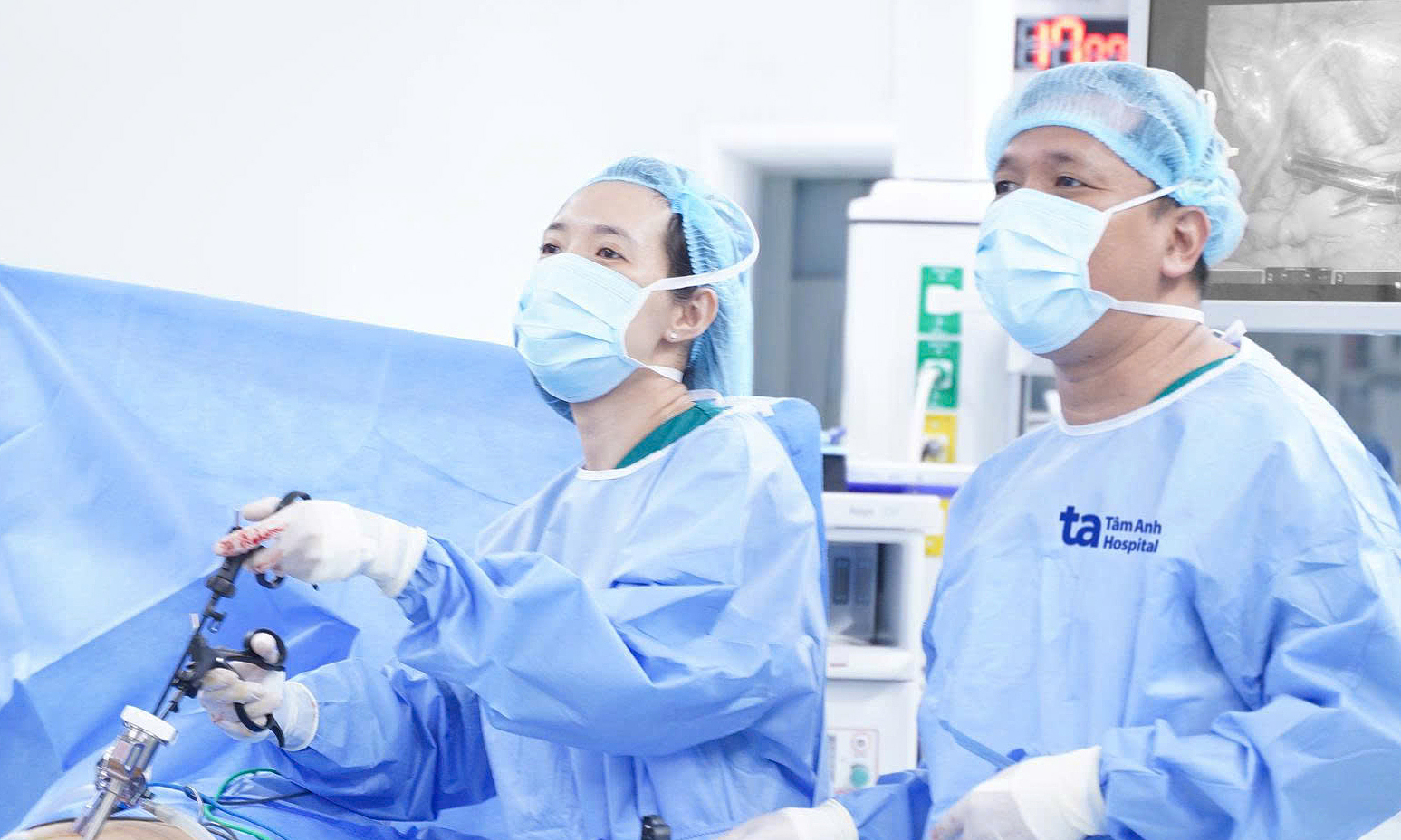 |
The surgical team performs robotic pyeloplasty using the Da Vinci Xi for Ong Truc. *Photo: Hospital provided* |
Ureteral stricture can be congenital or acquired, from factors such as: urinary stones, inflammation, trauma, previous surgery, pregnancy, or compressive tumors. Patients may experience symptoms like flank pain, lower abdominal pain, dysuria, weak urinary stream, burning sensation during urination, frequent urination, hematuria, recurrent urinary tract infections, or hydronephrosis. This condition can lead to renal function impairment if not treated promptly.
In mild cases, or when surgery is not immediately possible, doctors may recommend JJ stent placement and regular replacement to drain urine. For more severe cases, doctors prescribe surgery to widen the narrowed area or perform pyeloplasty to restore urinary flow, preserve kidney function, and prevent long-term complications.
To prevent ureteral strictures and other urinary tract diseases, Doctor Lien advises maintaining a healthy lifestyle, drinking enough water daily, consuming plenty of fiber, and limiting the risk of stone formation and constipation. It is important not to hold urine, to use the restroom when needed, exercise regularly, and undergo routine health check-ups for early detection and timely treatment of any abnormalities.
Ha Thanh