Alexander Gintsburg, an academician of the Russian Academy of Sciences and scientific director of the Gamaleya National Research Center for Epidemiology and Microbiology, announced the plan on 3/8 to RIA Novosti. The mentioned products are therapeutic vaccines, developed to activate the immune system against cancer cells in individuals already afflicted, differing from prophylactic vaccines that prevent cancer. He has not yet disclosed the technology, research timeline, or trial plans for the three products.
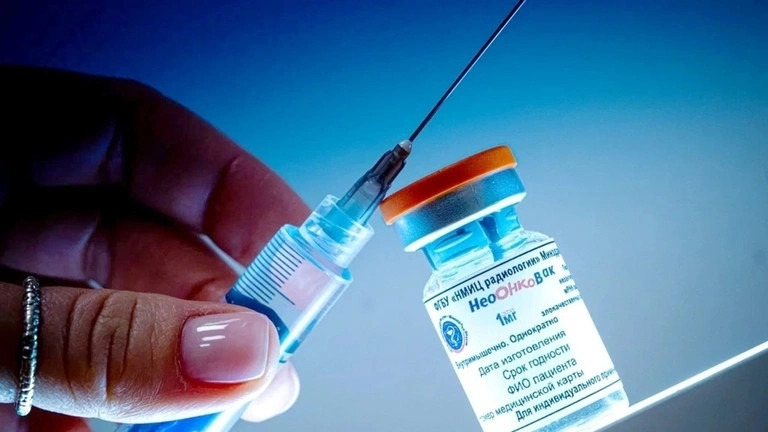 |
Experimental cancer treatment vaccine Neooncovac. Photo: Russian Ministry of Health
The foundation for developing these new products is built upon research experience with NeoOncoVac, a personalized mRNA vaccine for individuals with melanoma. This product began human trials in early April and is custom-designed based on the genetic characteristics of the patient's tumor.
According to the Russian Ministry of Health, NeoOncoVac is administered to help the immune system recognize specific tumor antigens in patients diagnosed with melanoma who still face a risk of disease progression despite surgery and immunotherapy.
The National Medical Research Center for Radiology of Russia stated that NeoOncoVac is being considered for use in combination with immune checkpoint inhibitors. It targets adults with inoperable or metastatic melanoma and may also be used as an adjuvant after surgical removal of metastatic lesions.
Beyond the Gamaleya Center's projects, the Federal Biomedical Agency of Russia is also developing two vaccines to treat glioblastoma, an aggressive form of brain cancer. Veronika Skvortsova, the agency's head, expects clinical use approval for the peptide vaccine Gliopept in 2026 and the mRNA vaccine GlioRNA by the end of the year.
Van Ha (According to RT, TASS)