On 17/7, Doctor Nguyen Thanh Tam, Department of Surgery, Gia An 115 Hospital, reported that a patient who had been receiving treatment in Cambodia was admitted to Vietnam for emergency care. She presented with hypotension, respiratory failure, and signs of multi-organ failure due to widespread infection.
Doctors diagnosed the patient with septic shock and transferred her to the intensive care unit (ICU). Imaging scans revealed a large abscess in her spleen. Given her critical condition, the medical team prioritized resuscitation to stabilize her hemodynamics and support respiration before surgery.
Following a consultation, doctors determined that the abscess had ruptured, leading to pleural effusion and a collapsed left lung, which severely exacerbated her respiratory failure. In the context of septic shock and multi-organ failure, an emergency splenectomy was considered high-risk but presented the only chance to save the patient's life.
Doctors successfully removed the spleen and cleared the infection from the abdominal cavity. The patient then continued intensive treatment in the ICU to control the infection, support respiration, and monitor organ function. After nearly three weeks of treatment, her health gradually recovered, and she was discharged from the hospital.
 |
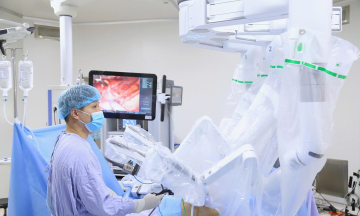
The doctors performing surgery on the patient. Photo: _Hospital provided_
According to Doctor Tam, splenic abscesses are very dangerous. Unlike abscesses in many other organs, damage to the spleen not only forms a pus pocket but also impairs immune function. Bacteria from the abscess can continuously enter the bloodstream, causing sepsis, septic shock, and multi-organ failure if not treated promptly.
Initial symptoms are often non-specific, such as prolonged fever, dull abdominal pain, fatigue, loss of appetite, or weight loss. These can be easily confused with common infections. Many cases are only discovered when severe complications have already appeared.
Doctor Tam advises against complacency if experiencing prolonged fever of unknown origin, dull abdominal pain, severe fatigue, weight loss, or shortness of breath. These could be signs of a deep infection in the body that requires early medical attention. Once the condition progresses to sepsis or septic shock, the risk of mortality is very high, and treatment becomes much more complex.
Le Phuong