The answer is yes, and this is based on a solid anatomical foundation.
The rectum and anal canal are not aligned straight; instead, they form an angle known as the anorectal angle, which is about 120 degrees. In a typical sitting posture on a toilet, the hips are only flexed to about 90 degrees. This causes the puborectalis muscle to remain partially contracted, bending the final segment of the bowel like a hook. This curve obstructs stool movement, forcing individuals to strain harder and longer than necessary during defecation.
Conversely, when squatting, the hips flex much deeper, reducing the torso-to-thigh angle to about 35 degrees. In this posture, the puborectalis muscle relaxes maximally, straightening the final segment of the bowel into an almost unobstructed passage. This allows stool to pass naturally without requiring much effort. This is why many people find defecation easier and quicker when squatting compared to sitting.
Modern toilets, common in most households today, do not allow for such deep hip flexion. A simple and effective intermediate solution is to place a low stool, about 15-20 cm high, under both feet when sitting on the toilet. Elevating the knees above the hips closely mimics the open angle of a squatting posture, while users can maintain their familiar toilet-sitting habit.
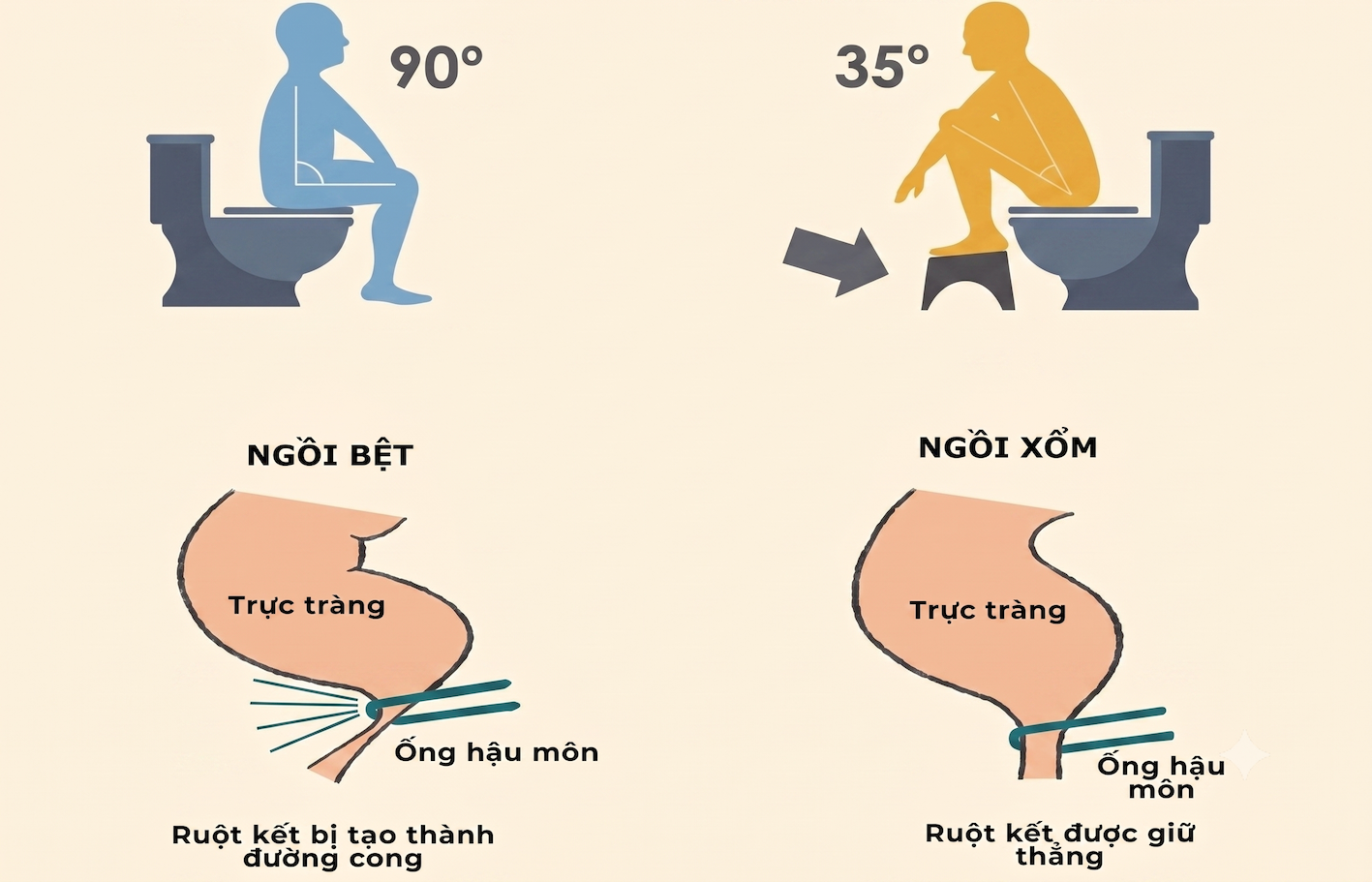 |
Image illustrating a defecation posture created by AI.
For individuals with chronic constipation, this offers a significant benefit. Constipation often causes excessive straining, increasing intra-abdominal pressure and pushing down on the veins in the anorectal region, which can lead to or worsen hemorrhoids over time. When the anorectal angle is straightened by a footstool, the necessary straining force decreases markedly, thereby reducing pressure on these sensitive tissues.
Similar benefits apply to postpartum women or individuals who have recently undergone anal surgery, groups who need to minimize strenuous straining.
However, it is important to emphasize that a footstool is merely a postural aid and does not replace treatment for the root causes of constipation, such as a diet lacking fiber, insufficient water intake, or limited physical activity. If constipation persists, accompanied by blood in the stool or unusual weight loss, individuals should still consult a gastroenterologist to identify the cause.
Guide to the correct posture when sitting on a toilet
Video: Bright Side
Doctor of Philosophy, Medical Doctor Vo Hong Minh Cong
Deputy Director of Nhan Dan Gia Dinh Hospital