According to a report from "Parade", cardiologists point out that sleep is a vital period for the body to recover its cardiovascular system. This recovery includes lowering blood pressure, reducing stress hormones, and repairing blood vessels. If a prolonged lack of sleep or poor sleep quality occurs, the risk of cardiovascular diseases such as hypertension, obesity, and diabetes can increase.
Doctors specifically emphasize that "sleeping with the TV on" is a common habit many often overlook. While some rely on TV sounds to relax and fall asleep, this practice can prevent the body from entering deep sleep. This reduces sleep's restorative effectiveness and thereby causes negative impacts on cardiovascular health over time.
Many are aware that blue light from mobile phones and tablets affects sleep. However, experts note that TVs, especially LCD and LED models, also emit similar blue light. Blue light disrupts the body's circadian rhythm, suppresses melatonin secretion (the sleep hormone), and can trick the brain into thinking it is still daytime, making it harder to fall asleep.
Additionally, watching intense content like horror films, stimulating programs, or sensational news before bed can cause adrenaline levels in the body to spike. This increases heart rate and blood pressure, making it difficult to fall asleep. Even if you do drift off, the continuous changes in sound and images from the TV can keep the brain partially alert. This leads to fragmented sleep, preventing the body from reaching the deep sleep stage, which is crucial for body restoration.
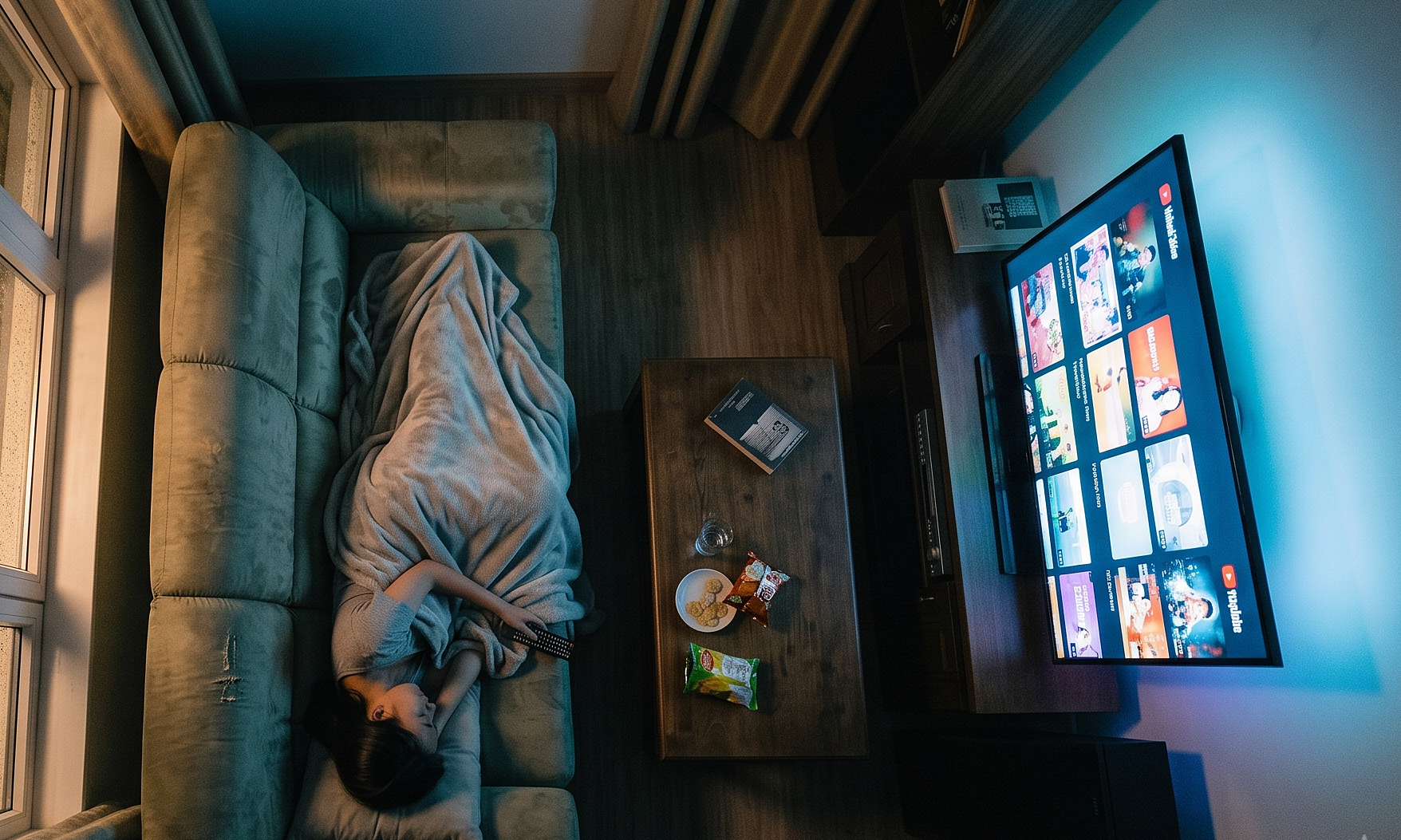 |
Sleeping with the TV on can reduce sleep quality. *AI-generated image*. |
To improve sleep, doctors offer advice to help you regain a healthy sleep rhythm:
Turn off all screens one hour before bed: It is best to turn off the TV and all electronic screens one hour before going to bed to allow the body to naturally transition into a resting state.
Replace screen time with gentle relaxing activities: Instead of watching TV, you can switch to reading, deep breathing, or meditation to calm your mind.
Maintain a consistent sleep schedule: Going to bed and waking up at a fixed time will help stabilize your biological clock and protect heart health.
Furthermore, doctors also caution against the habit of many people drinking alcohol before sleep. Although alcohol may offer a short-term sedative effect that gives a feeling of falling asleep easily at first, it ultimately harms sleep quality and offers no benefit to heart health.
My Y (According to HK01)