According to Doctor Tra Anh Duy, Specialist Level 2, from Men’s Health Male Health Center, infertility is not solely a female issue. Male factors contribute to approximately 20-30% of cases and play a role in about 50% of all infertility cases. Psychological pressure, reluctance, and a tendency to self-blame often delay men from seeking medical consultation, leading them to miss the optimal window for treatment.
The following are common male reproductive health conditions that can diminish a man's ability to father children if not addressed promptly.
Varicocele
Varicocele is a condition where veins around the testicles become enlarged, causing blood stagnation and increasing scrotal temperature, which severely impacts the sperm-producing environment.
This condition affects about 15% of men generally, but accounts for up to 35% of cases in the primary infertility group. Symptoms are often vague, such as a heavy feeling in the scrotum or mild aching when standing for long periods or engaging in strenuous activity. Many men only discover it incidentally by feeling a "bag of worms" in the scrotum.
While not all men with the condition experience infertility, it is a treatable cause that can improve sperm quality if its severity is accurately assessed.
 |
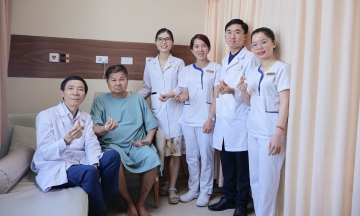
Doctor Duy examines a patient. *Photo: Lam Anh* |
Genitourinary infections
Conditions like epididymitis, orchitis, or prostatitis are often underestimated by men, who may attempt self-treatment with painkillers or superficial antibiotic courses.
However, infections not only cause pain but also alter the seminal environment, reducing sperm motility. More dangerously, chronic infections can lead to scarring that blocks the vas deferens. Data indicates that approximately 15% of male infertility cases are linked to genitourinary infections. Symptoms such as painful urination, blood in semen, or recurrent scrotal pain are warning signs that should not be ignored.
Mumps complications
Many mistakenly believe mumps is a childhood illness that resolves without lasting effects. In reality, if mumps occurs after puberty and leads to orchitis (testicular inflammation), the risk of infertility is significant.
Research indicates that fertility impairment affects about 13% of individuals after mumps orchitis. Specifically, if both testicles are inflamed, the infertility rate can range from 30-87%. Doctor Duy advises men with a history of mumps to proactively undergo sperm analysis rather than waiting until marriage to address concerns.
Undescended testicle
Testicles require a cooler environment than body temperature to produce sperm. Therefore, if a testicle does not descend into the scrotum but remains in the abdomen or inguinal canal, sperm-producing cells will suffer permanent damage.
The infertility rate for men with an undescended testicle on one side is about 32%, and this figure doubles if both are affected, even after surgical correction to bring them into the scrotum. Early detection and surgery in childhood are crucial for preserving future fertility.
Testicular torsion
This is a urological emergency. When a testicle twists, its blood supply is completely obstructed. If not untwisted within the first few hours, the testicle will necrotize and may require removal.
Even with timely intervention, sequelae can persist. One study showed that 64% of patients after testicular torsion had sperm abnormalities, and 39% experienced reduced fertility. Men experiencing sudden, severe scrotal pain accompanied by nausea should seek immediate medical attention.
Testicular cancer
Testicular cancer often affects young men. Although the cure rate is very high, chemotherapy and radiation therapy can destroy sperm production capability.
More than 50% of patients already have low sperm counts before treatment. Therefore, counseling for sperm cryopreservation before cancer intervention is a crucial step often overlooked while patients are concerned about their lives.
Hormonal disorders
Pituitary insufficiency, hyperprolactinemia, or hypogonadism all directly affect the male endocrine axis. A common mistake currently is men self-administering exogenous testosterone to "boost virility."
This action can have a counterproductive effect, suppressing the body's natural sperm production, making men potentially "stronger" in libido but lacking sperm in their semen.
Doctor Duy emphasizes that the most regrettable issue is not the severity of the illness, but the delay in addressing it. To protect fertility, men need to undertake two concurrent actions:
Lifestyle adjustments: Dedicate at least 10-12 weeks to improving sleep patterns, exercise, reducing waist circumference, and avoiding habits that heat the scrotal area (e.g., overly hot baths, tight clothing).
Specialized medical consultation: If abnormal signs appear or if conception has not occurred after 6-12 months of trying, a sperm analysis should be performed to screen for causes and ensure appropriate intervention, avoiding self-treatment with folk remedies that could jeopardize the last chance.
My Y