Response
For stomach cancer patients, surgery is often a critical component of a multimodal treatment plan. Current cancer treatment combines various methods, including surgery, chemotherapy, targeted therapy, immunotherapy, and radiation therapy. However, the necessity and type of surgery depend on numerous factors. These include the disease stage, tumor characteristics, pathological findings, gene mutations, treatment response, overall health, co-existing conditions, and the patient's psychological state. A doctor will determine the most suitable approach based on these individual circumstances.
Surgery for stomach cancer aims to remove cancerous tissue completely or as much as possible, preventing disease progression and recurrence. It also seeks to preserve digestive function and enhance the patient's quality of life. For very early-stage stomach cancer, where cancer cells are confined to the gastric lining and have not deeply invaded, doctors may recommend endoscopic submucosal dissection. This procedure removes the lesion while fully preserving stomach function.
 |
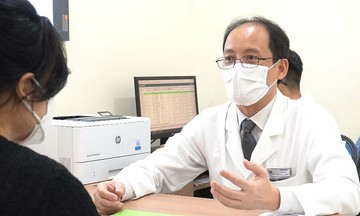
Dr. Diep examining a patient. Illustration: Tam Anh General Hospital |
Partial gastrectomy is a common surgical approach for early-stage stomach cancer. Surgeons may remove up to two-thirds of the stomach if the cancer is in the lower section, or a portion of the esophagus if the tumor is in the upper stomach. This procedure typically involves removing part of the connecting peritoneum linked to the liver, esophagus, stomach, and duodenum. Additionally, lymph nodes around the stomach are dissected to reduce the risk of recurrence. If the tumor has invaded adjacent organs like the spleen, pancreas, or intestines, doctors may also remove parts of these organs to ensure complete lesion removal. After a partial gastrectomy, the remaining stomach is connected to the small intestine. While the stomach becomes smaller, a portion of its function is preserved.
If malignant cells have spread extensively, making stomach preservation impossible, surgeons perform a total gastrectomy, removing the entire stomach along with any adjacent organs affected by the cancer. For cases where cancer has metastasized distantly or curative treatment is no longer feasible, surgery may be indicated for palliative purposes, aiming to alleviate symptoms and improve the patient's quality of life.
Stomach cancer surgery can be performed using either open surgery or minimally invasive techniques. Open surgery involves a long incision in the abdomen, allowing direct manual access to the stomach. This method typically results in a larger scar and a longer recovery period. In contrast, minimally invasive robotic surgery involves smaller incisions in the abdomen or mouth, leading to less pain, faster recovery, and better cosmetic outcomes. Patients should consult a doctor to determine the most appropriate surgical method for their specific condition.
Dr. Kim Thi Be Diep
Department of Medical Oncology
Oncology Center
Tam Anh General Hospital TP HCM
| Readers can submit questions about cancer here for doctors to answer. |