Hoa had terminated pregnancies multiple times, most recently a 10-week pregnancy. Afterward, her menstrual cycles became sparse, with periods of prolonged amenorrhea. For the past two years, she had been unable to conceive. At the Center for Reproductive Assistance, Tam Anh General Hospital Hanoi (IVF Tam Anh), uterine endoscopy results revealed her uterine cavity had almost completely disappeared due to adhesions, preventing an embryo from implanting and developing.
Doctor Le Duc Thang explained that uterine adhesions, also known as Asherman's syndrome, occur when the uterine lining is severely damaged, forming fibrous scar tissue that causes the uterine walls to stick together. The primary cause is procedures involving the uterine cavity, especially abortions or interventions following a miscarriage. Research indicates the risk of uterine adhesions increases with the number of interventions: approximately 16% after one abortion and around 32% from the second or third intervention onward.
Doctor Thang assessed Hoa's infertility treatment as particularly challenging. The initial step involved hysteroscopic adhesiolysis to maximize the restoration of the uterine cavity. Following surgery, Hoa was closely monitored for several months and received prolonged adjuvant treatment to support uterine lining regeneration. Anti-adhesion measures were implemented to limit the risk of continued fibrosis in the uterine cavity. Results showed the uterine cavity partially reopened, but the remaining endometrial surface was uneven, making natural pregnancy highly unlikely. Consequently, Hoa was advised to undergo in vitro fertilization (IVF) to conceive.
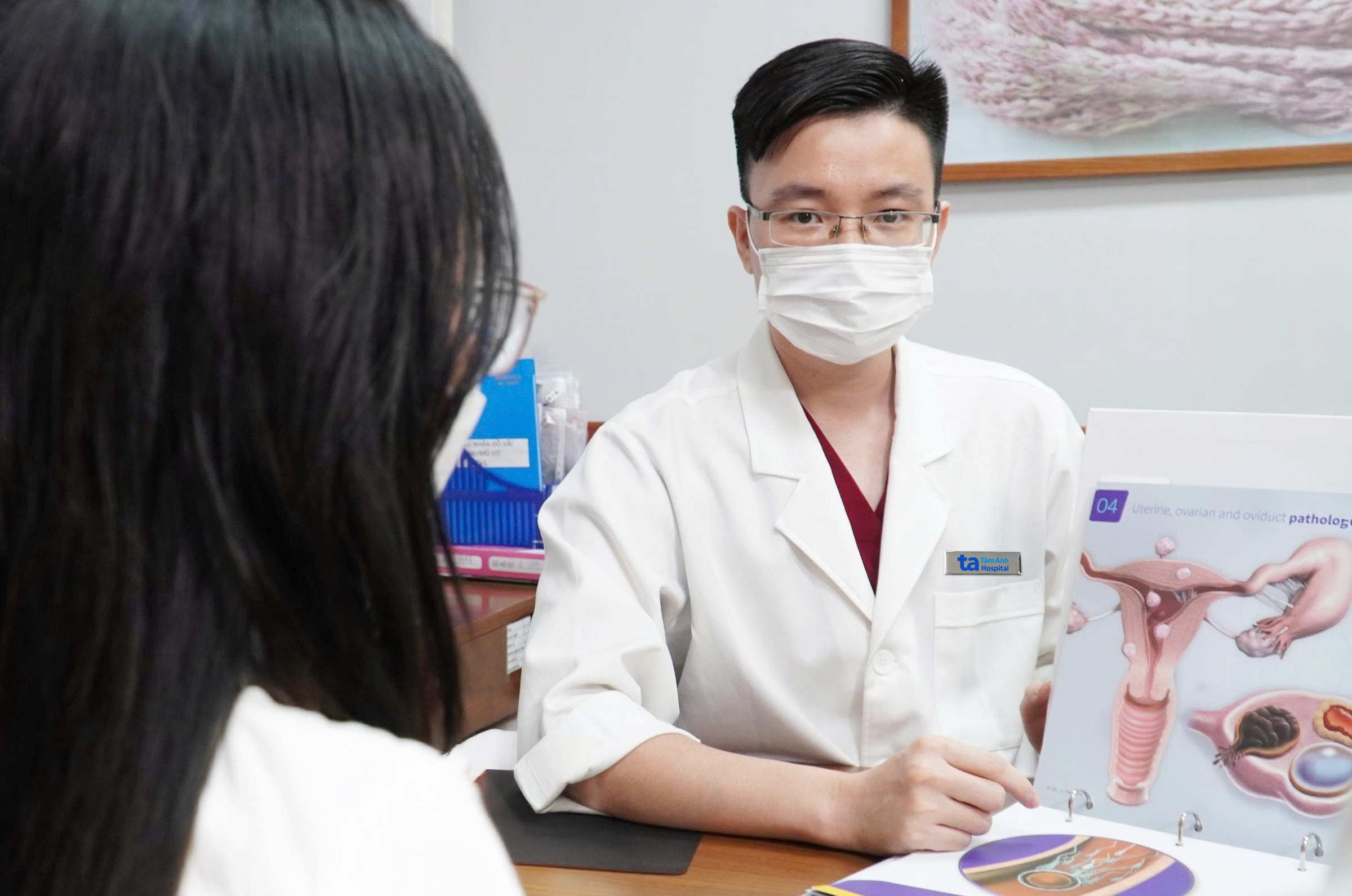 |
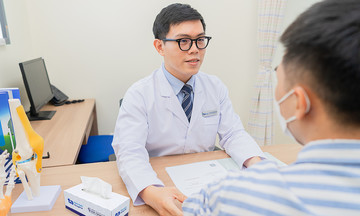
Doctor Thang advises Hoa on infertility treatment. *Photo: Tam Anh General Hospital* |
The doctor prescribed ovarian stimulation medication for Hoa, then retrieved oocytes and fertilized them with her husband's sperm to create embryos. Before embryo transfer, Hoa underwent a thorough, extended uterine lining preparation. Once her lining reached a safe threshold, the doctor transferred a high-quality embryo into the uterine cavity.
The embryo successfully implanted, and Hoa's pregnancy was closely monitored from the early stages to control the risks of miscarriage, premature birth, and placenta-related complications. In January, the couple welcomed their healthy first child.
Doctor Thang noted that the most common clinical symptoms of uterine adhesions include menstrual disorders like light periods or amenorrhea, painful periods, or infertility. Even with successful adhesiolysis, the risk of readhesion can be up to 20-23%, particularly in severe cases, requiring long-term monitoring and care.
To prevent uterine adhesions, Doctor Thang advises women of reproductive age to proactively use safe contraception and minimize abortions. If an intervention is necessary, it is crucial to choose a medical facility with expertise, ensuring sterility and standard techniques. Complete follow-up examinations after the procedure are vital to detect abnormalities early. If conception becomes difficult after 6-12 months, seeking early medical examination is important for diagnosis and timely treatment.
Thanh Ba