Answer:
Botox and fillers are aesthetic treatments that reduce wrinkles and improve signs of aging, but they have completely different mechanisms of action.
Fillers use hyaluronic acid (HA), a dermal filler with a structure similar to natural HA in the body. They are used to fill static wrinkles, improve hollow eye sockets, and reduce dark circles. Thanks to their ability to retain water and restore volume, HA fillers help skin become smooth and firm. This is effective for skin tissue that is sunken, has reduced elasticity, or shows lines over time. This procedure typically takes only 5-10 minutes, requires little recovery time, and is suitable for areas like the lower eyelids, tear troughs, nasolabial folds, or marionette lines.
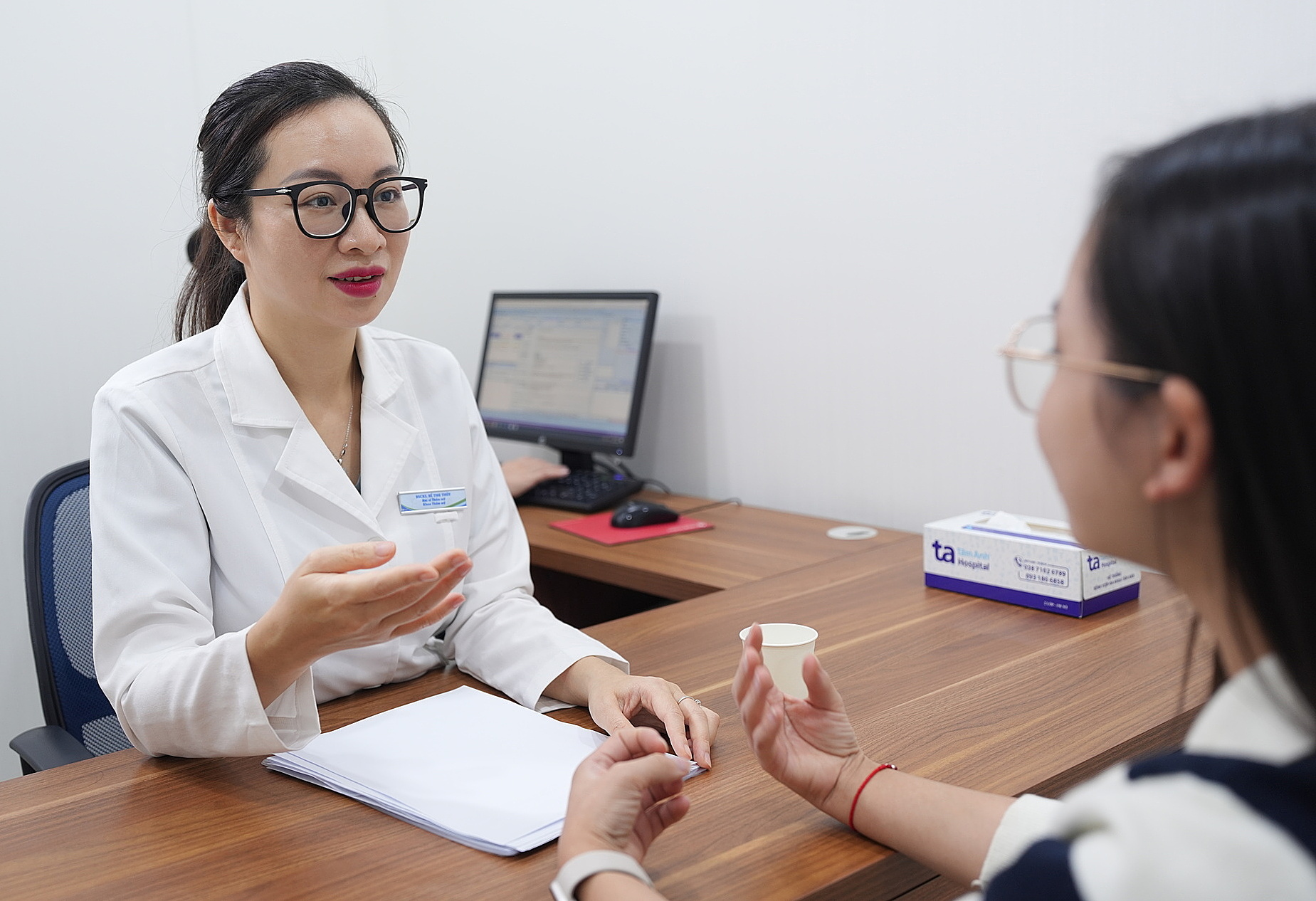 |
Doctor Thuy advises a woman on eye wrinkle treatment. Photo: Tam Anh General Hospital |
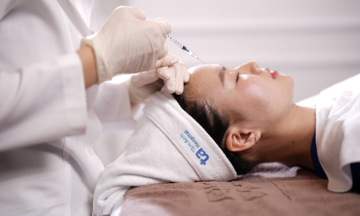
In contrast, botox injections relax wrinkle-causing muscles using botulinum toxin. When injected into overactive muscle groups around the eyes (where dynamic wrinkles appear when smiling, squinting, or frowning), botox temporarily inhibits nerve signals, reducing muscle tone. This gradually diminishes crow's feet and other dynamic wrinkles. Botox does not plump the skin; it acts directly on the muscles. The procedure takes 15-30 minutes, with noticeable effects after one to two weeks, lasting three to six months. Injections around the mouth require careful consideration to avoid affecting natural facial expressions.
The choice between fillers and botox depends on the specific type of wrinkles and a doctor's professional assessment. For reducing eye wrinkles, botox is generally a suitable and effective method. In some cases, a doctor may combine both treatments.
You should visit a reputable facility for an accurate assessment of your wrinkle type, degree of aging, and tissue structure around the eyes. The doctor will then recommend an appropriate method. The skin in this area is thin, highly vascularized, and prone to bruising, so the technique and dosage must be individualized. The person undergoing the procedure should be in stable health, without bleeding disorders, and not pregnant or breastfeeding. The products used must have clear origins and be administered by a specialist doctor to reduce the risk of complications such as drooping eyelids, muscle asymmetry, lumps, or vascular occlusion. After the injection, follow post-care instructions, avoid massaging the treated area, and monitor for any unusual signs for timely intervention.
Doctor Be Thu Thuy
Aesthetics Department
Tam Anh General Hospital Hanoi
| Readers can send dermatology and aesthetic skin questions here for doctors to answer |