Ms. Tam's medical history included ischemic heart disease, two-branch coronary artery disease with stents placed more than 5 years ago, hypertension, dyslipidemia, and being overweight. A polysomnography at Tam Anh General Hospital Ho Chi Minh City confirmed she suffered from obstructive sleep apnea.
Dr. Tran Thi Thanh Truc, Head of the General Internal Medicine Department at Tam Anh General Hospital Ho Chi Minh City, prescribed continuous positive airway pressure (CPAP) therapy. After approximately 6 months of treatment, Ms. Tam's health and symptoms improved, with reduced fatigue and increased alertness.
Dr. Truc noted that sleep apnea in older adults can often go undiagnosed for a long time. Symptoms in the elderly are typically not as pronounced as in younger individuals, who often experience loud snoring, obvious breathing pauses, and daytime sleepiness. For older patients, the condition may manifest as restless sleep, frequent awakenings, fatigue, reduced concentration, general sleepiness, or changes in cognitive ability.
 |
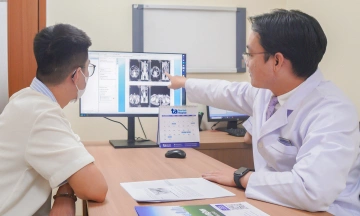
Dr. Truc advises a patient on health check-up habits and managing underlying conditions. *Photo: Tam Anh General Hospital* |
Obstructive sleep apnea occurs when the upper airway narrows or is intermittently blocked during sleep. These episodes can repeat numerous times throughout the night, disrupting sleep and causing fluctuations in blood oxygen levels, heart rate, and sympathetic nervous system activity. This condition is closely linked to hypertension and various cardiovascular diseases.
According to Dr. Truc, CPAP is a primary treatment method for sleep apnea. The continuous positive airway pressure machine helps maintain an open airway during sleep, thereby limiting obstructive episodes.
Dr. Truc advises older adults to undergo regular health check-ups, effectively manage underlying medical conditions, maintain a healthy weight, engage in physical activity suitable for their physique, limit alcohol consumption, and avoid other factors that negatively impact sleep quality.
Nhat Thanh
*The patient's name has been changed
| Readers can submit questions about respiratory diseases here for a doctor's response. |