The woman, in her 30s, has completed surgery and is undergoing recovery treatment at Dong-A University Hospital in Busan. This outcome followed a 4,5-hour search by rescue teams for a hospital to admit her emergency case on the night of 1/5, according to Korea Herald.
Around 11 p.m. on 1/5, the expectant mother arrived at an obstetrics clinic in Cheongju, Gyeongsang province, experiencing bleeding. The fetal heart rate then dropped sharply. The clinic doctor determined the case exceeded their capabilities, requiring a higher-level medical facility equipped for both delivery and emergency resuscitation.
Medical staff immediately called 10 medical facilities with pediatric departments. Six answered, including major university hospitals in the Chungcheong region, but all refused to admit the patient. A representative from a leading hospital explained they lacked an on-call obstetrician that night, resulting in insufficient staff to manage the case.
After numerous unsuccessful attempts to contact nearby facilities, the fire department decided to dispatch a helicopter to transport the expectant mother over 280 km to Busan. It took 4,5 hours from the onset of abnormal symptoms for the patient to reach Dong-A University Hospital. The fetus had died before doctors at the final facility could intervene.
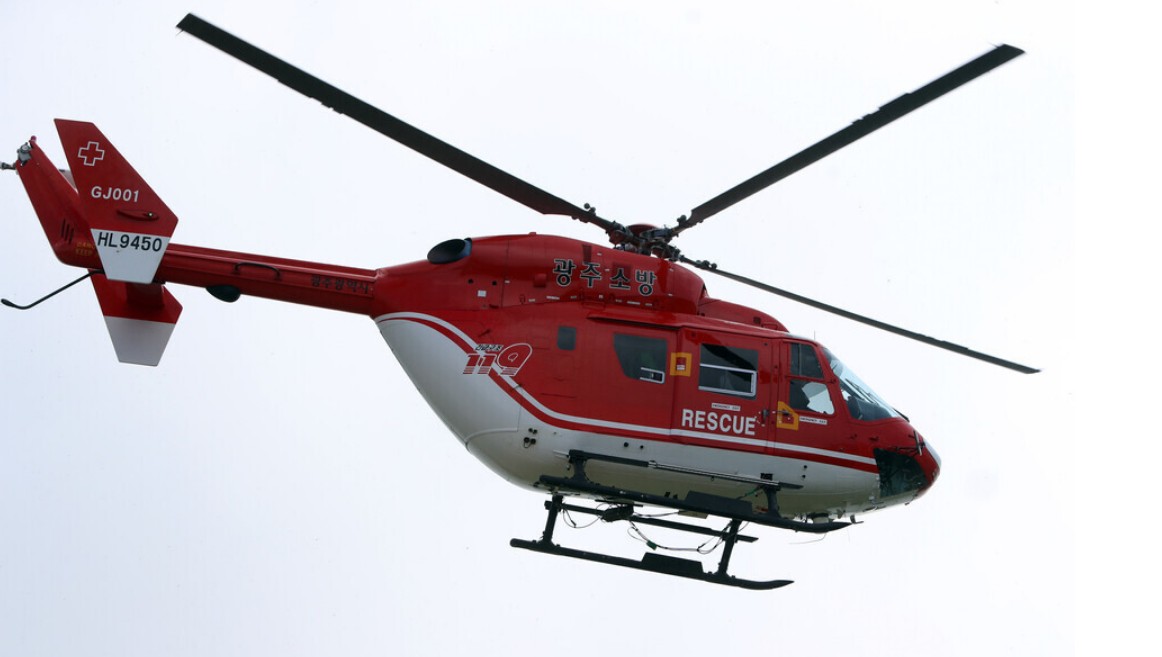 |
The expectant mother was transported to a hospital in Busan by helicopter, but the fetus had died. *Illustrative photo: Nate*.
This incident further highlights systemic issues within South Korea's healthcare system. The country's laws prohibit emergency teams from transferring patients to emergency rooms without prior consent from the receiving facility. Medical facilities increasingly refuse patients due to severe staff shortages. Furthermore, medical professionals often fear facing criminal charges if a patient does not survive. Studies show that the rate of South Korean doctors facing trial for medical incidents far exceeds the average in many developed nations.
According to KBS News, this is not an isolated incident of expectant mothers facing danger due to healthcare system inadequacies. Previously in Daegu, another pregnant woman had to search for a hospital for hours, resulting in the death of one twin and severe brain damage to the other. The South Korean government consistently calls for efforts to overcome the record-low birth rate, yet tragedies involving expectant mothers "wandering" in search of treatment continue to recur.
Binh Minh (According to Korea Herald, KBS News, Chosun)