


Esophageal cancer is a malignant condition of the digestive tract, occurring when cells in the esophageal lining proliferate abnormally, forming a tumor. The disease often presents no symptoms in its early stages, making detection difficult. By the time patients experience weight loss, difficulty swallowing, coughing, or pain behind the breastbone, the tumor has typically grown large and invaded other organs, complicating treatment.
Doctor Vuong Ngoc Duong, Deputy Head of the Radiation Therapy Department at Tam Anh General Hospital Hanoi, states that surgery is currently the primary and preferred treatment for esophageal cancer. Doctors often opt for endoscopic mucosal resection (EMR), endoscopic submucosal dissection (ESD), or total esophagectomy when there is a chance for curative treatment. However, radiation therapy also effectively supports esophageal cancer treatment, especially for patients with large or inoperable tumors.
Doctor Duong outlines several scenarios where patients with esophageal cancer require radiation therapy:
Inoperable Tumors
Doctors prioritize combined radiation and chemotherapy if the esophageal cancer tumor is large, located in a difficult-to-operate position such as the upper one-third of the esophagus, or if it is close to or invades critical structures like the trachea and large blood vessels, where surgery carries high risks and complications.
Patients undergo radiation therapy for approximately 5-6 weeks, combined with chemotherapy, which can lead to curative treatment if there is a good response.
Neoadjuvant Radiation Therapy
For patients who are still candidates for esophageal cancer surgery but have large or invasive tumors, doctors prescribe combined radiation and chemotherapy before surgery. This aims to shrink the tumor, facilitate a smoother operation, increase the success rate of curative treatment, and reduce complications.
Neoadjuvant radiation therapy typically lasts about 5 weeks, alongside chemotherapy. Patients then rest for 6-8 weeks for recovery before re-evaluation and esophageal cancer surgery.
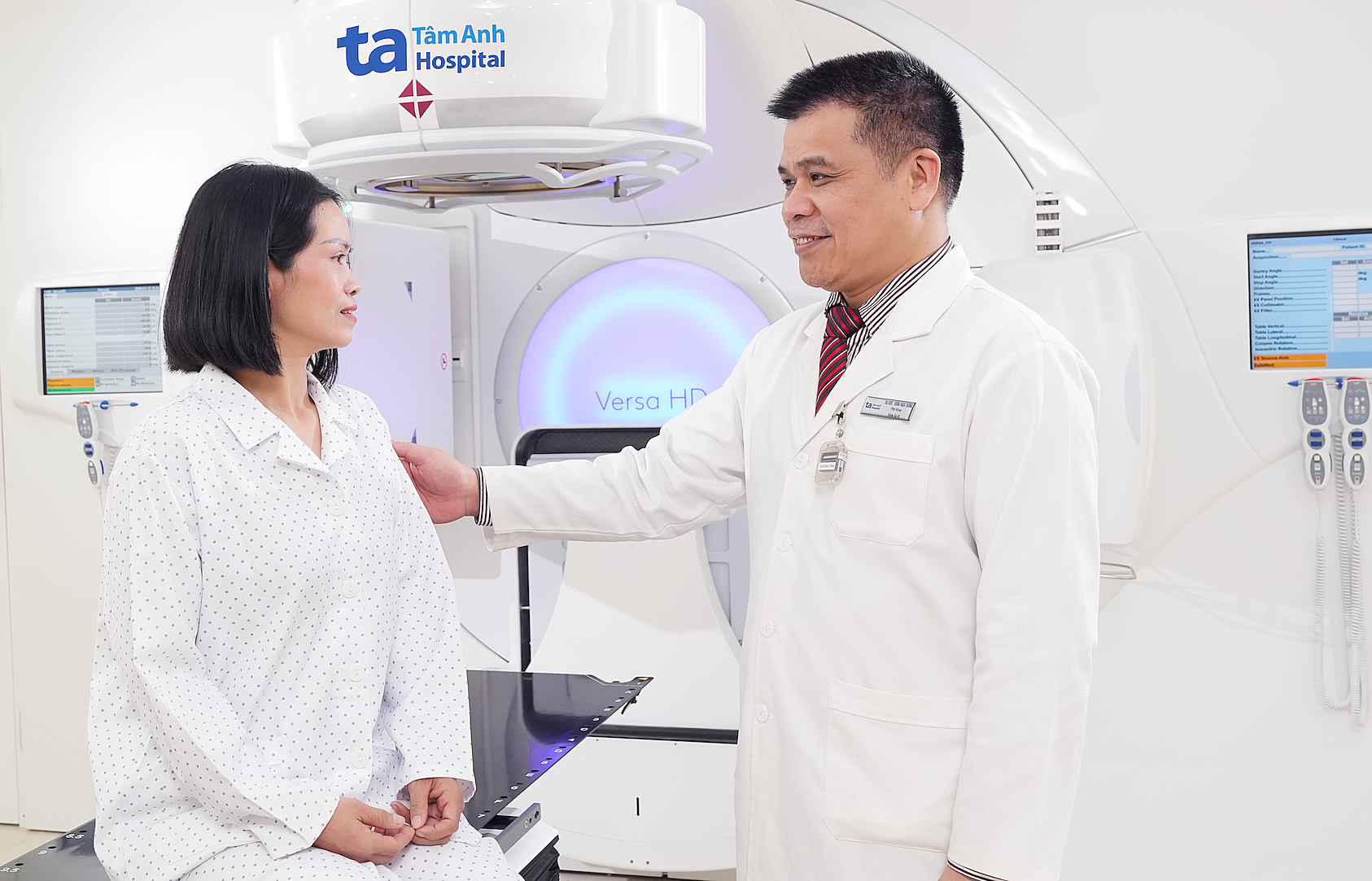 |
Doctor Duong encourages a patient undergoing radiation therapy for esophageal cancer. Illustration: Tam Anh General Hospital |
Adjuvant Radiation Therapy
After esophagectomy, 4-6 weeks later, some patients face a high risk of recurrence due to deep tumor invasion or numerous metastatic lymph nodes. In these cases, adjuvant radiation therapy destroys remaining cancer cells in the esophageal region and nearby lymph nodes, reducing the risk of local recurrence.
Palliative Radiation Therapy
For patients with late-stage esophageal cancer, where the tumor has spread and invaded, it often causes pain, bleeding, esophageal narrowing, and difficulty swallowing. Doctors prescribe radiation therapy to shrink the tumor, alleviate symptoms, and improve the patient's quality of life. When esophageal cancer metastasizes to the bones, palliative radiation therapy helps reduce pain, counteract compression, and prevent weakness or paralysis.
Doctor Duong emphasizes that esophageal cancer treatment is most effective when the disease is detected at an early stage, before the tumor causes symptoms. The disease is currently trending towards affecting younger individuals. Adults should undergo regular health check-ups at the hospital, including esophageal endoscopy once every 3-5 years or as advised by their doctor, to detect any abnormalities early.
Limiting alcohol consumption, avoiding smoking, maintaining a balanced diet rich in green vegetables and fruits, steering clear of excessively hot, spicy, pickled, or fermented foods, and effectively managing conditions like gastroesophageal reflux can help prevent esophageal cancer.
Thanh Long
| Readers can submit questions about cancer here for doctors to answer. |


