Doctor Duong Minh Tuan, from the Department of Endocrinology and Diabetes at Bach Mai Hospital, states that people with diabetes do not need to completely avoid fruit. Instead, they should prioritize whole fruits, such as individual segments or slices, over juice. When consuming one orange segment, one apple slice, or a few berries, the body must chew, grind, and digest the fruit, which gradually releases sugar. The fiber in fruit slows gastric emptying and glucose absorption in the intestines, resulting in a slower post-meal blood sugar increase.
When fruit is juiced, the juicer breaks down cell structures, separating the sugary liquid from the fibrous pulp. A glass of orange, apple, or grape juice can contain the sugar content of 2-4 fruits, yet it often lacks enough intact fiber to slow absorption.
Juices and smoothies often have their fiber removed or broken down, converting the fruit's sugar into "free sugars" that are more easily absorbed. It is easy to consume a large amount of juice quickly, leading to an increased total intake of energy and carbohydrates.
“Patients may observe that eating one orange causes a minimal blood sugar increase, but drinking a glass of orange juice results in a rapid spike”, the doctor noted.
Furthermore, juice consumption can diminish feelings of satiety, making it easy to consume more carbohydrates unknowingly. Many juices also contain added sugar, condensed milk, syrup, or are made from a very large quantity of fruit. Therefore, individuals with diabetes should prioritize whole fruits such as apples, pears, oranges, grapefruits, guavas, strawberries, and blueberries. They should limit ripe mangoes, jackfruits, longans, lychees, durians, and sweet grapes.
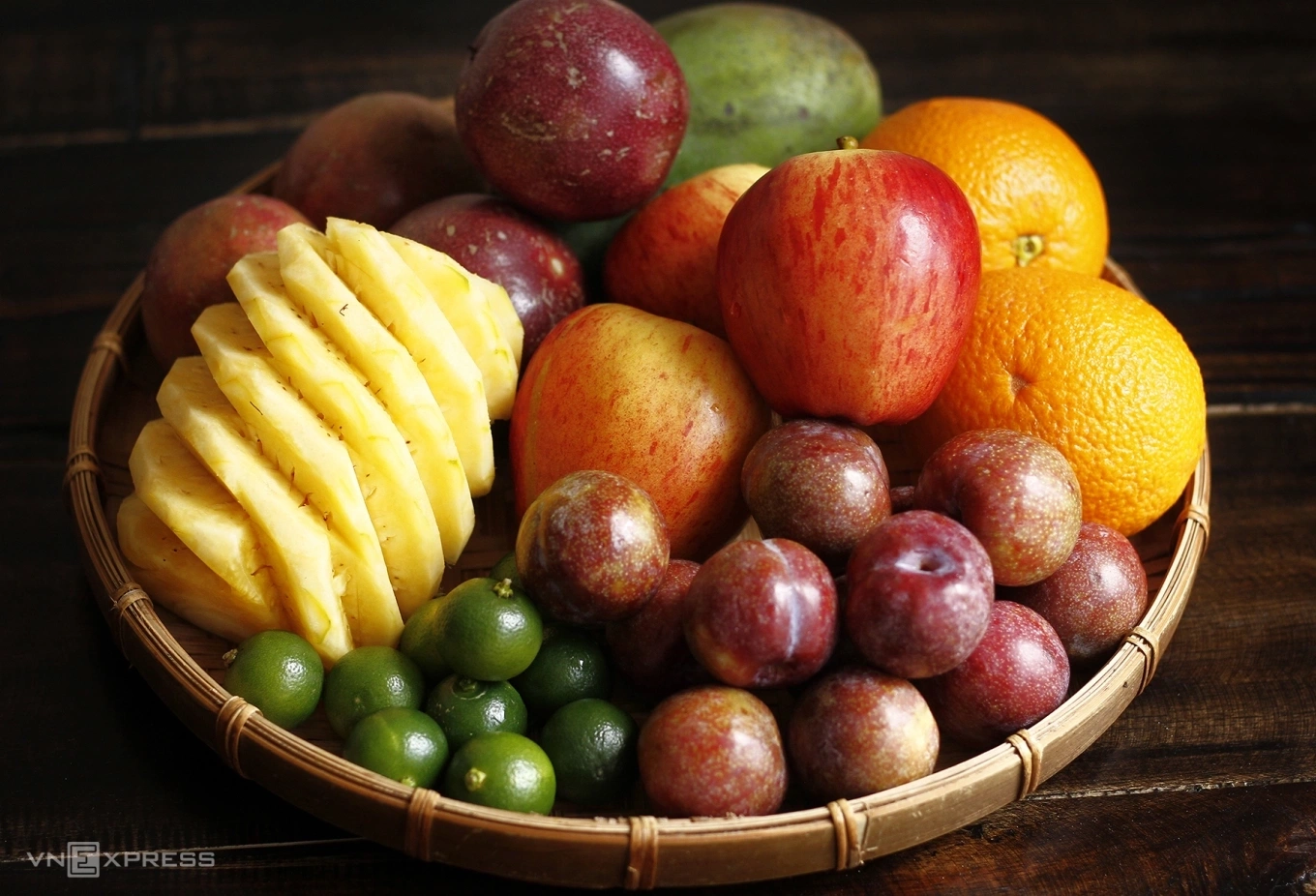 |
Illustration: Bui Thuy |
The doctor recommends five principles for fruit consumption:
Consume whole fruits, such as segments or slices, instead of drinking juice. Eat oranges as segments, apples as slices, and guavas with their fibrous pulp; avoid turning them into filtered juice.
Avoid consuming excessive amounts at once. Each serving should be moderate, for example, one small apple, one small pear, one medium grapefruit slice, one small bowl of berries, or a fruit portion equivalent to about 15 g of carbohydrate, depending on individual dietary plans.
Do not drink juice daily for "nutritional boosting." If you choose to consume juice, limit it to a small amount, ideally with a meal, and account for it in your total carbohydrate intake. The limit should be about one small glass of 150 ml per day, but for individuals with poorly controlled blood sugar, prioritizing whole fruit remains the best option.
Consume fruit after main meals or as part of controlled snacks, and avoid drinking juice on an empty stomach. When eaten with meals containing protein, healthy fats, and fiber, the rate of sugar absorption is typically slower compared to consuming fruit alone.
Monitor post-meal blood sugar to understand your body's response.
Thuy An