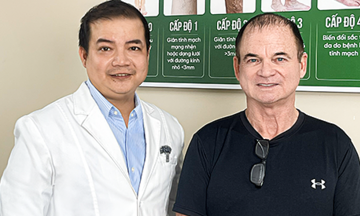
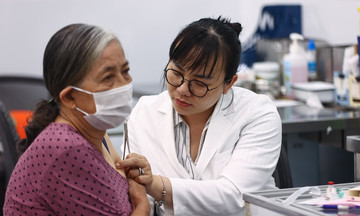
After four years of marriage without children, Hai and his wife visited the Center for Reproductive Assistance, Tam Anh General Hospital, TP HCM (IVF Tam Anh TP HCM) for an examination. Semen analysis results revealed he had only one to two sperm, while a normal male typically ejaculates 39 million sperm on average. Genetic testing identified a mutation on his Y chromosome, which progressively impairs sperm production and has no definitive cure. He also suffered from grade one varicocele.
Doctors initially advised Hai to collect multiple sperm samples for cryopreservation to preserve his fertility and avoid future surgery. However, the couple declined, hesitant about immediate treatment. Mid-this year, Hai returned for a follow-up, and a semen analysis showed no sperm. His testicles had atrophied, and the varicocele had progressed, posing a risk of blood stagnation in the testicles. Both factors contribute to infertility.
Doctor Nguyen Quang Vinh, from the Andrology Unit, and his team performed a micro-TESE microsurgery to retrieve sperm directly from the patient's testicles. Using a microsurgical microscope that magnifies 30 times, doctors identified several potential seminiferous tubules. Embryologists then dissected the seminiferous tubule tissue and examined it under an inverted microscope with 200 times magnification, successfully finding nearly 20 sperm for in vitro fertilization with his wife's eggs. However, due to the poor quality of the sperm, only two day 3 embryos were obtained for cryopreservation.
During the microsurgery, doctors also ligated the dilated varicocele veins, aiming to improve blood flow and nourish Hai's testicles.
Hai's wife is currently undergoing preparation of her uterine lining to ensure optimal conditions before embryo transfer.
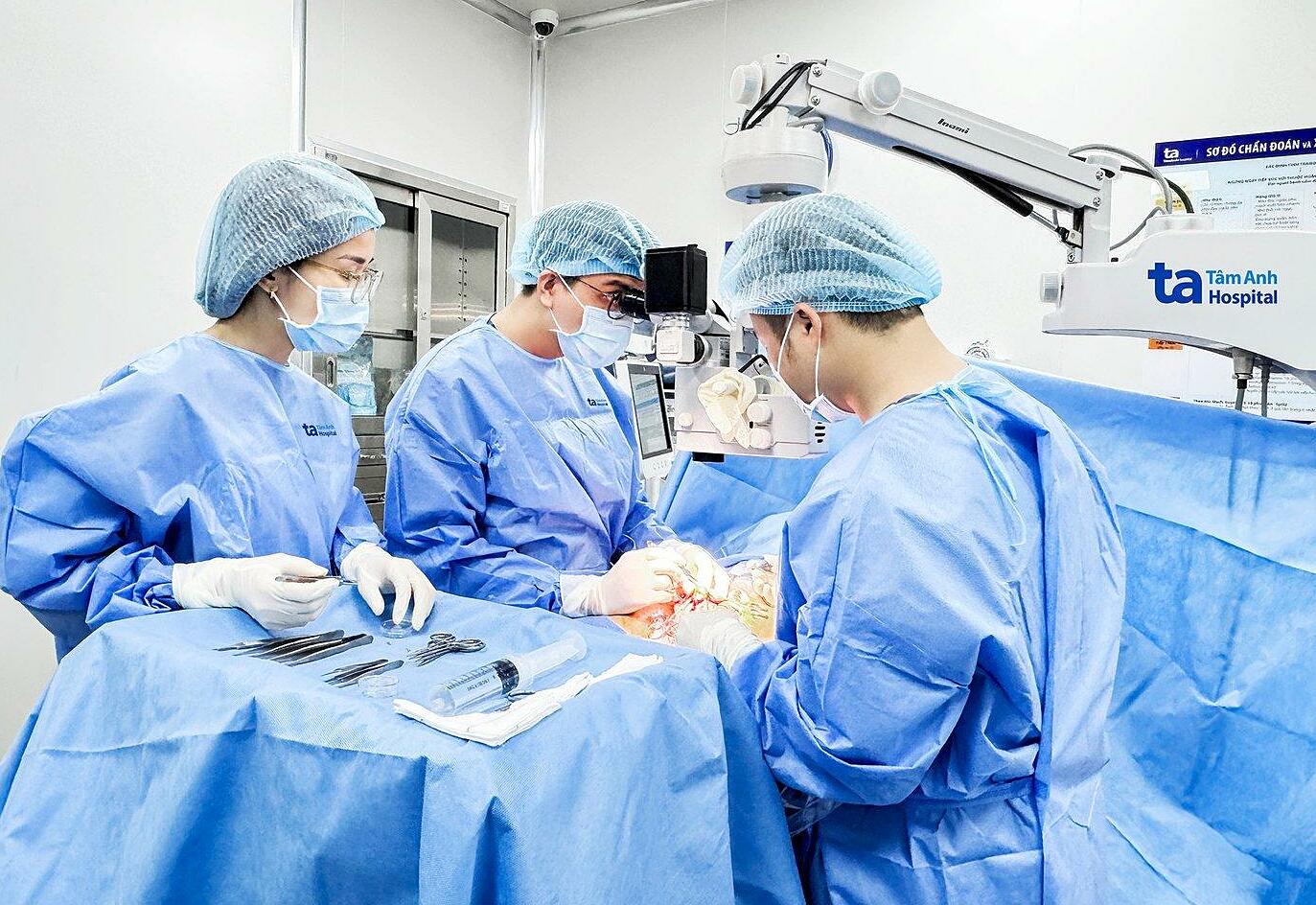 |
Doctor Vinh (center) and his team found sperm for the patient using micro-TESE microsurgery. Photo: Hoai Thuong |
According to Doctor Vinh, azoospermia caused by a Y chromosome mutation is quite common. Previously, such cases often led to the need for donor sperm or adoption. Currently, the micro-TESE microsurgery technique has a success rate of finding sperm in approximately 60-70% of cases.
When multiple medical conditions are present, the chances of successful treatment and fertility are further reduced. Therefore, couples who have not conceived after one year of marriage should seek a comprehensive examination early. Couples should also undergo reproductive health check-ups before marriage to detect any conditions early and allow for proactive treatment. Men with genetic abnormalities or gene mutations that impair sperm production should cryopreserve sperm as early as possible to preserve their ability to have children and avoid the need for surgery.
Hoai Thuong
*The patient's name has been changed