Four months ago, Mr. Nghi was diagnosed with pancreatic head cancer with multiple liver metastases. After four rounds of chemotherapy, his jaundice and yellow eyes progressively worsened, along with indigestion and fatigue. As endoscopic retrograde cholangiopancreatography (ERCP) for biliary drainage failed, he sought examination at Tam Anh General Hospital, Ho Chi Minh City.
Abdominal CT scan results revealed a tumor in the pancreatic head region, with extensive invasion of the pancreatic uncinate process, causing complete obstruction of the superior mesenteric vein and the main portal vein. The bile duct and pancreatic duct were significantly dilated because the distal common bile duct was completely blocked by the tumor. The tumor had also invaded duodenum segments D2 and D3. The patient presented with multiple metastatic lesions in the liver, lymph nodes in the porta hepatis, around the pancreatic head, and adjacent to the abdominal aorta, in addition to a history of hepatitis C.
Doctor Pham Huu Tung, Deputy Director of the Endoscopy and Endoscopic Gastrointestinal Surgery Center, stated that the patient suffered from malignant biliary obstruction caused by the pancreatic head tumor compressing and invading the bile duct. Bile, unable to flow into the intestines, accumulates in the liver and then re-enters the bloodstream. This leads to elevated bilirubin levels, causing jaundice, yellow eyes, dark urine, itching, loss of appetite, and fatigue. Over time, prolonged biliary obstruction can impair liver function and affect blood clotting processes.
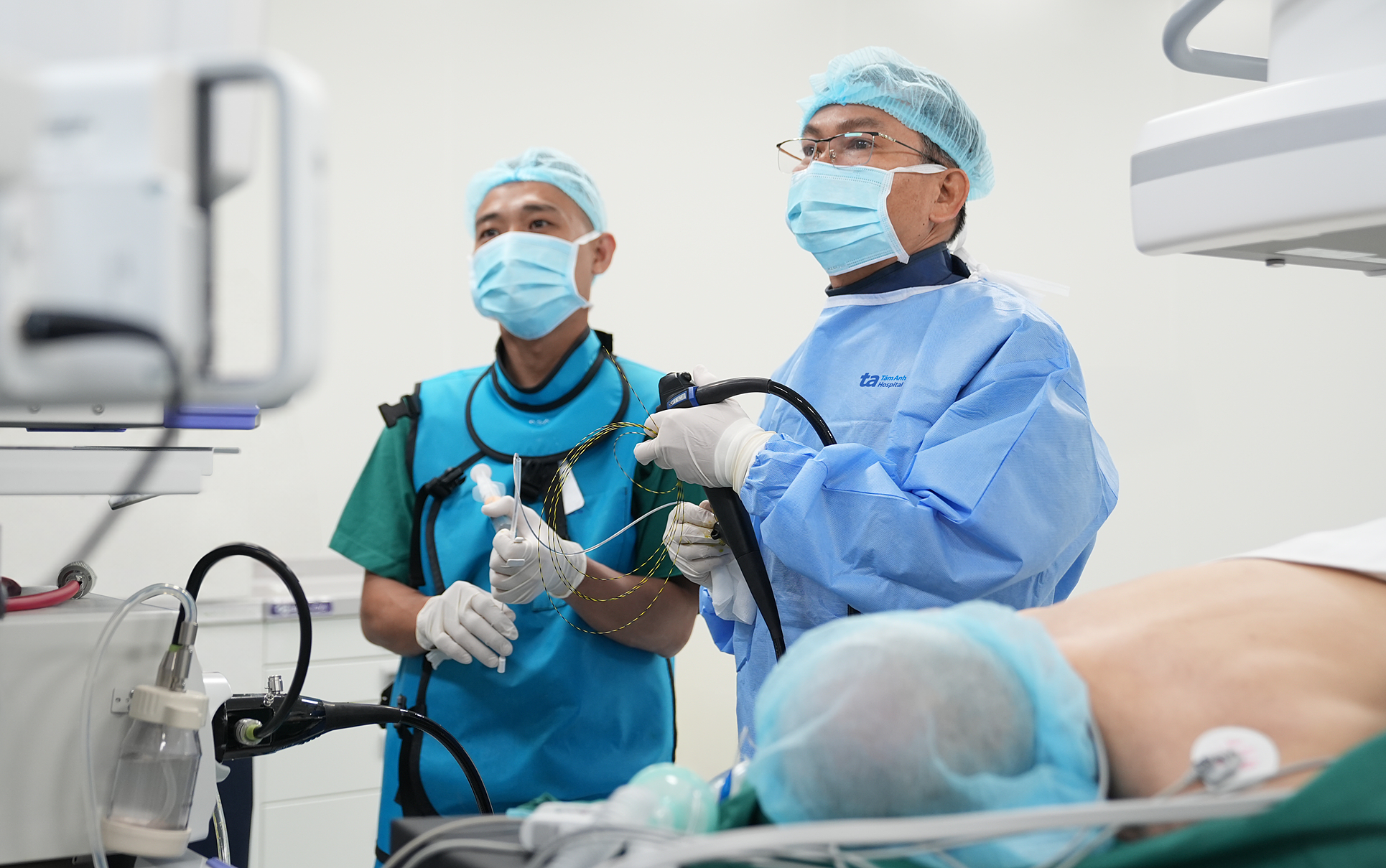 |
Doctor Tung (right) placing a biliary stent for Mr. Nghi. Photo: Tam Anh General Hospital |
Doctor Tung explained that for late-stage pancreatic head cancer where curative surgery is no longer an option, biliary stent placement plays a crucial role in relieving biliary obstruction, improving liver function, and allowing the patient to continue chemotherapy or other systemic treatments.
Following a consultation, the medical team decided on an endoscopic ultrasound-guided intervention for biliary drainage stent placement. During endoscopy, the team observed that the tumor had invaded the duodenal region, making access to the bile duct via endoscopic retrograde cholangiopancreatography (ERCP) challenging. Consequently, the doctors opted for the technique of placing a drainage stent from the left hepatic duct into the stomach, guided by endoscopic ultrasound.
Under the simultaneous guidance of endoscopic ultrasound and a digital subtraction angiography (C-arm) system, the doctor accessed the left hepatic bile duct branch, created a drainage tunnel, and accurately placed the stent. This procedure ensures proper bile flow and reduces pressure within the bile duct.
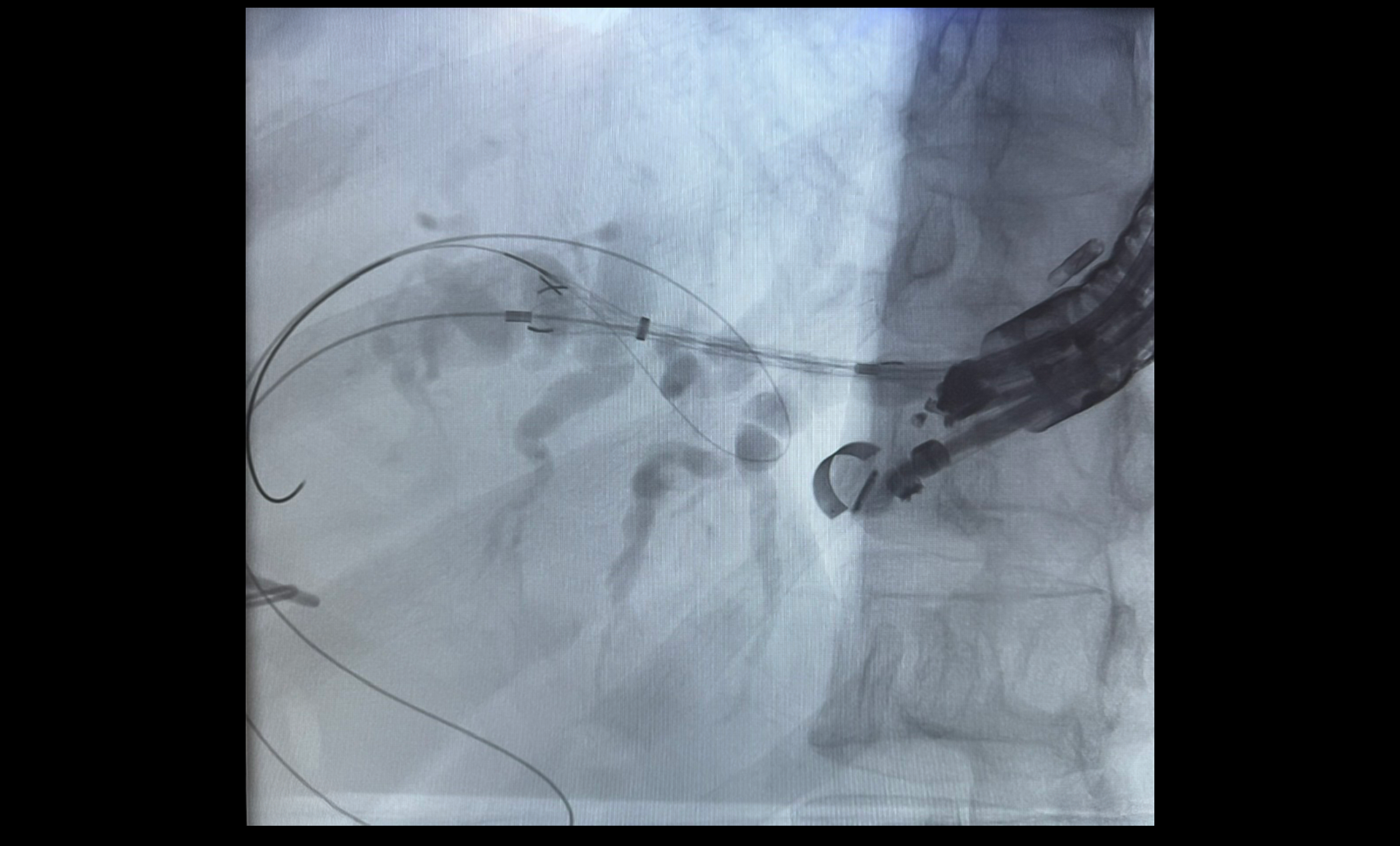 |
Image of the stent placed in Mr. Nghi's bile duct. Photo: Tam Anh General Hospital |
After the stent placement, the biliary obstruction was resolved, and Mr. Nghi was discharged from the hospital. According to Doctor Tung, the patient can proceed with chemotherapy or other systemic treatments once his condition is stable and he meets the necessary criteria.
Pancreatic cancer generally carries a poor prognosis due to its silent progression, making early detection difficult. The pancreas's deep location behind the stomach often means small lesions are hard to detect through conventional abdominal ultrasound. Most patients are only diagnosed when the tumor has grown large or caused complications such as obstructive jaundice, chronic abdominal pain, rapid weight loss, or metastases to the liver and lymph nodes.
Doctors recommend regular health check-ups for everyone, especially older individuals or those with risk factors such as smoking, chronic pancreatitis, diabetes, or a family history of pancreatic cancer. Early detection, when the tumor is localized, small, has not invaded major blood vessels, and has not metastasized, allows patients to undergo pancreaticoduodenectomy (Whipple procedure) combined with chemotherapy. This approach aims to prolong survival and increase the chances of recovery.
Quyen Phan
*Patient's name has been changed
| Readers can ask questions about digestive diseases here for doctors to answer |