Hemoglobin electrophoresis and gene analysis at Tam Anh Cau Giay General Clinic confirmed Hung carries the Thalassemia gene, a genetic blood disorder caused by a gene mutation affecting hemoglobin's globin chain synthesis.
Second-degree specialist doctor Nguyen Thien Lu, from the General Internal Medicine department at Tam Anh Cau Giay General Clinic, explained that individuals carrying the Thalassemia gene can be completely healthy or have only mild anemia, unaware they carry the disease gene. Common signs include small, hypochromic red blood cells on a complete blood count test. Many mistake the condition for iron deficiency anemia, self-medicating with iron supplements for extended periods without improvement.
Hung, recently married for three months, was advised by doctors to screen for the genetic disease before having children. His 23-year-old wife also exhibited small, hypochromic red blood cells, with tests confirming she carries the Thalassemia gene. Hung has a heterozygous beta-thalassemia CD17 mutation, while his wife carries a heterozygous beta-thalassemia CD41/42 mutation; neither showed obvious symptoms.
According to doctor Lu, Hung and his wife belong to the severe beta-thalassemia group. If they conceive naturally, there is about a 25% risk of having a child with beta-thalassemia, a 50% risk of having a child who carries the gene like the parents, and only a 25% chance of having a completely healthy child. Children born with Thalassemia suffer from severe anemia from the first few months after birth, requiring lifelong regular blood transfusions combined with iron chelation therapy to limit complications. Without adequate treatment, patients risk heart failure, liver cirrhosis, endocrine disorders, delayed physical development, and reduced life expectancy.
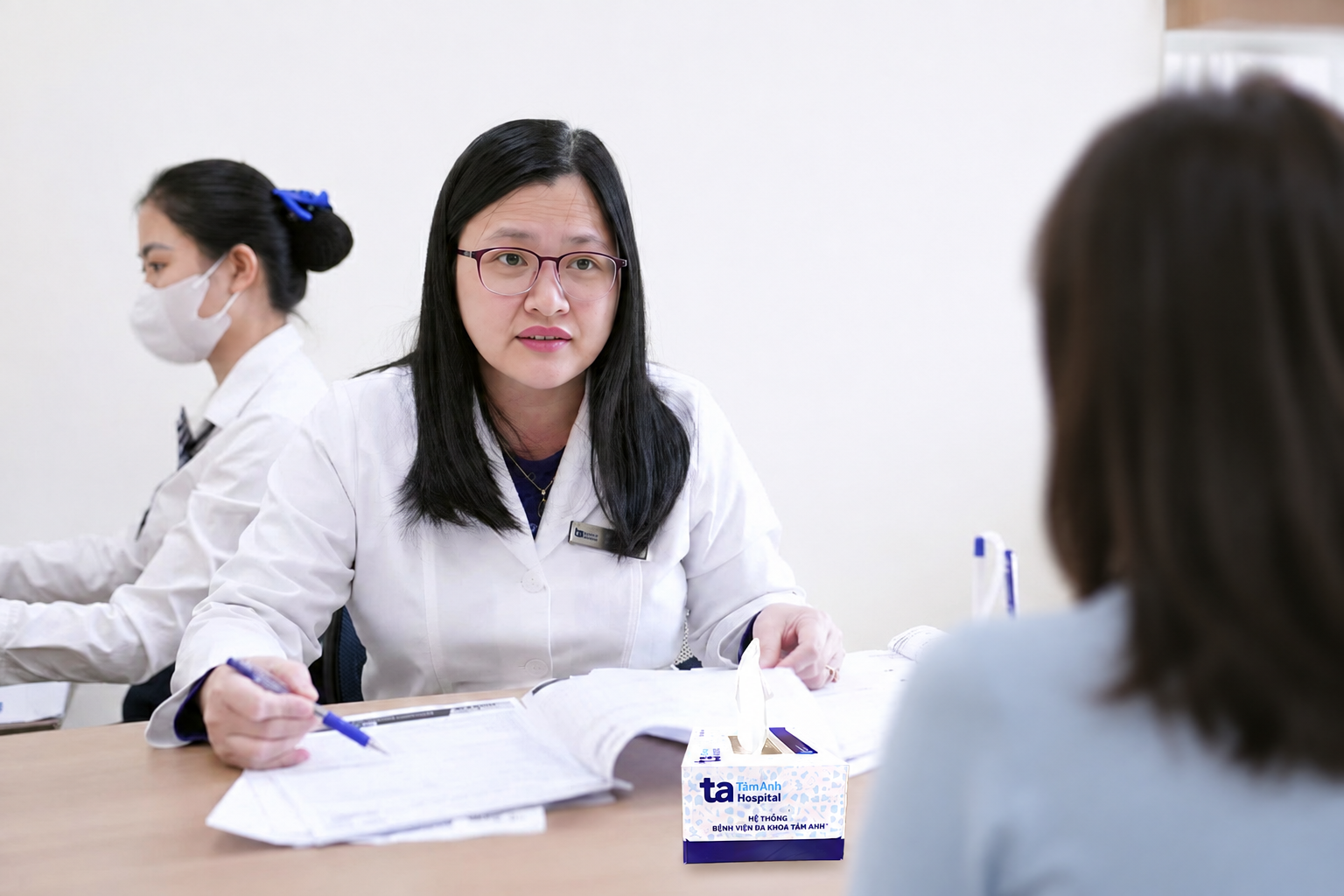 |
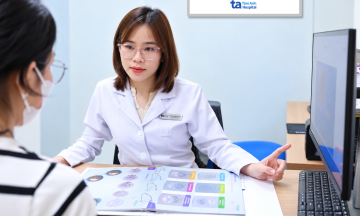
Doctor Lu explains to Hung and his wife the risk of having a child with Thalassemia when both parents carry the gene. Photo: Tam Anh Cau Giay General Clinic |
At the Reproductive Support Center, Tam Anh Hanoi General Hospital, Hung and his wife decided to undergo in vitro fertilization (IVF) combined with preimplantation genetic testing (PGT-M) to have a healthy child. PGT-M technology analyzes embryo genes, allowing selection of embryos not carrying the beta-thalassemia gene for uterine transfer, reducing the risk of transmitting the disease to the next generation. Currently, Hung's wife is undergoing ovarian stimulation, followed by egg retrieval for fertilization with her husband's sperm.
Vietnam reports a Thalassemia gene carrier rate of 13% of the population, with over 20,000 severely affected patients requiring lifelong treatment. An estimated 8,000 children are born with Thalassemia each year, with about 2,000 of them having severe forms of the disease.
Doctor Lu notes that small, hypochromic red blood cells do not definitively mean Thalassemia. This condition also occurs in individuals with iron deficiency or other hematological disorders. However, if test results do not align with iron deficiency or treatment does not improve the condition, patients require specialized tests like hemoglobin electrophoresis or gene testing to identify the cause.
Pre-marital Thalassemia screening helps detect the gene early before pregnancy, enabling couples to choose methods for having healthy children, thereby reducing the burden of disease for families and society and gradually decreasing the gene's transmission rate in the community.
Thanh Ba
| Readers can submit questions about infertility here for doctors to answer. |