Thalassemia, a congenital hemolytic anemia, is a genetic disorder caused by mutations in genes responsible for hemoglobin synthesis, leading to premature red blood cell destruction and chronic anemia. Doctor Nguyen Thac Viet, from the Center for Obstetrics and Gynecology at Tam Anh General Hospital Hanoi, states that if both parents carry the disease gene, there is a 25% chance in each pregnancy for the child to inherit severe forms of the disease. Prenatal diagnosis is crucial for doctors to provide counseling and develop appropriate management plans.
Amniocentesis is a widely used method for prenatal diagnosis of genetic conditions, including Thalassemia. However, in certain situations, doctors may recommend umbilical cord blood sampling to determine the fetal condition.
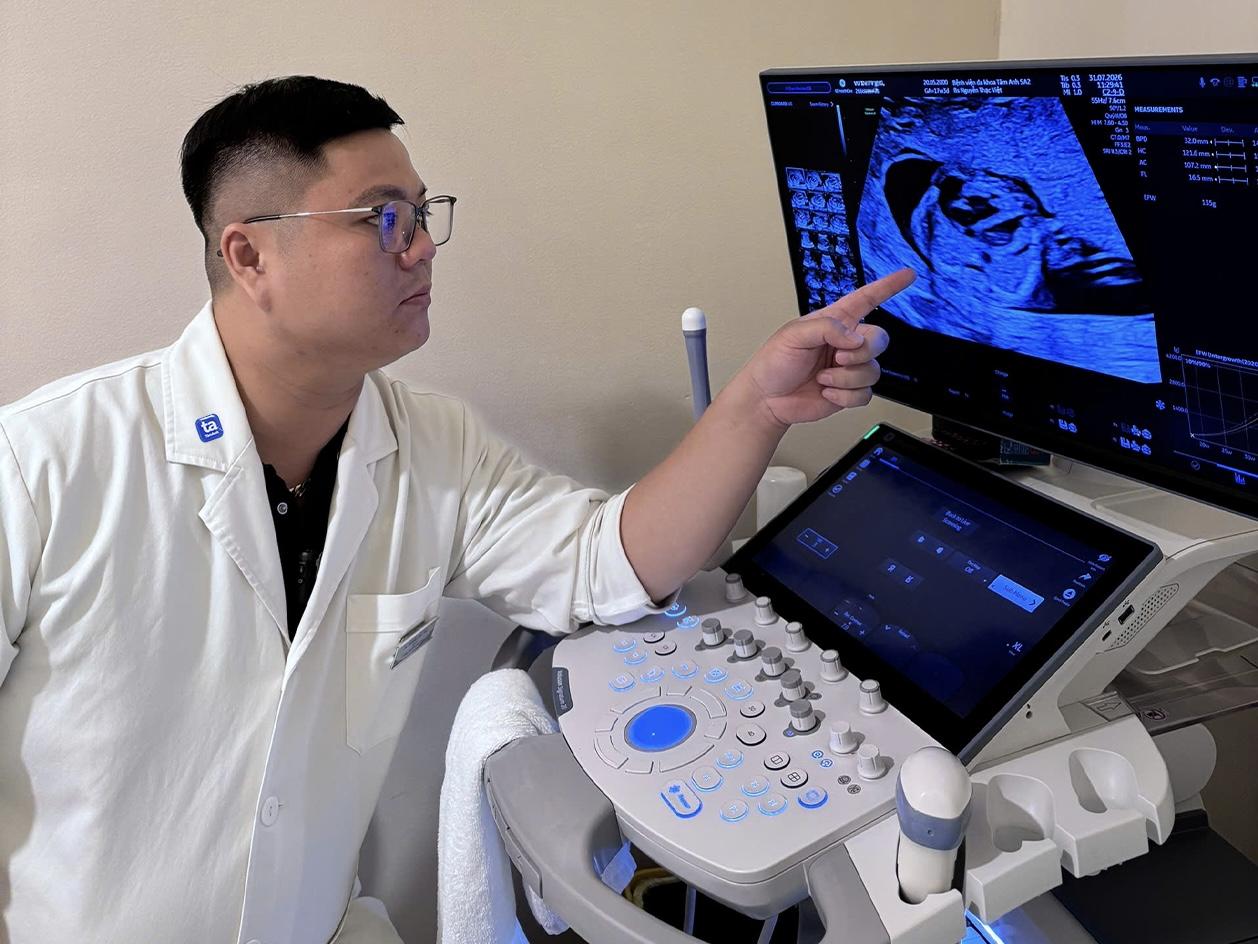 |
Doctor Viet is evaluating and indicating fetal umbilical cord blood sampling. *Photo: Tam Anh General Hospital.*
Umbilical cord blood sampling, or cordocentesis, is a technique where a specialized needle, guided by ultrasound, is inserted into the umbilical vein to collect a small amount of fetal blood for testing. From this blood sample, doctors perform gene analysis or hematological tests to determine if the fetus has Thalassemia.
According to Doctor Viet, an advantage of this method is the direct use of fetal blood samples, which often eliminates the need for cell culture, unlike amniotic fluid testing. This shortens the turnaround time for results and reduces costs associated with cell culture. Furthermore, the blood sample allows for direct assessment of fetal hematological parameters when necessary. Amniotic fluid culture tests typically yield results after two to three weeks, whereas hemoglobin electrophoresis of umbilical cord blood provides results in three to five days at optimal cost.
Beyond Thalassemia, umbilical cord blood sampling is also indicated for diagnosing or evaluating other fetal conditions, such as anemia, thrombocytopenia, certain hematological disorders, fetal infections, or genetic diseases in appropriate cases.
However, as this is an invasive procedure, it is not routinely indicated for all pregnant women. The procedure is typically performed from approximately the 18th week of pregnancy onwards at specialized prenatal diagnostic centers. Similar to other invasive techniques, umbilical cord blood sampling carries a risk of complications such as bleeding at the puncture site, umbilical cord spasm, fetal blood leakage, or miscarriage. Therefore, doctors must carefully weigh the benefits against the risks before proceeding.
The choice between umbilical cord blood sampling and amniocentesis depends on gestational age, diagnostic purpose, prenatal screening results, family history, and the specialist doctor's assessment. These two techniques are not entirely interchangeable; they are indicated in different circumstances to achieve optimal diagnostic efficacy.
Doctor Viet recommends that couples with a family history of Thalassemia or those identified as carriers of the disease gene should seek genetic counseling before and during pregnancy. Timely screening and diagnosis help detect fetuses with severe forms of the disease early, enabling appropriate pregnancy management plans.
Thuy Hanh
| Readers can submit questions about obstetrics and gynecology here for doctors to answer. |