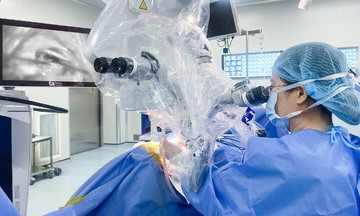
Endoscopy results for Ms. Chinh at Tam Anh General Hospital, TP HCM, revealed extensive invasive lesions in the angular incisure of the lesser curvature and antrum of the stomach. The lesions displayed abnormal surface structures and several central ulcers. Master, Doctor Ngo Hoang Kien Tam, from the Center for Endoscopy and Gastrointestinal Endoscopic Surgery, stated that the patient had stage 2 stomach cancer, which involves invasion of the submucosal and muscularis mucosa layers, with suspected lymph node metastasis. The cancer cells were poorly differentiated, indicating high malignancy. The tumor had eroded blood vessels within the stomach wall, causing slow bleeding or massive hemorrhages, leading to vomiting fresh blood or passing black stools.
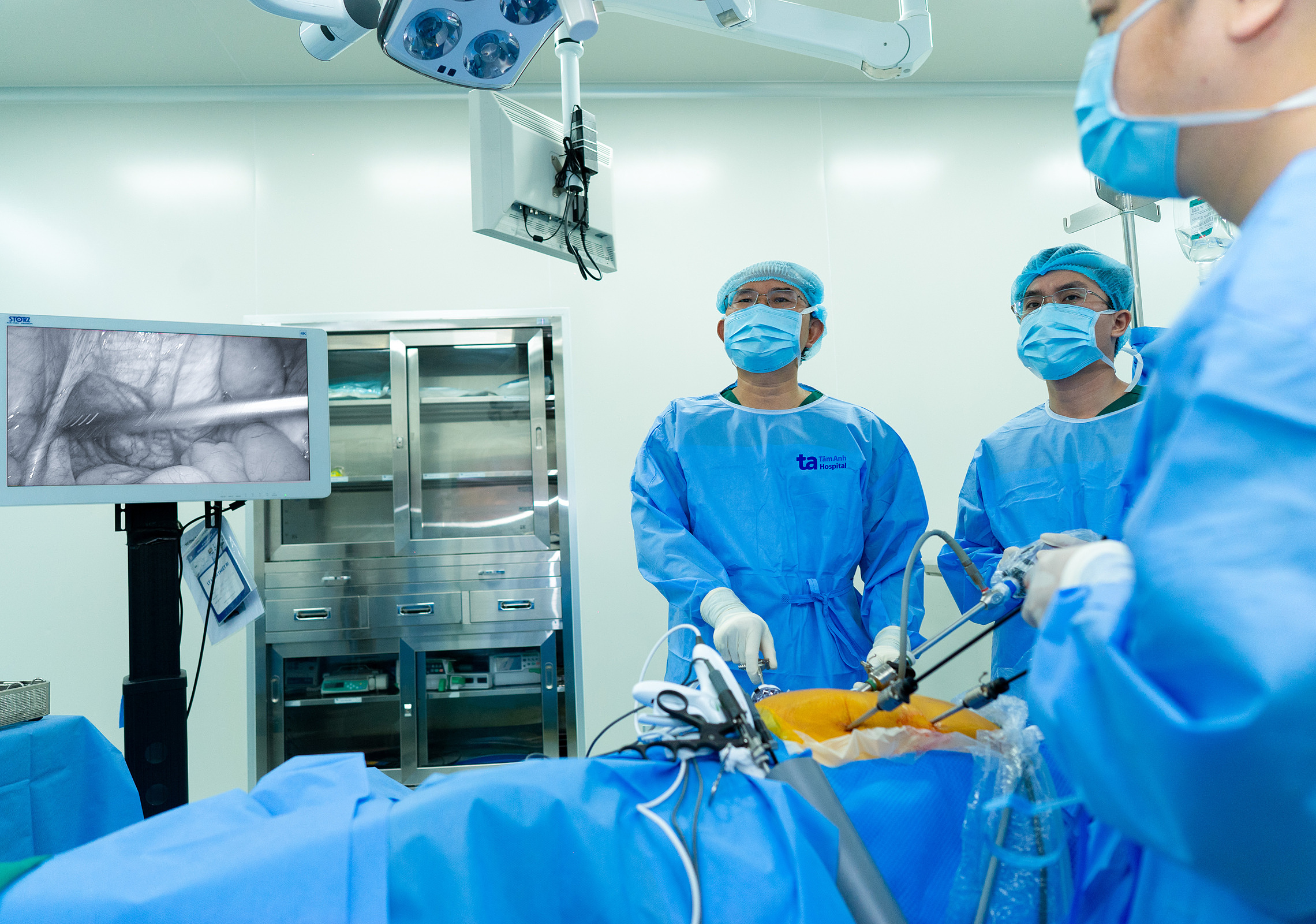 |
Doctor Kien Tam (third from right) performing endoscopic surgery to remove cancer for Ms. Chinh. Photo: Tam Anh General Hospital
Doctors decided on laparoscopic partial gastrectomy combined with lymph node dissection to remove all cancer cells and prevent local recurrence and distant metastasis. During the surgery, doctors located the antral tumor near the lesser curvature, which had not yet invaded the serosa. They used an ultrasonic scalpel to completely remove the tumor and dissected 38 lymph nodes.
Post-surgery, Ms. Chinh recovered rapidly. She was able to walk and eat after one day and was discharged 6 days after the operation. Pathological results confirmed stage 2A adenocarcinoma with three metastatic lymph nodes. The patient continues treatment in the oncology department, undergoing chemotherapy to eliminate any remaining cancer cells.
 |
Ms. Chinh being advised by a doctor after the surgery. Photo: Tam Anh General Hospital
Stomach cancer is a dangerous disease with a high mortality rate. If detected early, treatment methods are simpler, less invasive, and more effective. However, early-stage cancer symptoms are often vague, such as bloating, belching, and heartburn, which are easily confused with other digestive conditions.
Several factors increase the risk of stomach cancer, including HP bacterial infection, an unhealthy diet, smoking, and alcohol consumption. Individuals with genetic factors or a family history of stomach cancer and chronic atrophic gastritis also face a higher risk.
Doctor Tam recommends that everyone maintain regular health check-ups. Individuals experiencing unusual symptoms such as abdominal pain, indigestion, low-grade fever in the afternoons, or black stools should seek medical examination to determine the cause. Gastric endoscopy is considered the "gold standard" for detecting precancerous lesions or very early-stage cancer.
Quyen Phan