


Doctor Pham Quang Khai, from the Department of Urology and Andrology at E Hospital, reports a growing prevalence of stress-induced loss of sexual interest in men. Stress acts as a direct adversary, causing a decline in libido, a drop in performance, and even complete sexual dysfunction.
One such case is Tung, 20 years old, who sought examination at E Hospital in a state of fatigue and listlessness. His family's bankruptcy forced the young man to leave school and focus on earning money to repay debts. Over one year of relentless financial pressure led to chronic insomnia, anxiety, and a gradual loss of interest in intimacy.
"Family events pushed me to the bottom; I was stressed every day, feeling completely helpless", Tung shared with the doctor. The inability to engage in sexual activity led to frequent disagreements with his girlfriend, ultimately resulting in their breakup. This cycle of self-blame and feelings of failure further exacerbated his condition. Test results revealed Tung's testosterone level had fallen below 4 nmol/L, significantly lower than the normal range. The doctor diagnosed him with erectile dysfunction stemming from psychological factors and prescribed medication combined with lifestyle modifications for treatment.
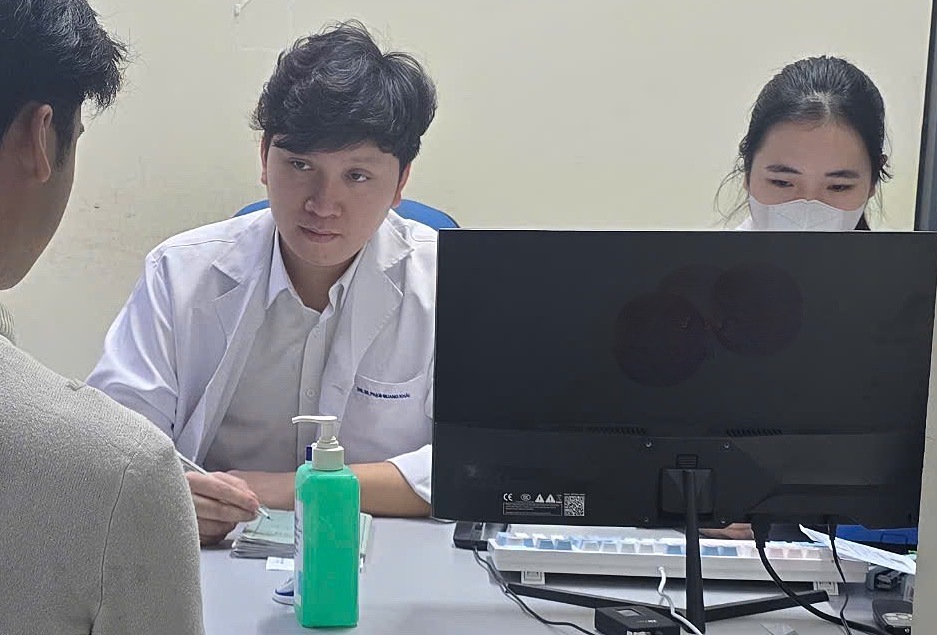 |
Doctor Khai examining a patient with signs of erectile dysfunction and decreased libido, on 13/1. Photo: Doctor provided
Beyond young individuals, middle-aged men also experience severe impacts. Hung, 40 years old, a long-haul driver, frequently drove at night. Returning home in a state of exhaustion, he could not meet his wife's needs and faced rejection. This situation led to self-deprecating thoughts. Recently, after noticing poor erection quality and premature ejaculation, Hung sought medical attention and was diagnosed with decreased libido and erectile dysfunction requiring medical intervention.
Similarly, another patient named Nam, 27 years old, consulted a doctor because he could not achieve morning erections. His busy work schedule during the period leading up to Tet often involved entertaining clients and consuming alcohol. Tests indicated he suffered from erectile dysfunction due to prolonged stress, compounded by the harmful effects of stimulants.
Doctor Khai explained the underlying mechanism: when the body is under stress, the brain releases cortisol hormone. Persistently high cortisol levels inhibit the production of testosterone, the most crucial male sex hormone, which is secreted most strongly between 11 p.m. and 4 a.m.
"If you sleep less than six hours a night, testosterone levels can decrease by 10-15% in just a few days", Doctor Khai warned. Additionally, stress affects the autonomic nervous system, causing vasoconstriction, which reduces blood flow to the penis and hinders the erection process. Prolonged stress can even "block" the male reproductive axis, disrupting signals from the brain to the testicles, even if the organ itself is completely normal.
Master Cao Tran Thanh Trung, CEO of Lumos Psychological Counseling and Therapy Center, notes that stress and sexual dysfunction create a negative cycle. Initial stress impairs physiological function, and subsequent anxiety about sexual performance further worsens the condition. Moreover, stress often accompanies unhealthy lifestyle habits such as insomnia, irregular eating, and alcohol and tobacco abuse, all of which rapidly degrade sexual health.
Numerous international studies have confirmed this connection. Research published in The Journal of Sexual Medicine (2011) indicated that stress is a main cause of erectile dysfunction by disrupting nerve signals and blood circulation. Another study by Pasqualotto and colleagues (2006), published in Current Women’s Health Reviews, also affirmed that prolonged stress negatively affects both sperm count and quality.
To prevent and improve this condition, experts recommend that men maintain a healthy lifestyle. Engaging in sports, walking, yoga, or meditation helps reduce stress, improve blood circulation, and increase natural testosterone levels. Sleep plays a pivotal role; it is necessary to ensure seven to eight hours of sleep each night for the body to recover and balance hormones. Additionally, men need to focus on nutrition and minimize tobacco and alcohol consumption. In cases of excessive or prolonged stress, patients should seek help from a psychologist or an andrologist for an effective treatment plan.
*Character names have been changed
Thuy An





